Key Points
- The Cardiff business person Roger Walters of Roger Walters of Whitchurch and Roger Walters Interiors was fined more than £2,500 due to health and safety violations.
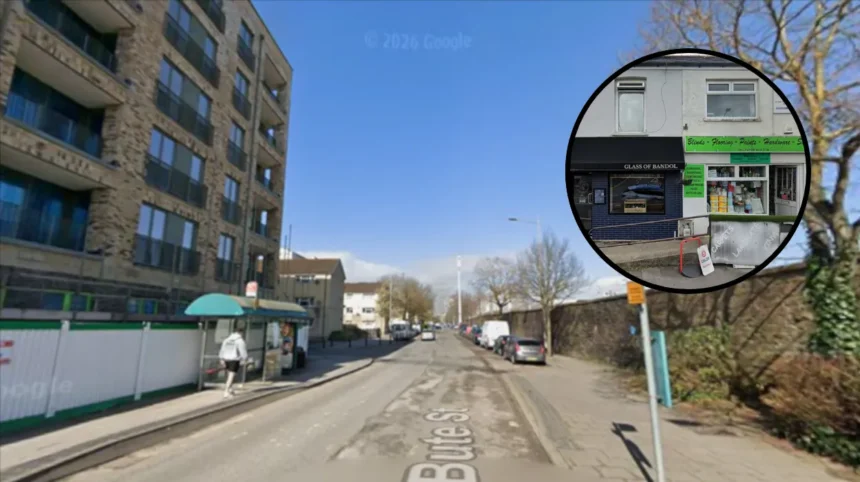
- As Nation.Cymru reporters have reported, the charge against him arose after unannounced checks by Shared Regulatory Services following a public complaint in April 2025 about storage of stock and cylinders of liquid petroleum gas (LPG) in a hardware shop on Merthyr Road, Whitchurch.
- The investigators have found an abundance of cylinders of propane and butane stored indoors near combustible materials and immediately near the entrance to the premises where there was no other access available.
- Some extra cylinders were found to be not secured outside the entrance while a storage cage located in the rear parking lot of the building was surrounded by combustible materials.
- It was established that the staff did not receive enough training on how to handle and store LPG cylinders safely.
- Walters violated a Health and Safety Prohibition Order concerning the number of cylinders stored indoors and failed to observe the deadline set in an Improvement Notice on May 31, 2025.
Cardiff (Cardiff Daily) September 17, 2026 – A local retailer has been ordered to pay more than £2,500 following a prosecution by Shared Regulatory Services after inspectors discovered liquid petroleum gas cylinders stored dangerously close to combustible materials and the primary exit route of a commercial premises. Roger Walters, trading via Roger Walters of Whitchurch and Roger Walters Interiors, faced legal action at Cardiff Magistrates’ Court after failing to adhere to mandatory health and safety notices regarding hazardous materials. The case highlights regulatory enforcement concerning commercial fire risks and employee safety compliance within local retail spaces.
- Key Points
- Why Was a Cardiff Retailer Fined More Than £2,500 by the Courts?
- What Specific Safety Breaches Did Inspectors Uncover on the Premises?
- How Did the Defendant Respond to Official Health and Safety Notices?
- What Did the Judiciary and Local Council Authorities Say About the Risks?
- Background of the Particular Development
Why Was a Cardiff Retailer Fined More Than £2,500 by the Courts?
As reported by Nation.Cymru staff, the legal proceedings originated from a public complaint submitted in April 2025. The tip-off directed local authorities toward the storage practices surrounding stock and liquid petroleum gas (LPG) cylinders at a hardware shop situated on Merthyr Road within the Whitchurch area of Cardiff.
Following the complaint, unannounced inspections conducted by Shared Regulatory Services revealed severe compliance breaches. Investigators documented excessive quantities of propane and butane cylinders kept within the interior of the shop space, positioned directly alongside combustible materials. Furthermore, inspectors noted that several cylinders sat adjacent to the front entranceway, which functioned at that time as the sole accessible point of entry and exit for the entire building.
Explore more Whitchurch News
Nominations Open for Whitchurch Citizen of the Year Award Whitchurch 2026
Whitchurch Golf Club Wins Women & Girls Award, Cardiff 2026
What Specific Safety Breaches Did Inspectors Uncover on the Premises?
According to details brought forward during the court hearing via Nation.Cymru staff, the safety hazards extended past the indoor retail area. Inspectors identified additional gas cylinders left entirely unsecured directly outside the front entrance. Authorities emphasized that these configurations failed to meet established industry codes of practice.
While a designated storage cage had originally been installed within the rear car park to accommodate extra cylinders, investigators found that potential fire hazards and combustible materials had accumulated around it, elevating the baseline risk profile for a potential fire or explosion.
Compounding the physical storage violations, the court was informed that members of staff employed at the premises had received no proper information, instruction, or formal training regarding the safe handling, management, and storage protocols required for LPG cylinders, leaving workers largely unaware of the inherent dangers.
How Did the Defendant Respond to Official Health and Safety Notices?
As documented in the reporting by Nation.Cymru staff, regulatory bodies attempted to correct the hazards through formal administrative channels prior to pursuing criminal prosecution. Roger Walters was initially served with a Health and Safety Prohibition Notice designed to limit and restrict the volume of cylinders permitted for storage inside the indoor retail space. However, subsequent monitoring visits confirmed that this notice had been actively breached.
Additionally, an independent Improvement Notice was issued, mandating that complete alterations and rectifications to the storage arrangements be finalized by May 31, 2025. Court records indicated that appropriate safety measures were not successfully implemented at the location until December.
Walters subsequently appeared before Cardiff Magistrates’ Court on September 3 to face the charges. The presiding bench issued a financial penalty consisting of a £1,200 fine, alongside an order to cover £1,077 toward the local council’s legal and investigative costs, plus an additional £480 victim surcharge, bringing the total financial obligation past the £2,500 threshold.
What Did the Judiciary and Local Council Authorities Say About the Risks?
As noted by Nation.Cymru staff, the presiding District Judge addressed the gravity of the situation during sentencing, stating that although no individual suffered actual physical harm, the negligent storage layout generated a substantial, unacceptable risk capable of triggering catastrophic consequences.
Emphasizing the wider municipal stance on commercial compliance, Cllr Ed Stubbs, Cardiff Council’s cabinet member with responsibility for Shared Regulatory Services, released a formal statement. As reported by Nation.Cymru staff, Cllr Ed Stubbs stated that:
“Businesses that store LPG cylinders must do so in accordance with strict safety standards to protect employees, customers and neighbouring properties.”
Expanding on the potential scale of danger, Cllr Ed Stubbs further stated that:
“If LPG cylinders were to explode, they can cause significant damage and while fortunately no one was harmed in this case, the court recognised the significant risks created by the storage arrangements found at these premises.”
Concluding the local authority’s position on future violations, Cllr Ed Stubbs stated that:
“Shared Regulatory Services will not hesitate to take enforcement action where businesses fail to comply with legal requirements designed to keep people safe.”
Background of the Particular Development
The prosecution of Roger Walters forms part of a broader, ongoing regulatory enforcement framework overseen by Shared Regulatory Services—a partnership delivering environmental health, trading standards, and licensing functions across Cardiff, Bridgend, and the Vale of Glamorgan. Local authorities have increasingly prioritized unannounced commercial inspections following public intelligence reports regarding hazardous material handling. Liquid petroleum gas, encompassing both propane and butane, is strictly regulated under specialized health and safety legislation and industry codes of practice due to its highly flammable and volatile properties under pressure. Improper storage near ignition sources, blocked egress routes, and inadequate worker training are historical focal points for regulatory crackdowns, given that failures in these areas have previously resulted in severe structural blasts and fatalities across commercial retail sectors in the United Kingdom.
This legal development is expected to significantly impact local retailers, small business owners, and commercial operators across Cardiff and surrounding Welsh authorities. Heightened scrutiny from Shared Regulatory Services will likely prompt local enterprises to urgently audit their on-site storage methods, particularly regarding compressed gases, chemical stocks, and emergency exit routes. For the retail business community, the strict enforcement and visible financial penalties serve as a direct warning that non-compliance with statutory prohibition and improvement notices carries severe fiscal and legal consequences. Consequently, employers may accelerate investments in formal staff safety training and infrastructure upgrades—such as compliant exterior storage cages—to mitigate liability, safeguard customers and employees, and avoid parallel court prosecutions.