
Key Points
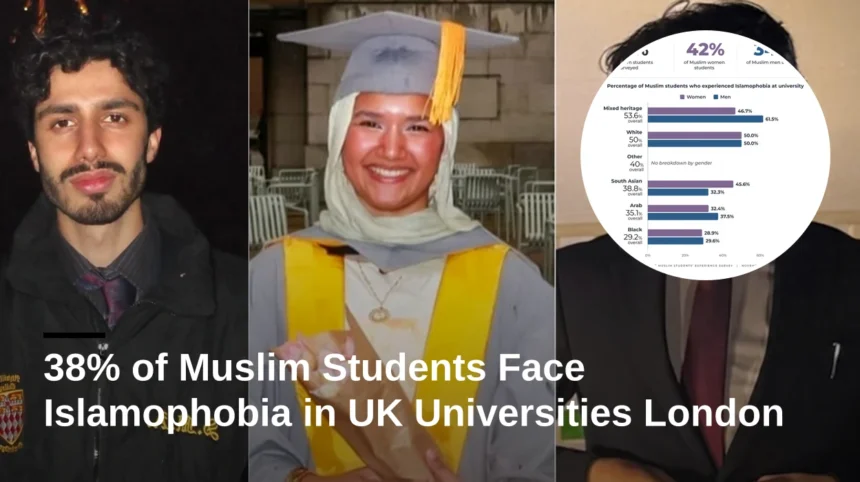
- A Federation of Student Islamic Societies survey found that 38.3 per cent of Muslim students experienced Islamophobia at university.
- The survey collected responses from 715 Muslim students across 63 higher education institutions.
- Women, students at leading research universities and those reporting timetable barriers faced particularly serious concerns.
- The Federation of Student Islamic Societies is calling for clearer definitions, better reporting systems and protections for religious observance.
- Universities including Queen Mary University of London and the University of Sussex have announced measures addressing anti-Muslim hostility.
London (Cardiff Daily) November 25, 2026 – More than one in three Muslim students in the United Kingdom reported experiencing Islamophobia at university, according to a Federation of Student Islamic Societies survey published this week. The study gathered responses from 715 students at 63 higher education institutions and found that discrimination affected campus life, mental health, reporting confidence and access to religious observance. The findings have prompted calls for universities and students’ unions to strengthen policies and accountability.
- Key Points
- What did the Federation of Student Islamic Societies survey find?
- How have Muslim students described their experiences?
- What changes has the Federation of Student Islamic Societies requested?
- What responses have universities announced?
- What is the background to the development?
- How could the findings affect Muslim students seeking to be seen?
What did the Federation of Student Islamic Societies survey find?
As reported by Al Jazeera in “We need to be seen”: Over a third of UK Muslim students face Islamophobia, the survey found that 38 per cent of Muslim students had personally experienced Islamophobia at university. Women reported higher levels than men, while the rate was particularly high among Muslim women studying at Russell Group universities.
The survey also identified barriers to reporting. A majority of affected students said they did not feel able to report incidents, and many respondents said they did not know how to make a complaint. Among students who did report incidents, a substantial proportion said their concerns were not handled properly.
Reported experiences included verbal abuse, racialised comments, harassment, exclusion from academic activities and hostility towards students seeking to attend Friday prayers. The survey also recorded concern about expressing views on Palestine and described the impact of Islamophobia on students’ mental health.
How have Muslim students described their experiences?
Al Jazeera reported the account of Haanyah Cassam, a former student of the School of Oriental and African Studies and current trainee teacher at University College London. Cassam said she experienced derogatory comments from a security guard, was spat at while entering university and encountered statements in teaching that she regarded as anti-Muslim.
She also described difficulties while researching the emotional effect of the Prevent programme on Muslim students. Cassam said she found another academic supervisor after concerns about her dissertation, which later received a first-class honours mark.
Aayan Hashmi, a law student and Islamic Society president at the University of York, told Al Jazeera that university staff and the students’ union had been supportive but said Muslim students could feel alienated by social activities centred on drinking. Syed Ali, a politics and international relations student at the University of Cambridge, said prejudice could be expressed through academic language that made it difficult to distinguish racism from Islamophobia.
What changes has the Federation of Student Islamic Societies requested?
The Federation of Student Islamic Societies has called on universities and students’ unions to adopt a definition of Islamophobia, train staff and student leaders, and create dedicated categories for anti-Muslim incidents in reporting systems.
It has also called for complaints involving staff to be investigated outside the relevant department, protection for Friday prayers in timetables, no examinations on Eid and a government review of Prevent. Rahma Hegy, the organisation’s vice-president for student affairs, said students often remained silent because they did not expect anyone to be held accountable.
Wonkhe reported that the report, titled Belonging in question – the Muslim students’ experience in higher education, also included responses from 26 Islamic Society committee members at 21 universities. Its findings described belonging as being shaped by timetables, event approvals and complaints procedures.
What responses have universities announced?
Queen Mary University of London said it had adopted the United Kingdom Government’s non-statutory definition of anti-Muslim hostility after consultation with staff and students. The university said its guidance addresses anti-Muslim hostility and antisemitism while taking account of academic freedom, freedom of speech and existing legal protections.
The University of Sussex highlighted Islamophobia Awareness Month and said its campaign urged members of the university community not to ignore discriminatory behaviour. The University of Greenwich also publicised Islamophobia Awareness Month activities, including an anonymous survey organised by its Islamic Society.
Al Jazeera contacted the School of Oriental and African Studies, the University of York and the University of Cambridge for responses but had not received replies by publication.
What is the background to the development?
The Federation of Student Islamic Societies’ findings build on earlier concerns about anti-Muslim discrimination in higher education. The organisation’s survey recorded a higher level of reported Islamophobia than the approximately 25 per cent reported in a 2005 comparison cited by Al Jazeera. Students described religious identity and racial identity as frequently overlapping in experiences of hostility. The report also linked campus inclusion to practical arrangements such as prayer access, complaint handling and academic support.
How could the findings affect Muslim students seeking to be seen?
The findings could increase pressure on universities to publish clearer procedures, record anti-Muslim incidents consistently and demonstrate how complaints are resolved. Better protection for Friday prayers and Eid could reduce the need for students to choose between religious observance and academic participation. Stronger staff training may also help institutions address hostility expressed through both overt abuse and apparently academic language. For the audience of “We need to be seen”: Over a third of UK Muslim students face Islamophobia, the development may make student testimony more visible in university policy and national discussions about campus safety.