Key Points
- Thrilling Turnaround: Cardiff City staged a dramatic comeback from 4-1 down to beat Burnley 5-4 at Cardiff City Stadium, entering the second international break of the season on a high.
- Tactical Identity: Under manager Brian Barry-Murphy, appointed in the summer of 2025, the Bluebirds have adopted an aggressive, high-risk attacking style resulting in multiple high-scoring encounters.
- Current Standings: Fifteen games into the Championship season, Cardiff sit 14th in the table, six points adrift of the play-off spots and eight points clear of the relegation zone.
- Injury Crisis: The squad has faced severe defensive availability issues; centre-backs Krystian Bielik and Will Fish played through pain against Burnley, while key players played out of position in preceding matches.
- Atmospheric Shift: In contrast to the turbulent 2024–25 season that saw the sacking of Erol Bulut, fans remain firmly supportive of Barry-Murphy’s youth-centric, academy-driven project.
Cardiff (Cardiff Daily) November 10, 2026 – Following a chaotic 5-4 comeback victory over Burnley, Cardiff City FC enter the Championship’s second international break in 14th place. Under head coach Brian Barry-Murphy, the Bluebirds have embraced an aggressive, attack-minded philosophy that delivers intense drama alongside tactical vulnerabilities. Despite navigating a severe central-defensive injury crisis, the club enjoys strong supporter backing and a restored identity driven by academy talent.
- Key Points
- How Did Cardiff City Complete Their Epic Comeback Against Burnley?
- Why Have Cardiff Struggled to Convert Dominance Into Victories?
- How Does Brian Barry-Murphy Justify His High-Risk Tactical Approach?
- How Has Youth Development Transformed the Atmosphere at Cardiff City?
- How Are Mounting Injuries Impacting Team Selection?
- Background of the Tactical Transformation and Rebuilding at Cardiff City
- Predictions: How Will This Development Affect Cardiff City Supporters and Stakeholders?
How Did Cardiff City Complete Their Epic Comeback Against Burnley?
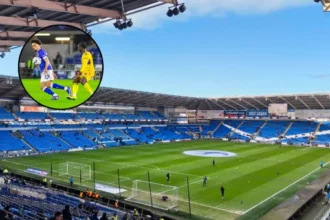
As reported by Glen Williams of BBC Sport, once a manager and team have been involved in a match as chaotic, draining, and utterly captivating as Cardiff City’s remarkable 5-4 comeback win over Burnley, it makes sense to pause and take a moment to reflect. It will have taken a while for heart rates to return to resting levels after the pandemonium at Cardiff City Stadium, where the hosts were 4-1 down with half an hour to go before staging the most dramatic of turnarounds.
The immediate aftermath was understandably a blur of excitement and high emotion, but as the Championship enters its second international break of the season, the period presents an ideal opportunity to assess the Bluebirds’ campaign so far. The Burnley encounter serves as a useful starting point—in many ways, a snapshot of the best and worst of Brian Barry-Murphy’s Cardiff team.
As highlighted by Glen Williams, since the Irishman was appointed head coach in the summer of 2025, he has instilled a thrilling style of play which has resulted in several high-scoring encounters. In League One last season, more often than not, Cardiff were on the right side of those contests as they secured promotion on their first attempt. However, following their return to the Championship, results have proved mixed. Fifteen games into the campaign, the Bluebirds occupy 14th place in the table, standing six points adrift of the play-off places and eight clear of the relegation zone.
Why Have Cardiff Struggled to Convert Dominance Into Victories?
As observed by BBC Sport’s match analysis, there is some frustration around the club that Cardiff do not have more than their four wins to show for their efforts. In the majority of matches this season, Cardiff have enjoyed greater possession and recorded more shots on target than their opponents, alongside superior expected goal (xG) statistics. Nevertheless, turning that dominance into definitive victories has proven elusive.
On some occasions, this shortfall has stemmed from wasteful finishing in the final third. On others, it has been the direct result of porous defending, a structural vulnerability exacerbated by a severe injury crisis at centre-back.
That defensive exposure was clearly evident against Burnley, when Krystian Bielik and Will Fish were forced to feature in central defence despite neither being fully fit. Coupled with a natural lack of outright pace, the central pair were left badly exposed by Cardiff’s high defensive line, an issue Burnley exploited to build a 4-1 lead before Cardiff’s late rally.
How Does Brian Barry-Murphy Justify His High-Risk Tactical Approach?
Addressing the tactical risks inherent in his system, head coach Brian Barry-Murphy acknowledged the team’s defensive vulnerability after the match but reaffirmed his commitment to the philosophy.
As reported by Glen Williams of BBC Sport, Brian Barry-Murphy stated:
“I think we have to improve all aspects of our game. We work as hard on the defensive end of our game as our attacking players.”
Barry-Murphy further explained the demands placed on his backline, stating:
“We play a very aggressive game where our defenders are asked to cover big distances and probably have to be exposed at certain times. But you saw the potential of when we get it right we’re so dangerous. When we don’t it’s difficult but you’ll see the development of a young side. The improvement that they can get playing this way is very exciting for us all.”
How Has Youth Development Transformed the Atmosphere at Cardiff City?
As emphasized by Glen Williams, Barry-Murphy’s focus on the youth of his team represents a pivotal aspect of the club’s broader evolution. Since his first day in the role, the former Manchester City Under-21s boss has placed explicit trust in Cardiff’s academy graduates.
This policy has not only yielded promotional success and introduced a bold brand of football, but the reliance on young, local talent has played a vital role in reinforcing the club’s Welsh identity and strengthening its connection with the fan base.
Prior to drawing with West Ham the previous week, Cardiff actually possessed fewer points than they did at the exact same stage of the 2024–25 season—the campaign in which they suffered relegation from the Championship. However, the contrast in mood between the two periods could hardly be greater. Two years ago, Cardiff had already dismissed manager Erol Bulut after just six league games amidst a toxic atmosphere that threatened to tear the club apart.
Today, the supporters stand fully behind Barry-Murphy and his squad. When asked about the contrast with previous years, Barry-Murphy noted:
“The stuff you’re referencing is a long way back and I wasn’t here, so I’m not aware of it. But we believe in the players that we have, we believe we can have a great season.”
How Are Mounting Injuries Impacting Team Selection?
Barry-Murphy retains significant goodwill among the fan base following his immediate promotion success from League One. As a result, supporters have displayed far greater patience regarding on-field stumbles than in previous Championship campaigns.
For instance, after witnessing their side surrender a 3-0 lead in the recent draw against West Ham, most fans pointed to Cardiff’s mounting injury list and depleted squad as clear mitigating factors for a result they would have accepted prior to kick-off.
The Bluebirds were forced to navigate that fixture without four senior central defenders. The situation was equally acute against Wolverhampton Wanderers the preceding weekend, where Cardiff finished the match with winger Ollie Tanner and central midfielder Joel Colwill deployed as emergency full-backs.
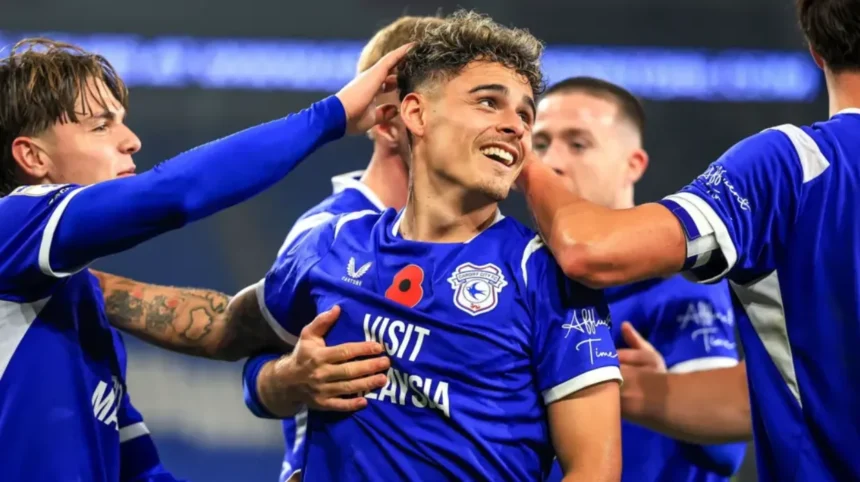
These physical demands were once again visible against Burnley. Post-match reports confirmed that Krystian Bielik, Will Fish, Perry Ng, and match-winner Alex Robertson all played through physical pain to aid the squad through a challenging period of player availability.
Background of the Tactical Transformation and Rebuilding at Cardiff City
The current climate at Cardiff City Stadium reflects a structural pivot initiated following the club’s relegation from the Championship at the end of the 2024–25 season. That campaign was defined by managerial instability, culminating in the early dismissal of Erol Bulut and a breakdown in rapport between the club hierarchy, squad, and fanbase.
In the summer of 2025, the Cardiff board appointed former Manchester City Elite Development Squad (EDS) manager Brian Barry-Murphy. Tasked with overhauling the playing squad, Barry-Murphy shifted the recruitment focus toward youth integration and high-intensity, possession-based tactics.
The strategy yielded immediate success in League One, where Cardiff secured automatic promotion back to the Championship on the first attempt. The transition back to the second tier in the 2026–27 campaign has tested the durability of this philosophy, as the step up in opposition quality has exposed structural risks in transition while highlighting the team’s attacking potential.
Predictions: How Will This Development Affect Cardiff City Supporters and Stakeholders?
The continuation of Brian Barry-Murphy’s high-risk tactical model, combined with squad depth challenges, is set to shape Cardiff City’s operational outlook across several key areas:
- For Supporters: Fans can expect an unpredictable campaign characterized by high-scoring fixtures and variable results. The goodwill built through academy integration provides Barry-Murphy with tactical leeway, meaning supporters are likely to remain patient through defensive setbacks as long as attacking momentum and effort levels are maintained.
- For the Playing Squad and Medical Staff: The international break provides vital recovery time for a depleted defensive unit. However, the physical demands of Barry-Murphy’s high-line system mean that squad rotation and sports science management will be critical. Failure to restore key defenders to full fitness could force persistent tactical compromises or emergency positional shifts.
- For Club Governance and Transfer Strategy: As the January 2027 transfer window approaches, the club’s board will face pressure to recruit athletic defensive cover tailored to a high-pressing system. If recruitment addresses these structural gaps, Cardiff’s underlying performance metrics (xG and shot generation) suggest the team has the potential to mount a challenge toward the upper half of the Championship table.