Key Points
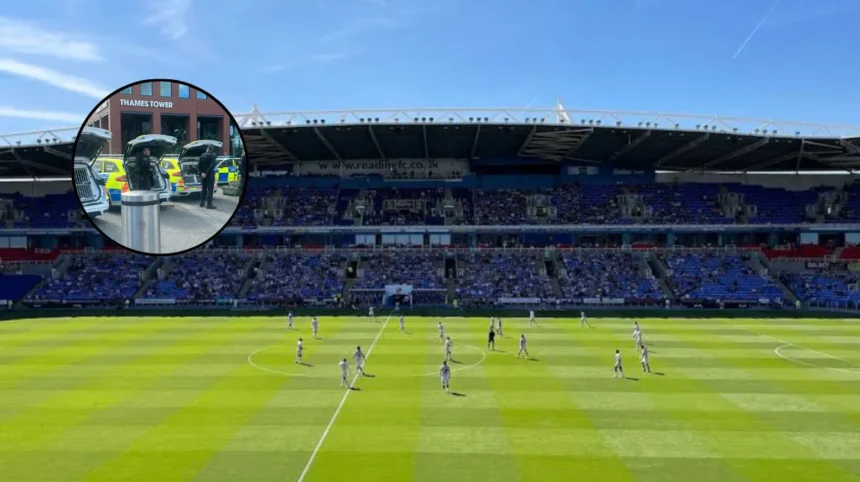
- A significant police presence is visible in Reading town centre, particularly near the railway station, ahead of the League One match between Reading FC and Cardiff City.
- Thames Valley Police has implemented Section 35 dispersal orders from 08:00 to 20:00 BST on Saturday, 18 April 2026, covering areas around the Select Car Leasing Stadium, Reading town centre, and Reading railway station.
- These measures aim to prevent antisocial behaviour, disorder, harassment, alarm, or distress, and to ensure safety for fans and local communities.
- Police tactics include mounted officers, bicycle units, police dogs, drones, and football spotters as preventative steps.
- The operation is described as highly visible and robust, with widened patrols around key locations before the 15:00 kick-off.
- Chief Inspector Dave Washington, tactical commander, stated that fans should enjoy the game but antisocial behaviour will not be tolerated, with arrests and football banning orders possible.
Reading (Cardiff Daily) April 18, 2026
- Key Points
- Why Has Thames Valley Police Implemented Dispersal Orders for Reading FC vs Cardiff City?
- What Tactics Are Thames Valley Police Deploying Around the Stadium and Town Centre?
- How Does This Operation Ensure Safety for Fans and Residents During the Match?
- What Areas in Reading Are Covered by the Dispersal Orders?
- Background of the Policing Development
- Prediction: Impact on Fans and Local Communities
A major police presence has been deployed across Reading town centre ahead of this afternoon’s League One fixture between Reading FC and Cardiff City at the Select Car Leasing Stadium. Officers are particularly visible near Reading railway station, with dispersal orders activated to maintain public order during the match scheduled for 15:00 BST.
As reported by staff writers at the Reading Chronicle,
“A major police presence can be seen in Reading town centre ahead of a football match set to take place this afternoon. Reading FC is set to take on Cardiff…”.
This operation underscores Thames Valley Police’s commitment to a safe matchday environment.
Why Has Thames Valley Police Implemented Dispersal Orders for Reading FC vs Cardiff City?
Thames Valley Police activated Section 35 dispersal orders from 08:00 BST to 20:00 BST on 18 April 2026, granting officers and Police Community Support Officers powers to move on individuals or groups likely to cause harassment, alarm, or distress. The designated zones encompass streets and roads surrounding the Select Car Leasing Stadium, Reading town centre, and the railway station.
According to coverage in El-Balad (translated from original reporting),
“Reading vs Cardiff City is under a police dispersal order in Reading on Saturday, with officers widening patrols around the stadium, town centre and railway station”.
These powers, as explained by Thames Valley Police, serve as a preventative measure rather than a response to any specific incident.
In Wokingham Today, reporters noted that
“Section 35 dispersal orders will be in place across parts of Reading from 8am until 8pm on 18 April as a preventative measure aimed at reducing antisocial behaviour and ensuring public safety”.
The 12-hour duration aligns with crowd movements before and after the 15:00 kick-off, focusing on safe travel through busy public spaces.
What Tactics Are Thames Valley Police Deploying Around the Stadium and Town Centre?
Alongside dispersal powers, Thames Valley Police is utilising a multifaceted approach including mounted officers, tactical cycle units, police dogs, drones, and dedicated football spotters. These resources aim to provide reassurance to the public and monitor crowd behaviour effectively.
Chief Insp Dave Washington, tactical commander for the match, outlined the strategy in statements covered by the BBC, saying,
“Our aim is for fans to relish the match, cheer for their team, and return home without incident, but we will not accept any antisocial behavior or disturbances”.
He emphasised that while most supporters behave responsibly,
“we will take decisive measures against anyone looking to instigate disorder, which may include arrests and football banning orders”.
El-Balad further detailed,
“The response includes mounted officers, officers on bicycles, police dogs, drones and football spotters. Thames Valley Police said the tactics are being used as a preventative measure to help ensure safety in the areas affected by the match”.
Drones and cycle patrols, in particular, enhance visibility in dynamic areas like the town centre and station.
Thames Valley Police’s official social media post on Facebook, as referenced in search results, confirmed:
“We’ll be carrying out a highly visible policing operation for the Reading FC v Cardiff City match… To help keep fans and local communities safe, we’ll have Section 35 dispersal orders in place from 8am to 8pm in Reading”.
How Does This Operation Ensure Safety for Fans and Residents During the Match?
The policing plan prioritises crowd management and public reassurance, with officers positioned to facilitate smooth movement around key hotspots. Chief Insp Washington urged supporters to voice concerns to officers, stewards, or staff on the day, reinforcing a collaborative approach to safety.
As per BBC reporting,
“The police presence around the station and match area is designed to provide reassurance as crowds move through Reading before and after kickoff”.
This is especially relevant given the match’s timing on a Saturday afternoon, when town centre activity peaks.
Wokingham Today highlighted that
“police will deploy a range of tactics including football spotters, mounted officers, tactical cycle units, police dogs and drones to support the operation and provide reassurance to the public”.
Such measures help mitigate risks associated with large gatherings without targeting any specific group.
What Areas in Reading Are Covered by the Dispersal Orders?
The orders specifically apply to streets and roads near the Select Car Leasing Stadium, encompassing the broader town centre and Reading railway station. This coverage addresses potential congestion points where fans converge pre- and post-match.
BBC coverage specified,
“The order covers streets and roads around Reading’s stadium, town centre and railway station”.
Similarly, El-Balad noted zones “around the Select Car Leasing Stadium, Reading town centre and Reading railway station”.
These boundaries ensure comprehensive monitoring during the operational window, from early morning preparations through evening dispersal.
Background of the Policing Development
Thames Valley Police’s deployment reflects standard protocols for high-profile League One fixtures involving away supporters, particularly in urban settings like Reading. Section 35 orders, part of the Anti-Social Behaviour, Crime and Policing Act 2014, are routinely authorised for football matches to preempt disruptions. This operation builds on similar measures for previous games at the Select Car Leasing Stadium, where crowd dynamics between home and away fans necessitate proactive policing. Historical context includes past incidents at football venues nationwide, prompting forces to adopt visible tactics like drones and specialist units as technology and legislation evolve. The focus on Reading stems from its central location and transport links, amplifying the need for coordinated safety efforts.
Prediction: Impact on Fans and Local Communities
This development can affect Reading FC and Cardiff City fans by enforcing stricter compliance with behaviour standards, potentially leading to quicker interventions against isolated incidents and smoother travel to and from the stadium. Local residents in the town centre and near the railway station may experience temporary restrictions on movement if dispersal powers are invoked, but the 12-hour limit minimises prolonged disruption. Businesses around match zones could see boosted footfall from supporters, balanced against brief police-managed crowd controls. Overall, the measures support uninterrupted enjoyment for the majority while deterring a minority from escalating tensions, fostering a safer environment for approximately 10,000-15,000 attendees and bystanders.