Key Points
- Yousef Salech says he experienced “fear” and “anxiety” during his comeback for Cardiff City after a three‑month injury lay‑off.
- The 24‑year‑old Danish striker returned late in Cardiff’s draw with Huddersfield Town, scoring a headed equaliser in the second half.
- Salech described his rehabilitation as mentally and physically challenging, calling it his “first time” going through such a serious injury.
- Cardiff’s coaching staff worked intensively with him on physical contact and set‑piece scenarios to ease his return to competitive football.
- Club‑linked reports indicate Salech is not yet fully back to his usual level but is taking steps toward sharper match fitness.
- Cardiff defender Dylan Lawlor has also been the subject of fresh injury scrutiny, with his recent international involvement cut short by a muscle problem.
- Manager Brian Barry‑Murphy has previously warned that Salech’s return timetable would be gradual and that fans should remain patient.
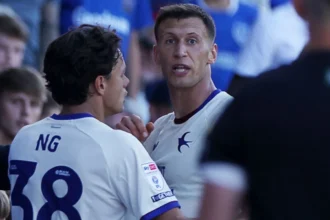
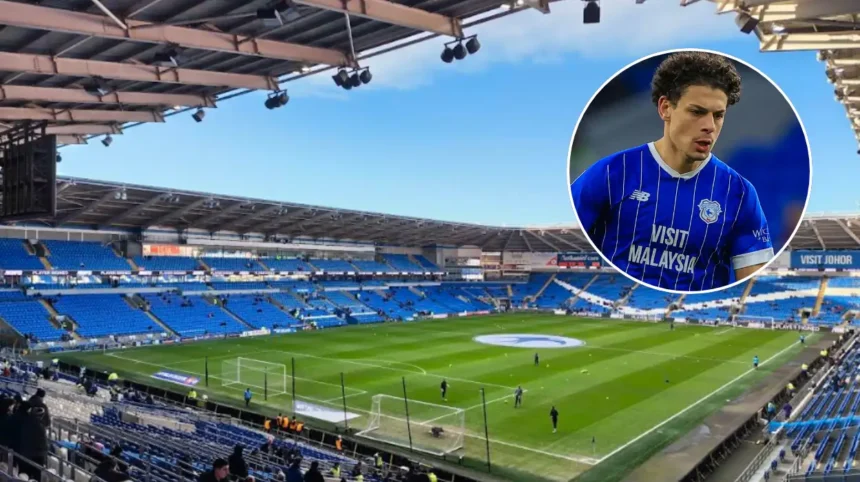
Cardiff City Stadium, (Cardiff Daily) April 15, 2026 –Yousef Salech has spoken openly about the “fear” and mental strain that accompanied his return to competitive action for Cardiff City, describing the process as tougher than he initially expected. As reported by WalesOnline on Wednesday, 15 April 2026, the 24‑year‑old forward came off the bench in Cardiff’s 1–1 draw with Huddersfield Town and scored a late headed equaliser, marking his first meaningful appearance after a three‑month absence caused by a neck and chest injury.
- Key Points
- How has Cardiff City managed Salech’s rehabilitation?
- How is Cardiff City’s attack looking after the Salech return?
- What is the latest update on Dylan Lawlor’s injury?
- How have Cardiff coaches and staff framed these developments?
- Background to this development
- Prediction for how this development can affect the audience
In his post‑match comments, Salech told the publication:
“It’s tough. It’s my first time going through this, so I didn’t really know what to expect. Especially with the pain and the anxiety surrounding it.”
He added that he was “really grateful” to the club for its support and “thrilled to be back” on the pitch, underscoring both the emotional and physical weight of his rehabilitation.
How has Cardiff City managed Salech’s rehabilitation?
According to WalesOnline, Cardiff’s coaching team focused heavily on reintegrating Salech into match‑like physical confrontations, particularly those involving aerial duels and tight pressing situations that are characteristic of his role as a central striker.
The report notes that Salech said staff helped him “feel at ease” when returning to contact work, allowing him to gradually rebuild confidence in his neck and chest area after the initial October incident.
Earlier coverage in BBC Sport had already outlined the seriousness of the injury, explaining that Salech sustained ligament damage in his neck during a collision in Cardiff’s 1–1 draw with Stockport County on 24 January 2026.
The club’s head coach, Brian Barry‑Murphy, stated at the time that Salech was “not close” to a return and urged supporters to be patient, a line he reiterated in subsequent updates as the player progressed to light training and then to limited match‑time.
How is Cardiff City’s attack looking after the Salech return?
Coverage in WalesOnline assessed Salech’s Impact Sub role against Huddersfield as “promising” rather than immediately decisive, noting that his goal was a product of timing and instinct rather than a fully restored match rhythm.
The article highlights that the club will now monitor how his body reacts to such late‑minute exertions over the coming fixtures, with the coaching staff wary of overloading him in the short term.
Elsewhere, Yahoo Sports reported earlier in April that Salech had been “targeting a return to action in April” following “positive updates” on his neck and chest complaints, suggesting that the club’s medical team had cautiously ramped up his workload in the weeks leading up to the Huddersfield match.
Those reports also indicated that Salech had missed at least nine League One fixtures during his absence, a spell that coincided with Cardiff’s fluctuating attacking form and prompted calls from sections of the support for a rapid readjustment of the forward line.
What is the latest update on Dylan Lawlor’s injury?
Alongside the Salech news, Cardiff fans also received fresh information on the fitness status of defender Dylan Lawlor, whose recent international involvement with Wales was interrupted by a muscle issue.
As outlined in BBC and club‑linked coverage, Lawlor was substituted just 15 minutes after coming on as a second‑half substitute for Wales in a 1–1 draw with Northern Ireland, raising concerns about the nature and severity of the problem.
WalesOnline’s Cardiff‑focused bulletin on 15 April explicitly noted that an “injury update” had been issued regarding Lawlor, although the precise diagnosis and expected recovery timeline were not fully detailed in the public summary.
Earlier reports from club‑watch outlets had indicated that Lawlor and midfielder Omari Kellyman had both been “assessed” in the run‑up to certain fixtures, with manager Barry‑Murphy stating that neither player had trained fully in the days leading to some weekend fixtures.
How have Cardiff coaches and staff framed these developments?
Observations from BBC Sport and WalesOnline show that Cardiff’s medical and coaching staff have consistently downplayed the risk of a repeat of the original neck trauma, stressing that scans taken after the Stockport incident ruled out life‑threatening or long‑term structural damage.
Barry‑Murphy has repeatedly urged supporters to treat Salech’s return as a “gradual” process, reminding them that even when the player is technically fit, it may take several weeks to restore his sharpness and confidence in one‑on‑one battles.
In the context of Lawlor, the club has similarly emphasised caution, with reports suggesting that the coaching team are monitoring his workload closely ahead of a busy run‑in in League One.
As WalesOnline summarised, the dual focus on Salech’s mental and physical acclimatisation and Lawlor’s muscular recovery reflects a broader strategy of managing key players’ fitness during the final stages of the campaign.
Background to this development
The current focus on Yousef Salech’s return and Dylan Lawlor’s latest injury stems from a series of earlier incidents and strategic decisions at Cardiff City. Salech first sustained his neck and chest injury during a competitive clash with Stockport County in late January 2026, an episode that required prolonged on‑pitch medical attention and hospital scans to rule out serious damage. Following those assessments, the club’s medical staff opted for a conservative rehabilitation path, keeping him out of training and competitive action for several weeks while gradually reintroducing light work.
In parallel, Dylan Lawlor’s role had grown both at club level and for the Welsh national side, making any disruption to his availability a notable concern for Cardiff’s defensive plans.
His substitution in the international match against Northern Ireland, followed by subsequent club‑watch coverage, prompted fans and media alike to scrutinise the robustness of Cardiff’s defensive options as the season neared its decisive phase. Against this backdrop, the club’s recent statements on both players have been framed as efforts to balance optimism about returns with transparent messaging about the risks of rushing back from injury.
Prediction for how this development can affect the audience
For Cardiff City fans and stakeholders, the dual narratives around Salech’s emotional and physical comeback and Lawlor’s fresh injury setback are likely to shape match‑day expectations and tactical discussions in the coming weeks. Supporters may see Salech’s return as a psychological boost, particularly if he can maintain goal‑threat from a substitute or limited‑starts role, but may also push for more cautious management of his minutes to avoid relapse.