Key Points
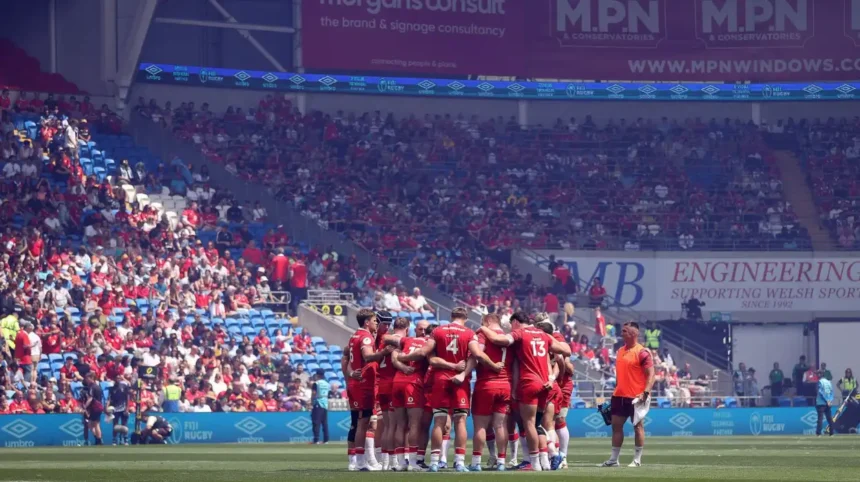
- Squad Representation: Four Cardiff Rugby players have been selected in the Wales matchday squad to face Japan in the upcoming Nations Championship clash at the Principality Stadium.
- Midfield Overhaul: Wales head coach Steve Tandy has made major alterations to his team, ripping up his previous midfield configuration by naming Max Llewellyn and Eddie James as the starting centre partnership.
- Fly-Half Selection: Sam Costelow has been given the nod at fly-half (No. 10), edging out Dan Edwards for the starting jersey.
- Pack and Front-Row Updates: Nicky Smith and Archie Griffin start in the front row alongside captain and hooker Dewi Lake, while lock Dafydd Jenkins returns after recovering from a knee injury.
- Bench Inclusion: Among the replacements, young talent Louie Hennessey has been handed an opportunity to secure his first Test cap on home soil.
Cardiff, Wales (Cardiff Daily) November 5, 2026 — Four standout representatives from Cardiff Rugby have been officially named in the Wales matchday squad as head coach Steve Tandy dramatically reshapes his team ahead of their high-stakes Nations Championship fixture against Japan at the Principality Stadium. The fixture marks a crucial juncture for the national side as they return to home turf to kick off the next phase of their campaign. Tandy’s selections signal a distinct tactical shift, particularly in the midfield, where long-standing combinations have been abandoned in favour of a powerful new partnership designed to inject fresh momentum into the Welsh backline.
Who Has Been Selected in the Wales Matchday Squad to Face Japan?
The official team announcement revealed a blend of experienced internationals and exciting emerging talent. As reported by WalesOnline correspondent Ben James, Wales head coach Steve Tandy has made sweeping changes to his lineup, most notably tearing up his preferred dual-playmaker approach in midfield.
The starting XV features Blair Murray at full-back, flanked by Louis Rees-Zammit and Josh Adams on the wings. In the half-backs, Sam Costelow has been selected at fly-half, combining with scrum-half Tomos Williams.
The forward pack boasts significant power and experience. In the front row, Nicky Smith and Archie Griffin pack down alongside captain and hooker Dewi Lake. In the second row, Dafydd Jenkins has been passed fit to start after overcoming a knee injury that forced him to miss Exeter Chiefs’ recent Premiership fixture against Harlequins, lining up alongside Ben Carter. The back row comprises Alex Mann moving to openside flanker, Jac Morgan, and Aaron Wainwright.
The replacement bench includes Ryan Elias, Rhys Carré, Tomas Francis, Teddy Williams, James Botham, Reuben Morgan-Williams, Dan Edwards, and Louie Hennessey.
What Led to Steve Tandy’s Midfield Rework?
The most striking talking point of the team announcement is Steve Tandy’s decision to completely overhaul his midfield. As detailed by WalesOnline journalist Ben James, Max Llewellyn and Eddie James are set to form a powerful centre partnership at numbers 12 and 13. This selection represents a stark departure from the dual-playmaker strategy previously favoured by attack coach Matt Sherratt.
As reported by Planet Rugby writer Louis Chapman Coombe, this pairing of James and Llewellyn constitutes Wales’ third different centre combination in four Test matches, highlighting Tandy’s ongoing evaluation of his midfield options. Discussing his squad selections and the necessity to evaluate player development ahead of future global tournaments, Steve Tandy stated:
“If we have to change one or two things before the World Cup, this is the time to do it.”
Tandy also elaborated on the fierce competition within the squad and the specific physical attributes that influenced his selection, noting Max Llewellyn’s recent trajectory:
“You can’t look away from Max’s form since he’s come back. It’s been really competitive in training with the other boys as well. I think there’s elements to every player with different strands. Some of Max’s defence has been excellent and he’s good on the ball. We are confident we can get exactly what we want from Max.”
How Are the Opposition Approaching the Test Match?
Addressing the media ahead of the weekend showdown, head coach Steve Tandy offered a respectful assessment of the Japanese national team. Recognizing their structural evolution and tactical threats, Tandy noted:
“I think Japan are getting very consistent. The Japanese players are skillful. You can see the growth and play a fast game. Coached well by Eddie [Jones] and it will be a tough Test match. We face a tough challenge on the weekend.”
Reflecting on the overarching goals of the squad following a demanding summer series, Tandy emphasized the importance of imposing a distinct Welsh identity on the game. He remarked:
“We’re excited to be back at home. We want to go out there on Saturday, put our mark on the match and start the next phase in our Nations Championship campaign strongly.”
Background of the Particular Development
The selection of the Cardiff Rugby quartet and the subsequent tactical restructuring by head coach Steve Tandy arrive against a backdrop of transition and intense competitive pressure for Welsh rugby. Over recent international windows, the national coaching staff has faced mounting scrutiny to find a winning formula that bridges structural depth with immediate Test-match competitiveness. Following a rigorous summer series that highlighted areas requiring evolution, the coaching ticket has actively sought out club form, physical gainline dominance, and defensive resilience.
Midfield combinations, in particular, have been a focal point of experimentation as Wales attempts to balance creative distribution with direct physical carrying power. The integration of club combinations and players showing peak domestic form—such as those representing Cardiff Rugby—reflects an ongoing strategy to establish cohesion, improve player familiarity, and test alternative tactical blueprints with an eye on long-term international milestones.
Prediction
This strategic development and squad selection carry significant implications for the Welsh team and its loyal supporters. By opting for a more direct, physically imposing midfield partnership alongside energetic forward combinations, Wales aims to stifle Japan’s trademark high-tempo, expansive attack through suffocating defensive pressure and territory control. For the fans and the wider Welsh rugby community, this match serves as a crucial litmus test: a successful execution could validate Tandy’s willingness to disrupt established norms and usher in a more dynamic era. Conversely, any lack of fluency in the newly formed midfield axis could expose vulnerabilities against a well-drilled, highly skilled Japanese outfit, making an immediate statement performance vital for restoring home confidence and momentum in the Nations Championship.