Key Points
- Cardiff Council has rolled out an infrastructure programme encompassing 20 bus stop schemes across several local areas.
- The initiative is financially supported by the Welsh Government’s Local Transport Fund.
- Physical works officially commenced on October 19 and are scheduled to reach full completion by December 2.
- Targeted neighborhoods include Rhiwbina, Llandaff, Llanishen, and Radyr.
- Specific streets designated for upgrades involve Heol Uchaf, Wenallt Road, Heol Llanishen Fach, Western Avenue, Fidlas Road, and Drysgol Road.
- The project aims to provide buses with better pullover clearance while empowering local authorities to enforce penalties against obstructed stops.
Cardiff (Cardiff Daily) November 5, 2026 — A fresh round of infrastructure upgrades has been launched across multiple districts in the Welsh capital to counter the persistent issue of vehicles blocking public transport pickup points.
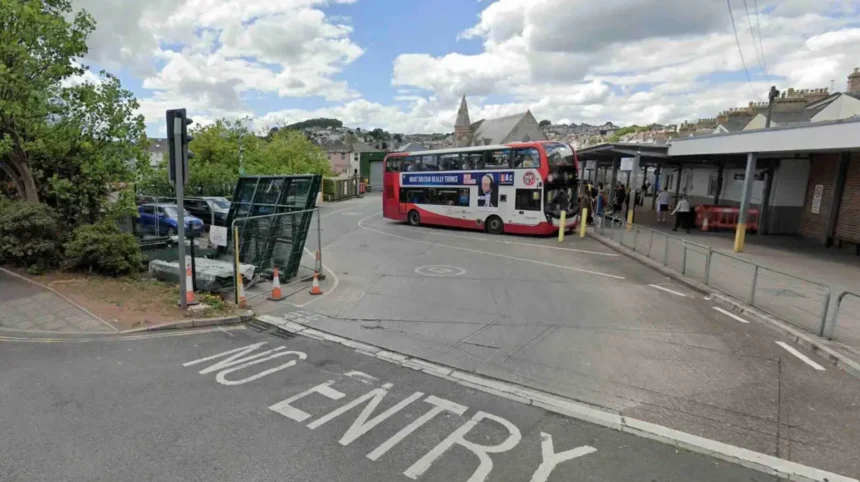
As reported by staff writers at Nation. Cymru, new road markings and layout modifications are actively being introduced at various bus stops throughout Cardiff. The initiative is part of an extensive municipal strategy engineered to combat inconsiderate parking, which frequently prevents public service vehicles from accessing the curb safely and forces commuters to board from unsafe road positions. Kieran Molloy of WalesOnline further detailed that the physical overhaul spans a total of 20 distinct bus stop schemes designed to ease public transit access for elderly citizens, disabled passengers, parents with prams, and other vulnerable travelers.
What Locations Are Included in the Cardiff Bus Stop Improvement Programme?
The municipal works program targets several suburban corridors across Cardiff. According to scheduling details published by regional news outlets, the targeted neighborhoods encompass Rhiwbina, Llandaff, Llanishen, and Radyr.
Specific thoroughfares designated for the upgrades include Heol Uchaf, Wenallt Road, and Heol Llanishen Fach located within Rhiwbina, alongside Western Avenue in Llandaff, Fidlas Road in Llanishen, and Drysgol Road in Radyr. Municipal records confirm that several of these roads feature multiple sequential schemes due to the extensive nature of the pavement and road layout reconstructions. Upcoming construction phases include scheduled interventions on Drysgol Road running through November 3 to 9, Heol Llanishen Fach from November 5 to 11, and Fidlas Road across two separate windows from November 5 to 10 and November 10 to 16.
How Will the New Layouts and Markings Deter Inconsiderate Parking?
The primary operational purpose of the modifications is to create expanded clearance zones that allow buses to dock parallel to the curb. By redefining road markings and adjusting the physical confines of the stops, the council intends to strip away ambiguous parking spaces that motorists frequently exploit.
As reported by Kieran Molloy of WalesOnline, the construction phase commenced on October 19, with project completion slated for December 2. Councillor Dan De’Ath, Cabinet Member for Climate Change, Transport and Strategic Planning, emphasized that the engineering adjustments serve a dual purpose of passenger accessibility and legal accountability. Councillor Dan De’Ath stated that
“These improvements will make it safer and easier for people to board their bus at these locations”.
He added that
“They will give buses more space to pull in, while also helping to ensure that enforcement action can be taken when bus stops are obstructed by inconsiderate parking”.
Furthermore, municipal authorities note that the structural changes establish clear statutory boundaries, making it straightforward for civil enforcement officers to issue penalty charge notices to motorists who leave their vehicles idling or parked illegally inside designated bus bays.
What Are the Expected Benefits for Everyday Public Transport Passengers?
Transport planners and municipal leaders anticipate that removing physical obstructions from bus corridors will yield immediate dividends for network punctuality. When buses are blocked by selfishly parked vehicles, drivers are forced to maneuver into active traffic lanes or halt mid-road, creating sudden bottlenecks and delaying timetables across entire routes.
Highlighting the broader impact on the community, Councillor Dan De’Ath stated that
“The work will make a real difference for passengers who rely on buses every day”.
He further noted that
“By making bus stops safer and easier to use, we are helping to make bus travel more reliable and a better public transport option for everyone”.
Local transport advocates have consistently pointed out that improved accessibility is essential for encouraging modal shift away from private automobiles, aligning with wider Welsh climate goals to reduce urban congestion and carbon emissions.
Background of the Particular Development
The current intervention builds on a long-standing challenge faced by urban transport authorities across the United Kingdom regarding pavement obstruction and illegal parking around public transit nodes. Local authorities have historically struggled with enforcement due to ambiguous road layouts, worn-out advisory signage, and a lack of clear statutory backing to penalize motorists quickly. In Cardiff, rapid suburban growth and increased vehicle ownership density have exacerbated competition for curbside space, particularly in residential commercial hubs like Rhiwbina and Llanishen. By securing capital support through the Welsh Government’s Local Transport Fund, Cardiff Council initiated this targeted engineering sweep to systematically upgrade aging infrastructure, ensuring that public transit networks can operate at higher efficiency without being bottlenecked by localized driver indiscipline.
Prediction
This infrastructure development is expected to positively impact daily commuters, local bus operators, and vulnerable pedestrians residing across Cardiff. For passengers, the elimination of curbside obstructions will translate into shorter dwell times at stops, smoother wheelchair and pram boarding, and more reliable timetable adherence. For local bus companies, reducing the frequency of blocked stops minimizes sudden route disruptions and decreases operational friction. However, local motorists in Rhiwbina, Llandaff, Llanishen, and Radyr will face stricter enforcement and a complete loss of informal parking spots near junctions and stops, necessitating greater adherence to parking regulations to avoid municipal fines.