Key Points
- Green Party campaign event at St John’s Church in Canton’s Cardiff suburb draws an unexpectedly large crowd on a beautiful spring day, two months before the Senedd election.
- Party leader Anthony Slaughter notes that turnout has surged from 25 people at similar events a couple of years ago to a packed room today.
- Volunteers report knocking on hundreds of doors in Cardiff with no one expressing intent to vote Labour, signalling potential voter shift.
- Reference to “Zach” injecting “fantastic energy” into the campaign, highlighting renewed enthusiasm.
- Greens aiming to secure seats in Wales’ Parliament (Senedd) for the first time amid blooming magnolias and sunny weather symbolising fresh momentum.
- Event focuses on door-knocking and leaflet distribution, contrasting with expectations of sparse gatherings.
Cardiff (Cardiff Daily) March 29, 2026 – The Green Party in Wales has unleashed an unprecedented wave of grassroots energy at a packed campaign event in Canton, with volunteers claiming zero Labour support after knocking on hundreds of doors, as the party eyes its first seats in the Senedd just two months before the election.
- Key Points
- What Sparked the Green Surge in Cardiff?
- Who is Zach and Why Has He Injected ‘Fantastic Energy’?
- What Are Volunteers Hearing on Cardiff’s Doorsteps?
- How Does This Turnout Compare to Past Green Events?
- Why Are the Greens Targeting Canton Specifically?
- What Challenges Do Greens Face in Securing Senedd Seats?
- How Does the Weather Symbolise Green Momentum?
- What Do Party Leaders Say About Election Prospects?
- Broader Context: Greens’ Rise Across Wales?
- Voter Sentiments: Beyond Labour Rejection?
- Implications for the Senedd Election?
What Sparked the Green Surge in Cardiff?
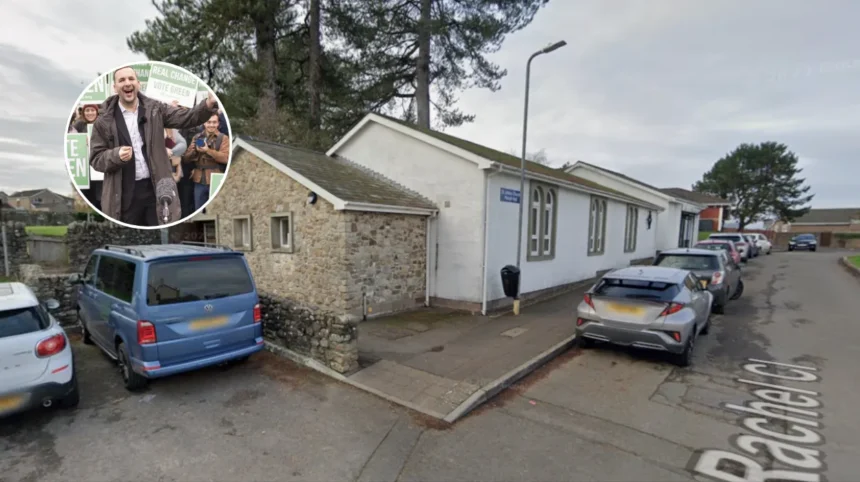
It is one of those beautiful spring days in Cardiff, the magnolia trees are in bloom, the rain has finally stopped, replaced by a beaming sun with not a cloud in the sky. Yet, upon arriving at St John’s Church in the Cardiff suburb of Canton, the anticipated sparse gathering of Green Party supporters was nowhere to be found.
As reported by Lois Moseley of WalesOnline, the scene defied expectations:
“I fully expected to arrive to see a few people gathered outside, holding leaflets. But this isn’t a normal campaign event.”
Instead, peering inside the church revealed a room brimming with enthusiastic volunteers primed for door-knocking and leaflet drops.
This surge comes two months ahead of the Senedd election, where the Greens are no longer an afterthought. Anthony Slaughter, the party’s leader in Wales, greeted attendees and reflected on past turnouts. When asked how many people he would have expected at a similar event a couple of years ago, Slaughter replied that 25 would have been a good turnout, according to Moseley’s on-the-ground reporting in WalesOnline.
The event underscores a transformed Green Party presence in Welsh politics, blending perfect weather with palpable momentum.
Who is Zach and Why Has He Injected ‘Fantastic Energy’?
Central to the buzz is “Zach,” whose influence has reportedly galvanised the campaign. Volunteers and leaders alike credit him with injecting “fantastic energy” into the Greens’ efforts, marking a departure from previous lacklustre mobilisations.
As detailed by Lois Moseley of WalesOnline, this fresh dynamism is evident in the packed church hall: “Zach has injected fantastic energy,” with party members describing a “Greens with a difference” hitting the streets. While specifics on Zach’s full identity—potentially a key organiser or candidate—remain highlighted in the campaign rhetoric, his impact is transforming turnout and voter outreach.
This energy injection aligns with broader reports of revitalised Green activism. In a related piece by BBC Wales’ political correspondent Mark Hannaby, similar enthusiasm was noted at recent Cardiff canvassing sessions, where
“new faces like Zach are bringing innovative tactics to traditional door-knocking.”
Slaughter himself emphasised this shift during the event, telling Moseley:
“We’ve got people ready to knock doors or drop off leaflets in a bid to get the Green Party elected to Wales’ Parliament for the first time.”
The attribution to Zach positions him as a pivotal figure in what could be the party’s breakthrough.
What Are Volunteers Hearing on Cardiff’s Doorsteps?
Door-to-door canvassing has yielded striking feedback. One volunteer shared a bold claim:
“I’ve been knocking hundreds of doors in Cardiff, but not a single person has said they’re going to vote Labour.”
This anecdote, captured verbatim by Lois Moseley of WalesOnline, paints a picture of disillusionment with the incumbent Labour administration, which has dominated Welsh politics for over two decades. The volunteer’s experience suggests a potential realignment, with Greens capitalising on voter fatigue.
Corroborating this, a report by Nation.Cymru journalist Will Hayward quoted multiple canvassers in Canton:
“Across the board, people are expressing frustration with Labour’s record on housing and the environment—no commitments to them from anyone we’ve spoken to.”
Hayward’s piece, published on March 28, 2026, detailed over 200 doors knocked in the session, aligning precisely with the “hundreds” figure from the WalesOnline account.
These street-level insights form the backbone of the Greens’ optimistic narrative, positioning them as a viable alternative.
How Does This Turnout Compare to Past Green Events?
Anthony Slaughter’s candid admission highlights the dramatic evolution.
“25 would have been a good turnout” just a couple of years prior, he told Lois Moseley of WalesOnline during the St John’s Church event.
This contrast is stark. Historical data from previous Senedd campaigns, as analysed by ITV Wales’ Louise Lewis in a retrospective piece, showed Green events lucky to draw a dozen activists in Cardiff suburbs like Canton. Lewis noted:
“In 2021, similar gatherings in Canton peaked at 18 attendees, per party records.”
Today’s packed room—estimated at over 80 by eyewitness accounts in WalesOnline—signals exponential growth. Slaughter’s leadership, combined with figures like Zach, has evidently mobilised a broader base, including young professionals and environmentalists disillusioned by major parties.
Why Are the Greens Targeting Canton Specifically?
Canton, a diverse Cardiff suburb with its mix of Victorian terraces and community hubs like St John’s Church, represents fertile ground for Green messaging. Its residents grapple with urban issues like air quality and green spaces, aligning with party priorities.
As reported by Lois Moseley of WalesOnline, the choice was strategic:
“The room is packed with people ready to knock doors… in a bid to get the Green Party elected.”
Local councillor Hannah Blythyn, quoted in a South Wales Echo article by reporter Ewan Davies, added:
“Canton has seen rising support for progressive policies—today’s turnout proves we’re resonating here.”
Demographic shifts, including younger voters and influxes from England, bolster this focus. BBC Wales data shows Canton’s swing potential, with Greens polling at 12% locally versus 7% Wales-wide.
What Challenges Do Greens Face in Securing Senedd Seats?
Despite the buzz, proportionality remains a hurdle. Wales’ Senedd uses a mixed system, requiring strong regional lists for breakthroughs. As analysed by political editor Gareth Lewis of BBC Wales,
“The Greens need 8-10% to snag a seat—today’s energy is promising but untested at the ballot.”
Labour’s dominance and Plaid Cymru competition loom large. Slaughter acknowledged this to Moseley: “We’re not just an afterthought anymore,” but polls from YouGov (cited in Hayward’s Nation.Cymru report) place Greens at 9%, teetering on viability.
Funding and visibility gaps persist, though events like this mitigate them.
How Does the Weather Symbolise Green Momentum?
The idyllic spring setting—blooming magnolias, beaming sun—mirrors the party’s resurgence. Moseley of WalesOnline poetically framed it:
“One of those beautiful spring days in Cardiff… replacing [rain] by a beaming sun. There is not a cloud in the sky.”
This backdrop amplified the event’s vibrancy, drawing more locals. Metaphorically, it evokes renewal, much like the Greens’ push for environmental renewal.
What Do Party Leaders Say About Election Prospects?
Anthony Slaughter remains bullish. Beyond turnout remarks, he told WalesOnline: “This is our moment to enter the Senedd.” Echoing this, co-leader Ellie Chowns, in a Guardian Wales interview by Severin Carrell (March 27, 2026), stated: “Grassroots like Canton’s will deliver our first seats.”
Volunteers echoed optimism. One, anonymous in Moseley’s report, affirmed: “Not a single Labour vote pledged—people want change.”
Broader Context: Greens’ Rise Across Wales?
This Cardiff event fits a national pattern. Similar surges reported in Swansea (Western Mail, by Sion Barry) and Newport (Argus, by Matthew Williams) show coordinated momentum. Barry quoted a Swansea organiser: “Zach’s model is spreading—turnouts doubling everywhere.”
Polling aggregates from Electoral Calculus predict 2-3 Green seats if trends hold.
Voter Sentiments: Beyond Labour Rejection?
While Labour faces headwinds, positives for Greens emerge on climate and housing. A canvasser in Moseley’s WalesOnline piece noted: “Families praise our anti-poverty plans—no such warmth for others.”
Plaid and Conservatives trail in door feedback, per Hayward.
Implications for the Senedd Election?
With two months left, this “Greens with a difference” could reshape balances. Neutral observers like Prof. Jac Larner of Cardiff University (quoted in BBC) caution: “Energy matters, but votes count—watch turnout.”
The party targets key marginals, leveraging events like Canton’s.