Key Points
- Cardiff Council is installing 36 new smart, secure bike lockers in the city centre as part of a second‑phase rollout.
- A further 14 lockers are planned for locations outside the centre, including Victoria Park in Canton, Turning Head car park in Riverside, and the Albany Road/Wellfield Road junction in Plasnewydd, bringing the total to 51 new units.
- The lockers are being supplied and operated by BikeDok under a five‑year contract with Cardiff Council.
- The units are solar‑powered and have been awarded the highest security rating by Sold Secure, making them one of the most secure smart bicycle locker systems in the UK.
- Cyclists access the lockers via a mobile app, booking and unlocking spaces remotely; the system charges £1.50 per day, £7.50 per week or £20 per month.
- The council says the expansion aims to reduce bike theft and improve facilities for cyclists, following criticism over stolen bikes in the city centre.
- During project planning, the council worked closely with South Wales Police and security experts to ensure the lockers are safe and cannot be misused.
Cardiff (Cardiff Daily) April 14, 2026 – Cardiff Council has launched the second phase of a smart bike‑locker scheme aimed at expanding secure cycle parking in the city centre, with 36 new lockers set to be installed at key locations over the coming weeks. The project marks an extension of last year’s initial rollout, which introduced a network of secure bike storage units to address rising concern over bicycle thefts in the Welsh capital.
The expansion follows the council’s appointment of BikeDok as operator under a five‑year contract, which will see the company install and manage 51 new secure cycle parking units across central and suburban areas. As reported by Business News Wales, the second phase adds 36 lockers in the city centre, with 14 more earmarked for Victoria Park in Canton, Turning Head car park in Riverside, and the Albany Road/Wellfield Road junction in Plasnewydd. This move is explicitly framed as part of a wider plan to “tackle bike thefts” and encourage more people to cycle by offering safer, more reliable storage.
Where will the new lockers be located?
Within the city centre, six lockers each will be placed at the National Museum Cardiff, Queen Street West, Park Place, Hills Street, Central Library and St Mary Street, according to Nation.Cymru. These clusters are chosen to serve high‑footfall areas where commuters, shoppers and visitors are most likely to park bicycles for extended periods, the outlet notes. Outside the core, the additional 14 units will sit in popular residential and green‑space locations, including Victoria Park and the Turning Head car park, widening secure access for residents who live beyond the immediate city core.
The council has stated that the rollout is designed to complement, rather than replace, existing free cycle stands; conventional bike racks will remain in place for those who do not wish to pay for secure parking. City officials have emphasised that the two‑tier system – free basic stands and paid secure lockers – aims to give cyclists a choice depending on how long they plan to leave their bikes and their appetite for additional protection.
How the smart locker system works for cyclists
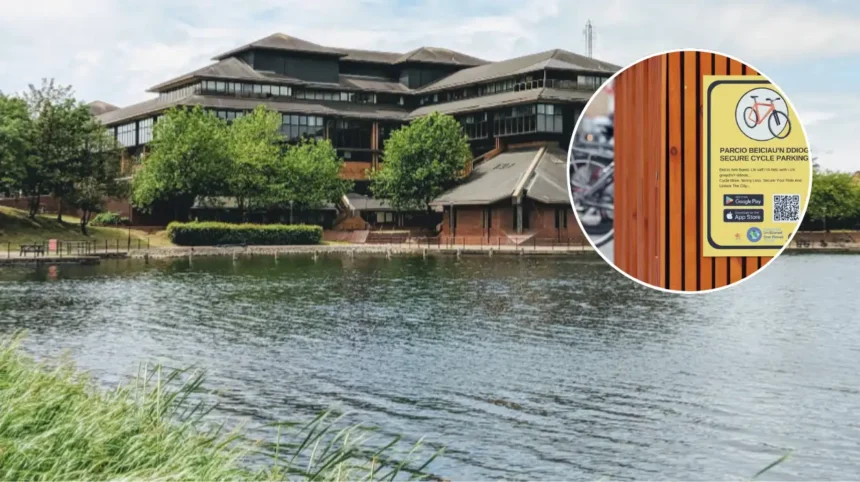
To use the new lockers, cyclists must download the BikeDok app, register an account, and book a space in advance, Business News Wales explains. Once a booking is confirmed, the locker door can be unlocked remotely via the app, monitored by an internal security system that logs entry and exit. The system is completely solar‑powered, eliminating the need for connections to the mains electricity grid and reducing both installation time and infrastructure costs.
Users are charged £1.50 per day, £7.50 per week or £20 per month for access to the lockers, prices that have been reported by multiple outlets including Nation.Cymru and WalesOnline. The council has described these tariffs as “a small cost” intended to provide “peace of mind” while cyclists shop, work or use public transport in the city centre. BikeDok itself notes that its locker design has achieved the highest security rating from Sold Secure, positioning it as one of the most robust smart bicycle storage systems on the UK market.
Security and collaboration with police
Throughout project planning, the council says it worked closely with South Wales Police and security experts to ensure the lockers are resistant to vandalism, tampering and misuse. As reported by WalesOnline, this collaboration was driven by mounting concern over the number of bike thefts in Cardiff, particularly in central areas where commuters and visitors commonly leave cycles unattended. Police have welcomed the expansion as a practical measure that could help reduce opportunistic thefts and ease the administrative burden placed on victims reporting stolen bikes.
The secure rating from Sold Secure – a widely recognised benchmark for physical security products – is cited by BikeDok and several news outlets as a key technical feature of the scheme. This standard covers testing for resistance to tools, brute‑force attacks and other methods commonly used by thieves, and the council has stressed that the locker design has been reviewed against these criteria. The integration of CCTV‑style monitoring within the centralised system is also highlighted as a deterrent, though exact camera arrangements are detailed in the operator’s own technical specifications rather than in the mainstream coverage.
Background of the development
The installation of smart bike lockers in Cardiff forms part of a broader push to increase cycling uptake and reduce car dependence in the city, building on earlier cycling‑infrastructure projects and parking‑upgrade schemes. Free secure cycle parking and upgraded cycle‑lane networks have featured in Cardiff Council’s transport strategies since the mid‑2020s, with the aim of aligning with the Welsh Government’s wider active‑travel goals.
Last year, the first phase of locker‑style secure parking was introduced in response to local complaints and media coverage about rising bike‑theft incidents, particularly around Cardiff’s central business district and main transport hubs. That initial rollout tested public appetite for paid, app‑based secure storage and informed the decision to expand the system with a second wave of 51 units this year. The choice of BikeDok, a UK‑based provider of smart bike‑locker systems, followed a tender process in which the company’s security rating and solar‑powered design were given particular weight.
Prediction: How this development could affect different audiences
For everyday cyclists in Cardiff, the expanded locker network could make it noticeably safer and more convenient to leave bikes in the city centre for work, shopping or leisure, especially for those owning higher‑value or e‑bikes. The app‑based booking system may, however, create a barrier for older or less tech‑savvy users who prefer traditional racks, which is why the council has emphasised that free stands will remain available. Over time, a reduction in reported thefts could increase confidence in cycling, potentially encouraging more people to switch from cars or buses for short‑distance trips.
For local businesses and transport hubs, secure bike parking may help attract employees and customers who rely on cycling, particularly as companies adjust to flexible working and hybrid‑commute patterns. Retailers and employers located near the new locker clusters on Park Place, St Mary Street and around the Central Library may see a modest uplift in footfall from cyclists who are more willing to leave bikes in a rated‑secure facility. At the same time, if prices or usage rules remain stable, the model could become a template for other Welsh cities and smaller towns considering similar schemes.
For city planners and transport authorities beyond Cardiff, the project offers a case study in how smart‑locker schemes can be integrated with existing cycling infrastructure, police input and public‑facing tariffs. The use of solar‑powered units and the Sold Secure rating may influence future procurement decisions, especially where trenching for mains‑electric power is expensive or disruptive. If the expanded network demonstrably reduces thefts over the next two to three years, it could shift the policy debate in favour of more paid secure‑parking options alongside traditional free racks across the UK.