Key Points
- Cardiff Council becomes the first in Wales to endorse the global Fossil Fuel Non-Proliferation Treaty, aimed at phasing out fossil fuels worldwide.
- Local Eco Churches, including Beulah United Reformed Church (URC), City URC, and Canton Uniting Church, campaigned for months through meetings with councillors, letters, events, speakers, and creative initiatives.
- Cardiff Eco Churches operates as an ecumenical network committed to environmental stewardship via the A Rocha Eco Church scheme.
- The treaty seeks a binding plan to address threats from oil, gas, and coal, including climate change, health crises, security, and economic instability.
- Eighteen nations have joined discussions to negotiate the treaty as a complement to the Paris Agreement.
- Protests occurred outside County Hall with partners like Climate Cymru, Global Justice Now, local Methodist churches, and the Church in Wales.
- Revd David Salsbury, Moderator of Yr Eglwys Ddiwygiedig Unedig, Synod Cenedlaethol Cymru (URC National Synod of Wales), stated that churches standing together can influence change at the highest level.
- Efforts tied into the Climate Coalition’s Show the Love campaign in February, involving letters, activists, conversations, and junior church members making Cymru Cares lanterns.
- Eileen Newington, National Synod of Wales Green Advocate, noted the treaty’s role in protecting against flooding and extreme weather in Wales.
- Sass Adams, Communications Officer for the National Synod of Wales, highlighted that persistent church efforts lead to change.
- Cardiff joins cities like London, Edinburgh, and Birmingham in supporting the initiative.
- A short video from Climate Cymru on Instagram captures the event atmosphere.
Cardiff (Cardiff Daily) – April 20, 2026 –
- Key Points
- Why Did Cardiff Churches Campaign for the Fossil Fuel Non-Proliferation Treaty?
- Which Nations Have Joined the Fossil Fuel Non-Proliferation Treaty Initiative?
- What Role Did Faith Play in Cardiff’s Climate Advocacy?
- How Did Local Partnerships Amplify the Campaign?
- Background of the Development
- Prediction for Cardiff Residents and Welsh Communities
Why Did Cardiff Churches Campaign for the Fossil Fuel Non-Proliferation Treaty?
Cardiff Council has endorsed the global Fossil Fuel Non-Proliferation Treaty, marking it the first council in Wales to do so. This decision follows sustained efforts by campaigning local churches, particularly members of Cardiff Eco Churches, including Beulah United Reformed Church (URC), City URC, and Canton Uniting Church. For months, these groups collaborated by meeting councillors, writing letters, hosting events, inviting speakers, and employing creative methods to maintain focus on climate justice.
Cardiff Eco Churches functions as an ecumenical network of local churches dedicated to environmental stewardship and climate justice through the A Rocha Eco Church scheme. In March, the council voted to back the treaty, which aims to establish a concrete, robust, binding plan to shield people and the planet from threats posed by oil, gas, and coal. These threats encompass climate change, health crises, security issues, and economic instability. The initiative complements the Paris Agreement, the legally binding international treaty on climate change.
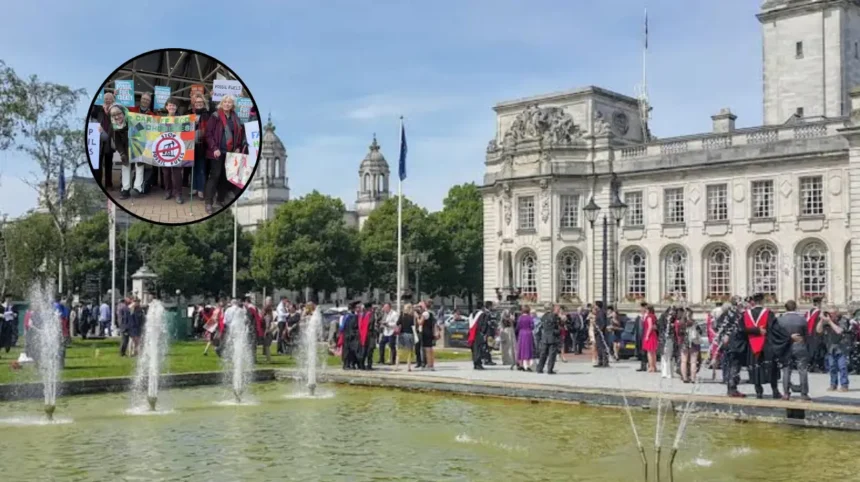
Ahead of the vote, members from Beulah URC, City URC, and Canton Uniting Church assembled outside County Hall. They joined representatives from local Methodist churches and the Church in Wales. Partners such as Climate Cymru and Global Justice Now provided support, demonstrating visible backing for the motion and its broader vision.
Which Nations Have Joined the Fossil Fuel Non-Proliferation Treaty Initiative?
Eighteen nations have already endorsed the initiative and participate in discussions to negotiate a Fossil Fuel Treaty. This positions the effort as a global call to phase out fossil fuels worldwide. Cardiff’s endorsement aligns it with cities including London, Edinburgh, and Birmingham, as well as countries worldwide responding to the climate crisis.
As reported by Sass Adams, Communications Officer for the National Synod of Wales, in coverage from the Eco Church network:
“Moments like this can feel small in the grand scheme of things, but they’re not. They’re a reminder that when churches work together, build relationships, and keep showing up, change can happen.”
The council’s decision came after voices from the community reached councillors. During the Climate Coalition’s Show the Love campaign, held each February, participants signed letters, listened to activists, and engaged in discussions on a just future. Junior church members from some churches contributed by creating Cymru Cares lanterns, which symbolically illuminated the need for action and helped sustain attention on climate justice.
What Role Did Faith Play in Cardiff’s Climate Advocacy?
Revd David Salsbury, Moderator of Yr Eglwys Ddiwygiedig Unedig, Synod Cenedlaethol Cymru (the URC National Synod of Wales), reflected on the endorsement and Eco Churches’ involvement. As quoted in the Eco Church network report:
“This decision proves that when churches stand together for creation and climate justice, their faith in action can influence change even at the highest level. By raising their voices together, Cardiff’s Eco Churches have helped light the way toward a more sustainable and hope-filled future.”
Eileen Newington, National Synod of Wales Green Advocate, addressed the urgency. In the same coverage:
“The fossil-fuelled climate emergency is already causing flooding and extreme weather in Wales. A global exit plan will help protect people here and worldwide who are already suffering the impacts of human-induced climate change. For many involved, this wasn’t just about environmental policy. It was about faith in action, caring for creation, standing with vulnerable communities, and speaking up where it matters.”
A short video shared by Climate Cymru on Instagram captures the atmosphere outside County Hall and underscores the Eco Churches’ role in the campaign.
How Did Local Partnerships Amplify the Campaign?
The collaboration extended beyond churches. Groups worked with Climate Cymru and Global Justice Now to organise the gathering outside County Hall. This partnership ensured a coordinated push ahead of the March vote. The efforts built on ongoing activities, such as those during the Show the Love campaign, where community engagement kept climate justice prominent.
Councillors responded to these inputs, leading to the motion’s passage. Cardiff’s action places it among progressive cities in the UK and globally supporting a coordinated response to the climate crisis.
Background of the Development
The Fossil Fuel Non-Proliferation Treaty emerged as a global initiative to address fossil fuel expansion. It builds on the Paris Agreement by proposing a binding mechanism to phase out oil, gas, and coal. Cardiff Eco Churches joined the A Rocha scheme, which encourages churches to adopt environmental practices. Their months-long campaign involved direct engagement with Cardiff Council, starting with meetings and letters, escalating to public demonstrations in March. This built on annual events like Show the Love, integrating faith-based advocacy with broader networks such as Climate Cymru. The council’s March vote formalised Wales’ first local endorsement, following similar moves in other UK cities.
Prediction for Cardiff Residents and Welsh Communities
This development positions Cardiff as a leader in Wales for climate policy, potentially influencing neighbouring councils to consider similar endorsements. For Cardiff residents and Welsh communities, it signals stronger local advocacy against fossil fuel reliance, which could lead to increased focus on renewable energy projects and resilience measures against flooding and extreme weather. Communities may see more church-led events and partnerships, fostering public participation in climate discussions. On a broader scale, it contributes to global pressure for the treaty, possibly accelerating national policy shifts in the UK that benefit vulnerable areas through enhanced protections and economic transitions away from fossil fuels.