Southern Co-op faces administration risk due to three years of financial losses and worsening trading conditions as of April 2026. The regional consumer co-operative operates over 300 convenience stores, funeral homes, and coffee shops across southern England, with implications for its presence in areas like Cardiff served by Co-op brands.
- What is Southern Co-op?
- What causes administration risk for Southern Co-op?
- What is Southern Co-op’s risk management structure?
- What are the main risks facing Southern Co-op administration?
- How does Southern Co-op mitigate administration risks?
- What is the history of Southern Co-op financial challenges?
- What impacts would Southern Co-op administration have on Cardiff?
- What does the proposed merger mean for administration risk?
What is Southern Co-op?
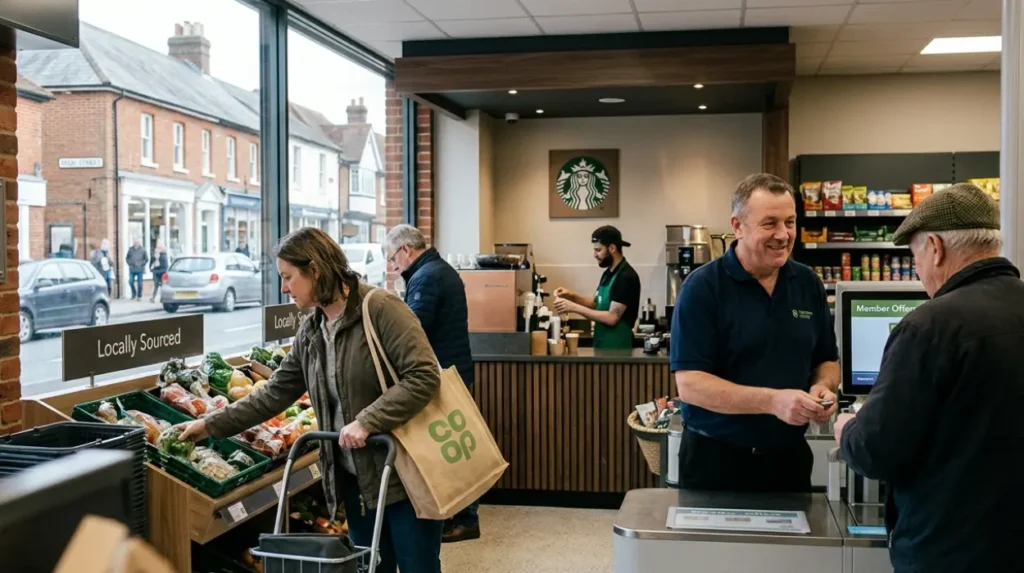
Southern Co-op is a regional consumer co-operative society in the United Kingdom that owns and operates more than 300 food retail stores, funeral homes, and Starbucks coffee franchises across southern English counties including Hampshire, Dorset, Kent, and Sussex. Members elect the Board, which sets strategy and oversees the Leadership Team to ensure compliance with co-operative rules and laws. It reported £545 million turnover in 2024 with a focus on community support and ethical sourcing.
Southern Co-op traces its roots to the co-operative movement, which began in the 19th century with Rochdale Pioneers in 1844 establishing principles of democratic member control and profit sharing. The society formalized as The Southern Co-operative Limited, governed by ‘our Rules’ approved by members. It maintains independence from national chains while relying on suppliers like The Co-operative Group for products.
Key components include the member-owned structure, where over 100,000 members hold voting rights at annual general meetings. The Board, elected from members with up to two appointed directors, handles strategic direction. Sub-committees like Audit and Risk oversee financial reporting and controls. Leadership Team manages daily operations across food retail, end-of-life services, and property.
Processes involve quarterly risk reviews across 10 directorates identifying 156 risks in 2023, calibrated into themes like cost base and competition. Members receive profit shares and influence decisions on governance. Implications extend to local economies, as store closures risk thousands of jobs.
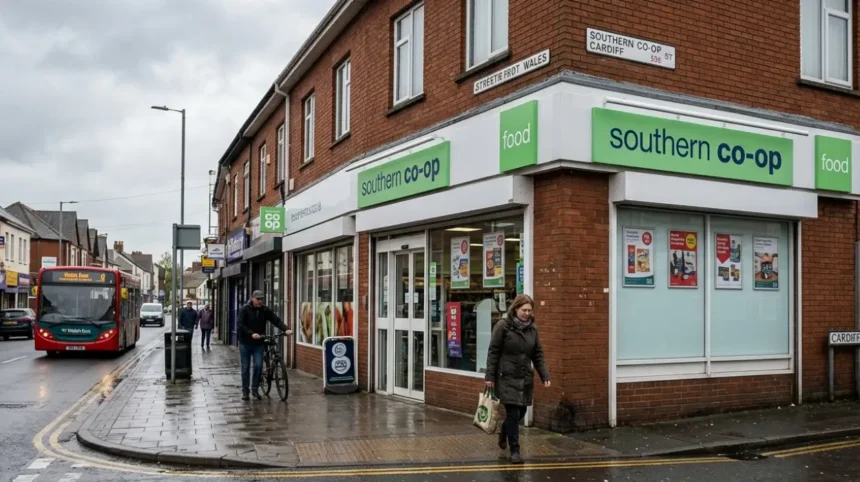
In Cardiff, Co-op stores such as Station Road (CF14 2FF) and Pontcanna Street (CF11 9HS) deliver similar convenience services, reflecting the brand’s reach into Welsh communities despite Southern Co-op’s primary southern England footprint.
What causes administration risk for Southern Co-op?
Administration risk for Southern Co-op arises from three consecutive years of operating losses, projected £20 million deficit in 2026, reliance on bank and supplier support, and worsening trading amid cost inflation and competition. Without member approval for a merger with The Co-operative Group by April 2026, the society enters insolvency proceedings under UK law, endangering 300 stores and jobs.
Macro context includes UK retail sector pressures from post-COVID recovery, energy price surges, and National Living Wage hikes. Southern Co-op posted £2.6 million loss in 2024 after £752,000 profit prior, with turnover dipping to £545 million. Gross profit fell to £172 million from £176 million.
Subtopics cover financial triggers: liquidity tightening, external funding limits, and three-year loss trend confirmed in April 22, 2026, member letter by Chair Janet Paraskeva and CEO Ben Stimson. Trading difficulties intensified over 12 months, with retail crime and operating costs rising ahead of inflation.
Mechanisms involve Insolvency Act 1986, where administration appoints an administrator to rescue the company or sell assets. Southern Co-op’s case links to failed profitability despite cost controls like IT investments and procurement efficiencies.
Implications hit suppliers, employees (thousands at risk), and communities. In broader co-op sector, principal-agent issues challenge boards lacking daily oversight. For Cardiff residents, Co-op store disruptions mirror potential supply chain breaks.
What is Southern Co-op’s risk management structure?
Southern Co-op’s risk management structure features Board oversight via the Audit and Risk Committee, which reviews financial reporting, internal controls, and principal risks quarterly. Leadership Team implements mitigation across 10 directorates identifying 156 risks annually, aligned with strategic plans and categorized by appetite levels like cautious for legal risks and open for financial ones.
The Board holds ultimate responsibility, delegating to the Audit and Risk Committee with at least three directors, including an independent chair like Lucy Knox with Deloitte experience. Committee terms, approved January 2021, monitor auditor independence and whistleblowing.
Key components include enterprise risk management principles: alignment with business planning, risk identification through workshops, robust reporting, and legal compliance. Risk appetite defines stances—open/active for operational, cautious for reputational, governance, safety.
Processes start with directorate reviews yielding themes like dependencies, legislation, skills shortage. In 2023, 20 strategic risks emerged, 12 very high (e.g., cost base from National Insurance hikes). Residual risks post-mitigation guide actions like business continuity testing.
Examples: Dependencies on Co-operative Group for food supply (very high risk, mitigated by contracts); Starbucks franchise for coffee (high risk, monitored via agreements). Implications ensure compliance but face external limits, as seen in 2024 cyber impacts on peers.
What are the main risks facing Southern Co-op administration?
Southern Co-op’s main administration risks include cost base inflation (energy, wages), supplier dependencies, skills shortages, competition, and legislation burdens, with 12 of 20 strategic risks rated very high in 2023. These compound three-year losses and liquidity strains, pushing merger as sole solvent option.
Macro pressures involve UK economic headwinds: £47 million regulatory costs like Extended Producer Responsibility and National Insurance rises in peers. Southern Co-op absorbs hits unable to fully pass to consumers.
Subtopics detail seven themes: Dependencies (Co-op Group supply failure unlikely but severe); Legislation (fire safety, RAAC in 550 properties, major cost); Skills Shortage (retail vacancies amid low unemployment, pay inflation); Change (tech lag, violence against staff); Cost Base (wage/living costs ahead of inflation); Competition (new rival stores); Business Continuity (incidents at key sites).
Data shows 156 risks identified 2023, with residual very high for cost/commodity impacts. Theft contributed to £2.6 million 2024 loss.
Implications threaten solvency without intervention. For Cardiff Co-op users, similar risks appear in convenience retail vulnerabilities.
How does Southern Co-op mitigate administration risks?
Southern Co-op mitigates administration risks through Board-set risk appetites, quarterly Leadership Team reviews, efficiencies like central office restructuring, procurement improvements, and business continuity plans tested annually. Member-voted merger with Co-operative Group via transfer of engagements secures solvency as of April 2026 vote.
Macro strategy aligns risks with Our Plan 2024/26, including 2024 risk process review. Internal audit by KPMG, external by BDO, ensures control effectiveness.
Subtopics cover mitigations: Cost controls via energy consortiums locking 2024-2025 prices; talent retention through pay rises, efficient recruitment; violence reduction via Protecting our People group and trade body lobbying. Supplier governance includes Federal Retail membership and continuity plans.
Mechanisms feature zero-tolerance anti-bribery/money laundering policies, proportional training. Organisational design cut central costs 2023.
Real-world examples: New payroll/funeral systems implemented 2023 with risk-managed cloud contracts; coffee shop expansions diversify revenue despite Starbucks dependencies. Implications stabilize operations, but external factors limit full reduction.
In Cardiff contexts, Co-op’s renewable energy stores exemplify mitigation parallels.
What is the history of Southern Co-op financial challenges?
Southern Co-op’s financial challenges began post-2023 with £2.6 million operating loss in 2024 after £752,000 profit, driven by thefts, living wage hikes, and National Insurance. Losses persisted three years to 2026, projecting £20 million deficit amid trading declines, prompting administration warnings without merger.
Historical context roots in co-op resilience through crises like COVID, but 2020s inflation eroded margins. Turnover stable at £545-546 million, gross profit dropped £4 million.
Key events: 2024 loss blamed on cost-of-living crisis, retail crime; 2025-2026 worsening liquidity via bank/supplier aid. Chair/CEO letter April 22, 2026, detailed no solvent alternative.
Processes involved annual reports flagging risks, with Audit Committee oversight. Stats: 2023 identified cost increases outpacing inflation; peer £35 million underlying loss including £86 million cyber hit.
Implications accelerated merger talks, announced April 2026 for hundreds of sites transfer.
What impacts would Southern Co-op administration have on Cardiff?
Southern Co-op administration would disrupt southern England supply chains, indirectly affecting Cardiff Co-op stores through shared branding and supplier networks, risking higher prices, stock shortages, and job losses in regional retail. Over 300 stores close potentially, mirroring national co-op threats to thousands employed.
Macro effects span UK co-op sector: job losses, supplier defaults. Southern focuses south England—no direct Cardiff stores—but Co-op ecosystem links via national Group merger.
Subtopics: Local impacts on Cardiff’s Station Road and Pontcanna stores include potential loyalty program changes post-merger. Communities lose ethical sourcing, community funding.
Mechanisms: Administration sells assets, prioritizes creditors under Insolvency Act. Data: 14 Isle of Wight stores, 5 funeral branches at direct risk.
Examples: Peer Co-op cyber attack caused £86 million hit; violence trends strain staff. Implications urge merger vote success for stability.
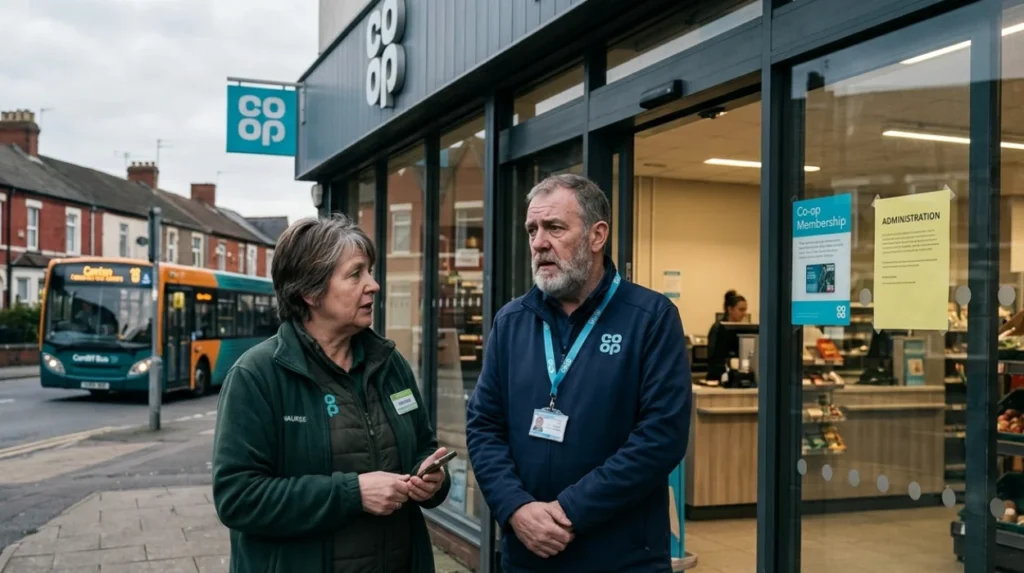
What does the proposed merger mean for administration risk?
The proposed merger with The Co-operative Group via member vote eliminates Southern Co-op’s administration risk by transferring engagements, securing 300 stores, jobs, and operations under national structure as of April 2026. It aligns values on democracy, ethics, and community while pooling resources against losses.
Background: Announced April 2026 after losses; CEO Ben Stimson cited shared values, stronger national voice. Transfer unifies societies legally.
Key components: National Co-op Group absorbs food/funeral shops, enhancing scale against competition. Members retain democratic input.
Processes: Vote determines outcome; success prevents insolvency. Stimson noted merger ensures sustainability amid profit drops, expense rises.
Implications: Cardiff benefits from stabilized Co-op network, avoiding supply disruptions. Future relevance: Bolsters co-op movement against retail headwinds.
What is Southern Co-op?
Southern Co-op is a UK consumer co-operative that runs over 300 stores, funeral homes, and coffee shops in southern England.