Key Points
- Event Dates and Location: The Cardiff Food and Drink Festival is scheduled to return to Roald Dahl Plass in Cardiff Bay from Friday 3 July to Sunday 5 July 2026.
- Cost and Access: Entry to the public festival grounds remains completely free of charge, with individual transactions conducted directly at independent trade stalls.
- Organisational Layout: The venue features five dedicated zones: the Producers Fair, the Farmers Market, the Street Food Piazza, the Crafters Market, and the live entertainment Bandstand.
- Vendor Roster: Over 50 independent stalls are confirmed for the Farmers Market, with high-profile regional brands such as Barti Rum, Hensol Castle Distillery, and Snowdonia Cheese Company appearing at the Producers Fair.
- Strict Health and Regulations: All participating food and beverage merchants hold an official Food Standards Agency (FSA) hygiene rating of either four or five.
- On-Site Restrictions: Consumption of alcohol is restricted exclusively to items purchased at designated event bars, while domestic pets are prohibited from entering the site, except for registered guide and assistance dogs.
Cardiff Bay (Cardiff Daily) July 1, 2026 — The annual summer gathering, widely regarded as a cornerstone of the regional tourism and hospitality calendar, will commence on Friday 3 July and run through Sunday 5 July. Organisers have confirmed that the free-to-enter exhibition will feature a broad selection of global street foods, artisanal regional produce, bespoke handmade crafts, and live musical entertainment. By utilising a multi-zoned public layout in the heart of Cardiff Bay, the festival aims to provide a platform for local food heroes, award-winning independent brands, and international flavours, drawing substantial crowds to the waterfront district over the weekend.
- Key Points
- What are the official opening times and structural zones for the festival?
- Which independent producers and retail brands are confirmed to exhibit?
- What culinary options will be featured in the Street Food Piazza?
- What non-food entertainment and craft markets will be accessible?
- What are the site regulations regarding alcohol, animals, and hygiene?
- Background of the Cardiff Food and Drink Festival
- Predictions for the local community and hospitality sector
What are the official opening times and structural zones for the festival?
As detailed in the public schedules released by Visit Cardiff, the festival’s operating hours will vary across the three-day weekend to accommodate both daytime shopping and evening hospitality. On Friday, the festival gates will open from 12:00pm to 10:00pm.
On Saturday, trading will commence earlier, running from 11:00pm to 10:00pm, while Sunday will see operating hours set from 11:00pm until a general close at 7:00pm.
To manage visitor traffic and separate distinct trading entities, organisers have structured the event into five targeted zones. According to official guidelines, the Street Food Piazza and the communal event bars will remain fully operational until 10:00pm on both Friday and Saturday nights.
However, a staggered closure is in place for retail operations; the Farmers Market, Producers Fair, and Crafters Market will cease public transactions at 9:00pm on Friday and Saturday, with all individual trade stalls concluding their operations at 7:00pm on Sunday evening.
Which independent producers and retail brands are confirmed to exhibit?
The retail and promotional core of the event is divided between the Producers Fair and the Farmers Market, both designed to showcase independent culinary businesses. Editorial reporting from Rhys Gregory of Wales247 confirms that the Producers Fair will feature established, award-winning regional brands.
Among the prominent commercial exhibitors confirmed to line Roald Dahl Plass are Barti Rum, Hensol Castle Distillery, Snowdonia Cheese Company, Flapjackery, The Garlic Farm, Zio’s Gelateria, and Ridiculously Rich by Alana—the luxury baking brand founded by former BBC Apprentice winner Alana Spencer.
Parallel to the Producers Fair, the Farmers Market will expand the event’s retail capacity by hosting more than 50 individual stalls. Media releases from the festival coordinators indicate that the market will focus heavily on fresh, locally sourced Welsh goods alongside artisanal pantry staples.
The inventory available for direct public purchase will span a wide variety of goods, including regional ciders, craft wines, independent spirits, fruit preserves, locally harvested honey, handmade fudge, artisanal doughnuts, and traditional Welsh cakes.
What culinary options will be featured in the Street Food Piazza?
The central dining area of the event, designated as the Street Food Piazza, is engineered to serve as a high-capacity outdoor food court offering a diverse global menu. Local authority updates state that the piazza will feature live, open-air cooking by independent caterers and mobile pop-up kitchens.
The culinary offerings compile a wide array of international street food trends alongside traditional comfort foods. Visitors will have access to freshly prepared dishes, including Mexican tacos, authentic Thai street food, traditional Greek cuisine, gourmet macaroni and cheese, Spanish paella, bespoke burgers, artisanal churros, East Asian dumplings, and wood-fired pizzas. In an appraisal of the event’s unique location, event organiser Heather Brown stated to The Culture Trip that
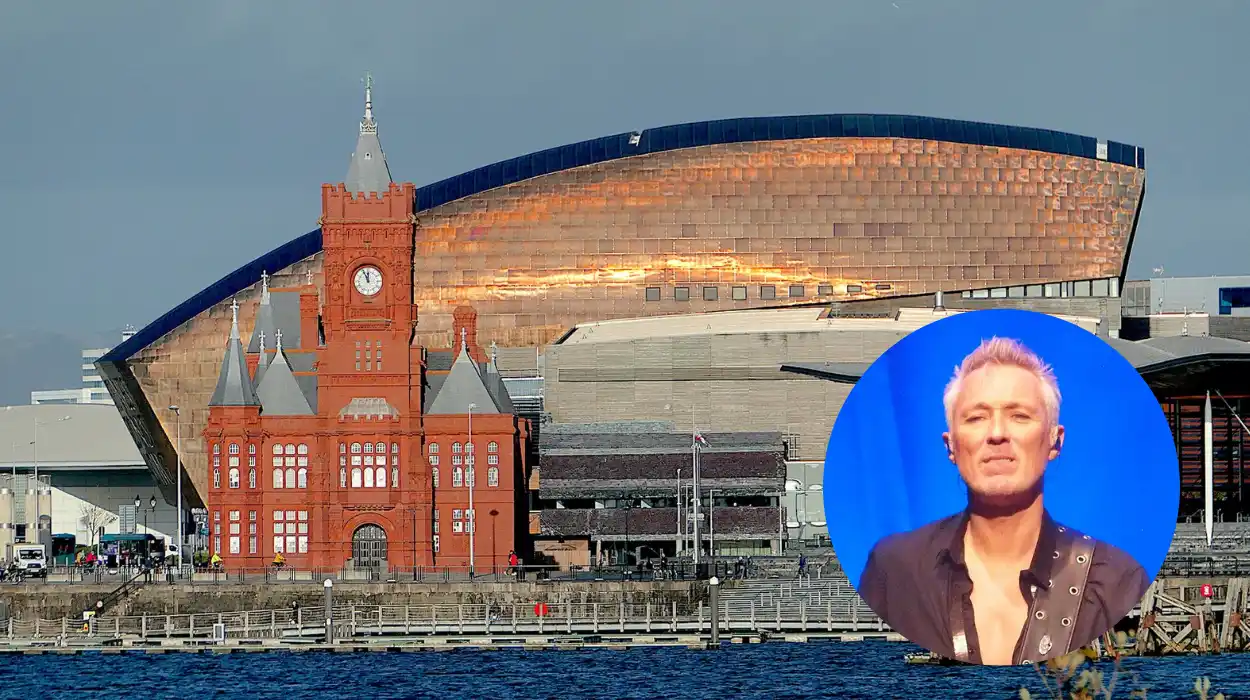
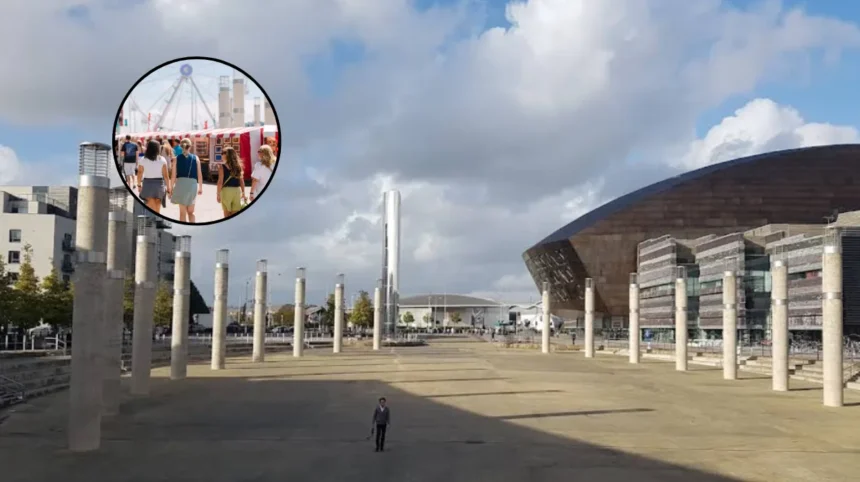
“the festival gives local makers a chance to shine and visitors get to taste the best of Wales in one delicious weekend. You’ve got the stunning architecture of the Wales Millennium Centre behind you, the waterfront breeze in your hair, and a plate of something tasty in hand.”
What non-food entertainment and craft markets will be accessible?
Beyond the food and beverage sectors, the festival grounds will integrate local craft retail and live performance arts to extend visitor engagement.
The Crafters Market, which occupies the distinctive red-and-white stalls flanking the main square, has been formally curated by Craft*folk, a regional organisation specialising in the promotion of independent artists and makers.
This zone will offer visitors an eclectic mix of hand-made gifts, bespoke arts, regional pottery, and artisanal crafts available for purchase across all three days.
Simultaneously, the festival’s live entertainment will be anchored by the Bandstand. Described by promotional directors as the event’s “lyrical larder,” the Bandstand will host a comprehensive, continuous programme of grass-roots musical acts.
The scheduled lineup is designed to provide a backdrop of summer-themed genres, allowing patrons to access free live music while utilising the communal seating areas nearby.
What are the site regulations regarding alcohol, animals, and hygiene?
To maintain public order and adhere to local licensing laws, festival management has instituted strict operational mandates regarding on-site consumption and safety.
A primary directive issued by the organisers dictates that only alcohol purchased directly from the licensed event bars may be legally consumed within the festival perimeters.
Consequently, any alcohol bought as retail stock from the Producers Fair, the Farmers Market, or brought in from external off-site locations is strictly prohibited from being opened or consumed on the premises.
Furthermore, animal control policies will be strictly enforced due to high projected footfalls. With the exception of registered guide dogs and assistance dogs—which must remain on leads and display clear formal identification—domestic dogs and other animals are not permitted within the event site.
On the matter of public health, municipal health records confirm that every food producer and mobile caterer permitted to trade at the 2026 festival holds a current Food Standards Agency (FSA) hygiene rating of either four or five, satisfying the upper tiers of local authority safety criteria.
Background of the Cardiff Food and Drink Festival
The Cardiff Food and Drink Festival is one of Wales’ longest-running and most successful free public culinary events, tracing its history back as a pillar of the regeneration of Cardiff Bay. Following the construction of the Cardiff Bay Barrage and the subsequent creation of Roald Dahl Plass, local authorities sought to establish large-scale cultural events capable of driving footfall to the former docklands.
The festival was conceived to celebrate the growing Welsh hospitality sector, which has increasingly gained international renown for its artisan cheeses, livestock farming, and independent craft distilleries.
Over the past decade, the festival has evolved from a modest gathering of local farmers into an essential socio-economic incubator for Welsh start-ups. For many micro-breweries and independent bakers, securing a stall at Roald Dahl Plass represents a major commercial milestone, offering direct exposure to tens of thousands of consumers over a single weekend.
The event’s structural reliance on free public entry—buttressed by partnerships with regional transport providers like Cardiff Bus and Transport for Wales—has allowed it to remain accessible to a broad demographic, cementing its status as an iconic summer tradition within the local community.
Predictions for the local community and hospitality sector
The return of the Cardiff Food and Drink Festival is anticipated to generate a substantial multi-layered economic impact, directly benefiting local business owners, regional producers, and the broader hospitality workforce within Cardiff Bay.
For independent traders, the three-day high-volume trading environment provides an immediate cash-flow injection and serves as a critical marketing showcase that can sustain brand awareness well into the autumn months.
For the resident hospitality sector in Mermaid Quay and the surrounding waterfront—including established restaurants, pubs, and hotels—the massive influx of visitors is predicted to create a positive economic spillover effect.
While the Street Food Piazza offers immediate dining, the sheer volume of regional tourists typically overflows into nearby brick-and-mortar establishments, driving up weekend covers and hotel occupancy rates across the city.
Furthermore, local commuters and residents will experience temporary infrastructural adjustments. Public transport bodies, including Cardiff Bus, have already scheduled increased service frequencies—such as adjusting the Baycar Route 6 to run every 15 minutes from the newly opened Cardiff Bus Interchange—to mitigate traffic congestion.
While residents will navigate busier public spaces and localized transport diversions, the successful execution of the festival reinforces Cardiff’s post-pandemic reputation as a premium destination for large-scale, accessible cultural tourism.