Key Points
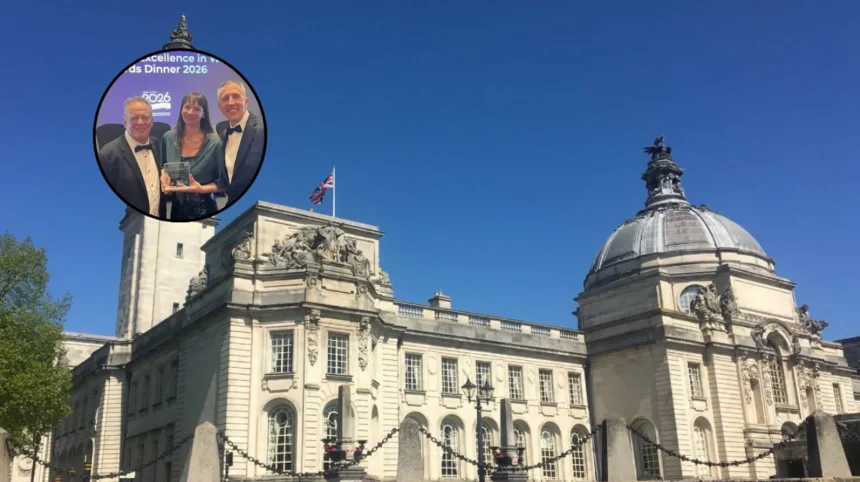
- Prestige Recognition: UK law firm Blake Morgan is celebrating Cardiff Council’s major victory at the prestigious 2026 Construction News Awards, where the local authority was crowned ‘Client of the Year’.
- Flagship Project: The accolade directly recognises Cardiff Council’s exceptional leadership on the landmark £110 million Fairwater Community Campus education development.
- Crisis Management: Following the abrupt insolvency of primary contractor ISG in Autumn 2024, the council successfully implemented a rapid rescue strategy that secured the local supply chain and prevented widespread job losses.
- Legal Stewardship: Legal advisers Blake Morgan provided critical support during the recovery process, helping to restructure contracts and revive what is slated to be one of the UK’s most advanced net-zero educational facilities.
- Industry Acclaim: Nominated by sub-contractor BESL/CMB Engineering, the project has been widely lauded for its focus on social value, collaborative construction delivery, and green innovation.
Cardiff Council’s (Cardiff Daily) July 14, 2026 – In a major triumph for public sector leadership, Cardiff Council has officially been named Client of the Year at the highly respected 2026 Construction News Awards, following a successful campaign celebrated alongside its chief legal advisers, Blake Morgan. The national award recognises the Welsh capital’s exemplary management of the multi-million-pound Fairwater Community Campus programme, which came under severe threat following the sudden collapse of lead contractor ISG in late 2024. Rather than allowing the flagship educational development to stall, Cardiff Council deployed an innovative, fast-tracked rescue strategy that kept sub-contractors on-site, fully preserved the supply chain, and successfully avoided any job losses, setting a benchmark for resilient project management in the UK construction sector.
- Key Points
- Why did Cardiff Council win Client of the Year?
- How did the collapse of ISG threaten the Fairwater Community Campus?
- What was Cardiff Council’s rescue strategy?
- What role did Blake Morgan play in reviving the development?
- Background of the Fairwater Community Campus Development
- Predictions: How This Award and Rescue Strategy Affects the Wider Construction and Public Sector
Why did Cardiff Council win Client of the Year?
As officially recorded by the event’s panel of industry experts, Cardiff Council demonstrated exceptional leadership during a period of immense sector-wide instability.
The Construction News Awards are widely regarded as one of the most respected accolades in the UK construction sector, celebrating excellence across clients, contractors, advisers, and major infrastructure projects.
According to the official judges’ feedback published by Construction News, the panel praised Cardiff County Council’s steadfast approach:
“Cardiff County Council demonstrated exceptional leadership while delivering one of the city’s most significant construction investments. Faced with a major project challenge, the council protected delivery, safeguarded the supply chain and retained public value throughout. An outstanding example of resilient client leadership.”
The project’s nomination came directly from the supply chain itself, put forward by BESL/CMB Engineering. This nomination highlighted the close-knit collaborative delivery approach, technological innovation, and outstanding social value outcomes achieved despite a highly volatile delivery environment.
How did the collapse of ISG threaten the Fairwater Community Campus?
As reported by Gareth Joy of Bro Radio in September 2024, the US-owned construction giant ISG ceased trading immediately after administrators were called in, resulting in the sudden loss of approximately 2,200 jobs across the UK.
The collapse caused immediate disruption to dozens of public and private sector projects nationwide, leaving councils across the country scrambles to secure semi-built school facilities.
Among these threatened schemes was the £110 million Fairwater Community Campus in Cardiff, which at the time of ISG’s insolvency had only recently reached its “highest point” of structural framing.
In the immediate aftermath of the collapse, Cllr Chris Weaver, Cabinet Member for Finance at Cardiff Council, spoke to local media to address the uncertainty. As documented by Gareth Joy of Bro Radio, Cllr Weaver stated:
“There will be disruption when a company goes into administration like this. Right now, work is ongoing to try and minimise that disruption. There will be lots of things in the coming days and weeks to work with sub-contractors, the parent company, just to try and minimise that as they go through that process.”
Weaver further emphasised that the city’s priority was keeping the site safe, protecting the financial exposure of the local authority, and finding a prompt way forward because the project was “very important” to the capital.
What was Cardiff Council’s rescue strategy?
Rather than retendering the entire project from scratch—a conventional process that frequently takes up to a year and results in massive cost inflation and sub-contractor insolvencies—Cardiff Council chose a highly collaborative path. The council stepped in as an active coordinator, working directly with the remaining supply chain partners.
As detailed by Steve Borley, Group Managing Director of BESL and CMB Engineering, during a project milestone event in December 2025, the local authority’s officers immediately pushed for an unconventional rescue solution.
By coordinating directly with BESL as the new Principal Contractor, the council managed to keep the existing sub-contractors active on-site. This prevented the specialist supply chain from suffering secondary insolvencies and protected hundreds of local trade jobs.
In a retrospective speech delivered during a site ceremony, the Leader of Cardiff Council, Huw Thomas, expressed his pride in the recovery team:
“I want to pay tribute to the Council Officers who pushed for a solution after the ISG administration, as well as BESL and all of your sub-contractors – I am so proud of the way they have been able to keep the supply chain in place without job losses.”
What role did Blake Morgan play in reviving the development?
The complex restructuring of the procurement route and contract framework required swift, specialist legal support. Leading UK law firm Blake Morgan acted as the primary legal adviser to Cardiff Council throughout the Fairwater programme.
The firm’s specialist construction team advised on the complex legal aspects of the rescue strategy, working alongside a broader multi-disciplinary advisory team to overcome the contractual hurdles left behind by ISG’s administration.
In a formal statement issued by Blake Morgan following the awards ceremony, Joanna Rees, Partner in the firm’s Construction team, commented on the significance of the council’s win:
“Cardiff Council’s recognition as Client of the Year is thoroughly deserved and reflects its commitment to delivering for its communities. The Fairwater project is a strong example of what can be achieved through collaboration, clear vision and determination to overcome challenges. Blake Morgan is proud to have supported the council on this important scheme.”
Background of the Fairwater Community Campus Development
To appreciate the scale of Cardiff Council’s achievement, it is necessary to look at the origins of the Fairwater Community Campus.
The project represents the single largest and most ambitious education infrastructure investment ever undertaken by Cardiff Council.
The £110 million campus is designed as a pioneering, ultra-low-carbon educational hub. Spanning a massive state-of-the-art site, the development is designed to co-locate three existing local schools into one shared, highly advanced campus:
- Cantonian High School
- Riverbank School (providing specialist education for children with severe learning disabilities)
- Woodlands High School (providing specialist education for pupils with diverse additional learning needs)
Once fully operational, the net-zero carbon campus will accommodate over 1,800 students, offering highly advanced facilities designed to meet a broad range of learning styles and physical needs. Crucially, the campus layout has been designed to allow all three schools to operate cooperatively while maintaining their individual identities and cultures.
The project is also a pilot for Wales’ progressive green building standards, incorporating advanced renewable energy generation, sustainable drainage systems, and low-embodied-carbon materials.
When ISG collapsed in September 2024, the sudden halt threatened to delay these vital educational and ecological provisions indefinitely, making the council’s rapid legal and operational intervention highly critical.
Explore More Cardiff Council News
Every Child Gets Welsh-Medium Secondary Place in Cardiff; 2026–28
Cardiff Student Move-Out Initiative Recycles Tonnes of Waste, Cathays 2026
Predictions: How This Award and Rescue Strategy Affects the Wider Construction and Public Sector
The successful recovery of the Fairwater Community Campus is expected to influence how public sector bodies across the UK manage major main contractor insolvencies.
Historically, the standard reaction to a tier-one contractor’s collapse has been to secure the site, terminate existing arrangements, and launch a lengthy, costly retender process. Cardiff Council’s award-winning strategy offers a proven alternative.
For local authorities and public sector clients, this development is predicted to accelerate the adoption of “direct-to-subcontractor” rescue frameworks. By utilising bespoke legal agreements—such as those structured by Blake Morgan—councils will likely feel more confident bypassing traditional retendering in times of crisis.
This approach keeps projects on schedule, saves taxpayer funds from being spent on prolonged security and inflation costs, and protects the local economy.
For sub-contractors and the wider construction supply chain, this precedent provides a blueprint for greater financial security.
If more public sector clients adopt active rescue strategies rather than walking away during insolvencies, smaller trade contractors will face a lower risk of collateral damage when main contractors fail. This shift could lead to more collaborative, trust-based relationships across the UK construction sector, ultimately driving higher quality and better social value outcomes on public builds.