Key Points
- First-Time Accreditation: Roath Park has achieved Green Heritage Site Accreditation for the first time in its history.
- Selective Honour: The park joins Bute Park as one of only two managed by Cardiff Council, and just 14 across all of Wales, to hold this prestigious heritage status.
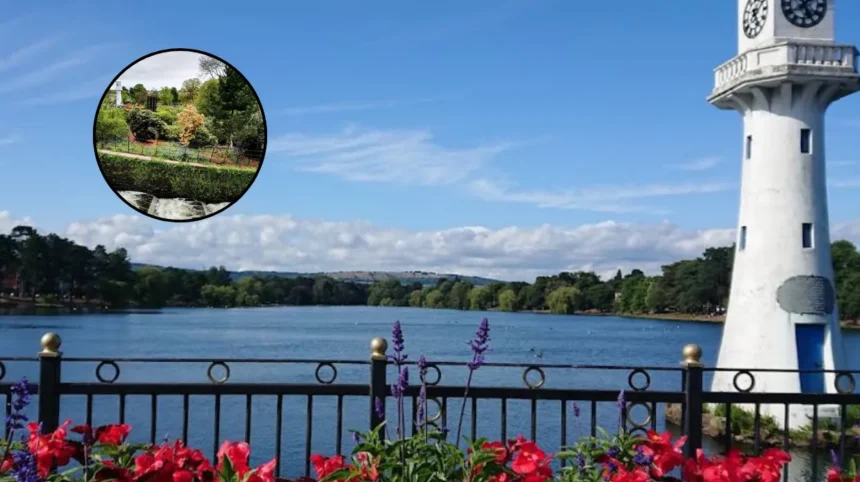
- Victorian Legacy: Opened in 1894, the park is celebrated for conserving its historic features, including its iconic lake and the Scott Memorial lighthouse.
- New Public Feature: A newly launched Heritage Trail allows visitors to explore and understand the site’s historical significance.
- City-Wide Success: Cardiff has successfully retained all 21 of its international Green Flag Awards for 2026, solidifying its standing as a premier UK urban environment for green space management.
Cardiff Council (Cardiff Daily) 14 July 2026, the capital city successfully retained all 21 of its international Green Flag Awards while its iconic Victorian space, Roath Park, secured the prestigious Green Heritage Site Accreditation for the first time. The dual recognition highlights the city’s ongoing commitment to balancing modern environmental standards with the meticulous conservation of its historical landscapes.
- Key Points
- Why did Roath Park win the Green Heritage Site Accreditation?
- What is the historical significance of Roath Park?
- How did Cardiff perform in the wider 2026 Green Flag Awards?
- What do local officials and environmental leaders say about the development?
- Background of the particular development
- Prediction on how this development affects Cardiff residents and park visitors
Why did Roath Park win the Green Heritage Site Accreditation?
As reported by Rhys Gregory of Wales 247, the supplementary accolade—endorsed and supported by Cadw, the Welsh Government’s historic environment service—is uniquely reserved for public spaces that do not merely meet standard environmental markers but excel at bringing their historical significance to life. To qualify, a park must already hold a foundational Green Flag Award and demonstrate exceptional care in maintaining, preserving, and promoting its unique heritage assets.
According to documentation provided by Business News Wales, Roath Park’s compliance with these strict criteria was bolstered by the official unveiling of its new Heritage Trail.
This trail allows the public to actively engage with the park’s 132-year-old layout, guiding them through its celebrated Victorian promenades, manicured formal gardens, and structural landmarks. It is this active integration of education and physical preservation that satisfied the independent judges.
What is the historical significance of Roath Park?
As detailed in the archival records published by CardiffParks.org.uk, Roath Park was the very first publicly owned park in Cardiff, constructed between 1887 and 1894 on a tract of former bogland. The land was donated to the Cardiff Corporation by wealthy local figures, principally the Marquess of Bute and Lord Tredegar.
Designed by Borough Engineer William Harpur and William Pettigrew, the city’s inaugural Head Gardener, the site officially opened on 20 June 1894.
The park retains much of its original character, featuring a Grade I listing on the Cadw/ICOMOS Register of Parks and Gardens of Special Historic Interest.
Its most recognizable feature is the 30-acre artificial lake, which features the Scott Memorial lighthouse constructed in 1915.
The lighthouse contains a scale model of the Terra Nova ship, commemorating Captain Robert Falcon Scott’s ill-fated 1910 expedition to the Antarctic, which departed from the Cardiff docks.
How did Cardiff perform in the wider 2026 Green Flag Awards?
Reporting on the wider national findings, the editorial team at Nation.Cymru confirmed that Cardiff successfully retained its full contingent of 21 Green Flag Awards for 2026.
This retention ensures that the Welsh capital maintains one of the highest densities of officially certified premier green spaces of any comparable core city in the United Kingdom.
The achievement comes during a milestone period for the scheme. As noted by Keep Wales Tidy, the international environmental accolade is celebrating its 30th anniversary in 2026, having grown from a domestic initiative founded in 1896 into a global benchmark spanning more than 20 countries.
The awards judge parks against rigid criteria including cleanliness, safety, general maintenance, biodiversity, sustainability, and community infrastructure.
What do local officials and environmental leaders say about the development?
In an official release captured by Business News Wales, Councillor Jennifer Burke, Cardiff Council’s Cabinet Member for Culture, Leisure, and Tourism, expressed the local authority’s satisfaction with the announcement:
“Roath Park is one of Cardiff’s most treasured green spaces, so achieving this special heritage recognition is a proud moment for the city. To also retain all 21 of our Green Flag Awards this year shows the consistent quality of Cardiff’s parks and green spaces and the huge amount of work that goes into looking after them every day. I’d like to thank all the Council staff, as well as the volunteers and community groups whose efforts make this possible.”
On behalf of the awarding body, Owen Derbyshire, the Chief Executive of Keep Wales Tidy, highlighted the broader context of the achievements across the nation:
“We are delighted to see so many green spaces across Cardiff recognised in this year’s Green Flag Awards. Wales is truly setting the standard when it comes to outstanding green spaces, with 330 places recognised in this year’s Green Flag Awards. From flagship parks and vibrant woodlands to historic sites and community spaces, Wales has shown year after year that it has an unwavering commitment to nurturing inclusive green spaces that can be enjoyed by everyone.”
Background of the particular development
The double victory for Cardiff takes place within a broader, record-breaking trend for environmental management across Wales. In July 2026, Keep Wales Tidy confirmed that a total of 330 parks and green spaces across Wales received Green Flag status, showing an upward trajectory from 315 sites in 2025 and 291 in 2024.
Historically, urban parks across the United Kingdom were established during the late 19th century as a direct public health response to rapid industrialisation.
They were engineered to introduce fresh air and recreational space to dense working-class populations. Over the subsequent century, many of these spaces suffered from municipal underfunding and structural decline.
The introduction of the Green Flag Award scheme in 1996 sought to reverse this trend by establishing strict operational standards. In Wales, the program is managed by the charity Keep Wales Tidy with direct funding from the Welsh Government.
The supplementary Green Heritage Site Accreditation was later developed in partnership with Cadw to prevent the loss of historical landscape architecture, ensuring that modern park maintenance routines do not inadvertently damage or obscure authentic Victorian, Edwardian, or ancient features.
Roath Park’s inclusion brings the total number of accredited heritage sites in Wales to 14, alongside fellow new 2026 inductees Caldicot Castle Country Park and Gnoll Country Park.
Prediction on how this development affects Cardiff residents and park visitors
This development will directly influence Cardiff residents, park users, and the local tourism economy in several ways.
For local residents, the retention of 21 Green Flags provides formal assurance that their immediate recreational spaces remain clean, safe, and biologically diverse.
Because many of Cardiff’s green spaces are linked to formal preservation frameworks—such as the Fields in Trust schemes—the continued receipt of international awards protects these public spaces against urban encroachment or budget reallocations. This guarantees long-term access to free exercise, nature, and mental health relief.
The newly minted Green Heritage Site Accreditation for Roath Park will likely alter visitor habits. The launch of the Heritage Trail transforms the park from a purely recreational asset into an educational cultural destination. Local schools, historical societies, and domestic tourists are expected to increase footfall along the designated trail.
While higher visitor numbers will benefit the park’s commercial amenities—such as the lakeside promenade café, rowboat hire facilities, and nearby businesses—it will also place added physical stress on the park’s infrastructure.
Cardiff Council’s maintenance teams and local volunteer networks will need to sustain a higher level of daily upkeep to preserve the sensitive Victorian features under the weight of increased public interaction, ensuring the park satisfies future annual reviews.