Key Points
- A 20-year-old woman, Grace Scott, waded into an algae-choked pond in Thompson’s Park, Cardiff, to rescue a drowning baby moorhen after water levels dropped dangerously low.
- The pond, which does not fill naturally, relies on the council to manually refill it via a tap, a process that has not been carried out recently amid scorching temperatures.
- The water has turned into a thick layer of sludge, algae and mud, conditions that previously made the pond unsuitable for much of its usual wildlife.
- Grace Scott said she believes the moorhen chick would have died within hours if she had not taken the risk and entered the water immediately.
- The incident has drawn attention to how extreme heat and low water levels are affecting urban park ponds across Cardiff and could impact other local wildlife sites.
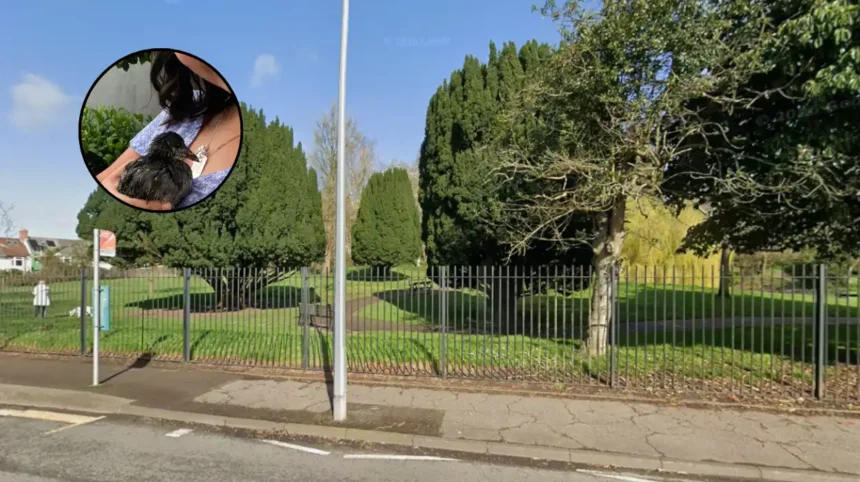
Thompson’s Park (Cardiff Daily) July 15, 2026 — A small pond in Cardiff’s Thompson’s Park has turned into a layer of algae and thick mud after water levels fell to critically low points, forcing a local woman to jump into the sludge to rescue a drowning baby moorhen.
Grace Scott, 20, spotted the chick struggling in the polluted water and decided to enter the pond despite the poor condition of the water. She later said she believes the moorhen would have died within hours if she had not acted at that moment.
The pond, situated in the Canton area of Cardiff, does not receive natural inflow and must be refilled by the council turning on a tap.
According to the reporting, this refill has not been carried out recently, leaving the water to shrink and become increasingly stagnant in the current heatwave.
As reported by the Wales Online team, the combination of high temperatures and low water has caused algae to dominate the surface, turning what was once a thriving wildlife habitat into what locals describe as a “layer of sludge”.
Why Did Water Levels Drop So Low in Thompson’s Park Pond?
According to the Wales Online report, the main reason the pond is now so shallow is that it does not fill up naturally and depends on the council to manually refill it by turning on a tap.
That refill process has not happened recently, leaving the pond to dry out further as temperatures have risen.
The article notes that the pond was once “thriving with wildlife” but has now deteriorated into a mixture of algae and mud, with water levels so low that even a small bird can become trapped and unable to escape.
How Did Grace Scott Rescue the Baby Moorhen?
Grace Scott said she saw the baby moorhen struggling in the algae-filled water and realised it was at risk of drowning. She decided to jump into the pond, despite the unhealthy appearance of the water, in order to reach the chick and pull it to safer ground.
As reported by Wales Online, Grace believes that without her intervention the moorhen would have died within hours, highlighting how quickly conditions in the pond can become life-threatening for small wildlife.
No further details were provided in the original report about whether the chick was taken to a wildlife rescue organisation or released back into the area, but local guidance on injured or distressed birds generally advises contacting a rehabilitator or vet if the animal appears unable to fly or is visibly injured.
What Does the Condition of the Pond Mean for Local Wildlife?
The transformation of the pond into a sludge of algae and mud suggests that oxygen levels in the water may have dropped and that the habitat is no longer supporting the range of species it once did. In similar situations, low water levels and high temperatures can lead to “pond turnover” events, where oxygen-depleted bottom water mixes with surface water, potentially harming fish and other aquatic life.
For birds such as moorhens, which rely on shallow water and vegetation for feeding and nesting, a pond that has become heavily algae-covered and shallow can become dangerous rather than beneficial.
The case of the drowning chick illustrates how quickly such environments can turn from safe habitats into life-threatening traps.
How Have Other Cardiff Ponds Been Affected by Low Water Levels?
This incident is not isolated in Cardiff. Recent reports have highlighted similar problems at other city parks, including Roath Park Lake, where water levels have also fallen significantly and fish have required rescue operations.
Those stories have prompted questions about how the city’s water management and park maintenance are coping with prolonged hot weather.
The pattern across multiple sites suggests that heatwaves and reduced water availability are putting pressure on urban water bodies, with councils increasingly required to intervene to prevent loss of wildlife and maintain public amenity.
Explore More Local Cardiff News
Richard Ashcroft Hits Cardiff Castle Stage – Cardiff 2026
What Cardiff Homeowners Should Know Before Selling Cardiff 2026
Background: Thompson’s Park and Its Pond
Thompson’s Park is a public park in the Canton area of Cardiff, known locally for its open spaces, play areas and small water features.
The pond in question has historically been used as a habitat for birds and other small wildlife, including moorhens, which are commonly found in urban ponds and wetlands across the UK.
Because the pond does not fill naturally from streams or rainfall alone, it depends on人工 management by Cardiff Council to maintain appropriate water levels.
This includes turning on a tap to refill the pond when levels drop. In recent weeks, according to the Wales Online report, this refill has not been carried out, leaving the pond to shrink under the influence of hot weather and evaporation.
The switch from a “thriving” wildlife pond to a sludge of algae and mud reflects a common problem in urban water bodies during heatwaves: when water volume decreases, nutrients become more concentrated, algae growth accelerates, and oxygen levels can fall.
These conditions can make the environment unsuitable for many species and dangerous for smaller animals that cannot easily escape.
Prediction: How This Development Could Affect Cardiff Residents and Wildlife
The degradation of Thompson’s Park pond is likely to affect both local wildlife and the people who use the park in several ways.
For wildlife, continued low water levels and high algae growth could reduce the number of birds, insects and aquatic species that rely on the pond. Moorhens and other waterbirds may avoid the site if it no longer offers safe feeding or nesting conditions.
In extreme cases, further drops in water could lead to temporary closures of the pond area or require more intensive rescue operations for trapped animals.
For Cardiff residents, the visual and ecological decline of the pond may reduce the attractiveness of Thompson’s Park as a recreational space. Families and visitors who previously enjoyed watching wildlife around the pond may find the site less appealing if it appears as a sludge-covered pool rather than a clean, vibrant water feature.
This could also increase concern about how other parks in the city are being managed during heatwaves, especially if similar problems emerge at sites such as Roath Park Lake.
From a council perspective, the incident highlights the need for more regular monitoring and proactive refilling of artificial ponds during periods of high temperature. If water management is not adjusted, similar rescue situations may become more frequent, and public trust in the maintenance of local parks could beaffected.
Over time, repeated incidents could lead to calls for updated policies on urban water body management, including seasonal refill schedules, shade planting to reduce water temperature, and clearer communication with residents about expected changes in pond conditions during extreme weather.