Key Points
- Shubman Gill is expected to be fit for India’s second ODI against England in Cardiff after cramps forced him to retire hurt in the first match.
- India won the opening ODI by six wickets, with Gill top-scoring with 80 before leaving the field.
- A team spokesman said Gill was expected to be available for the Cardiff fixture, easing immediate concern over India’s leadership plans.
- The match has also intensified debate over India’s bowling balance after Kuldeep Yadav was left out of the XI.
- Former India pacer Varun Aaron said Jasprit Bumrah cannot be expected to solve every bowling problem on his own.
- The discussion has further implications for Shreyas Iyer, who could be asked to lead if Gill were unavailable, according to reporting on India’s ODI structure.
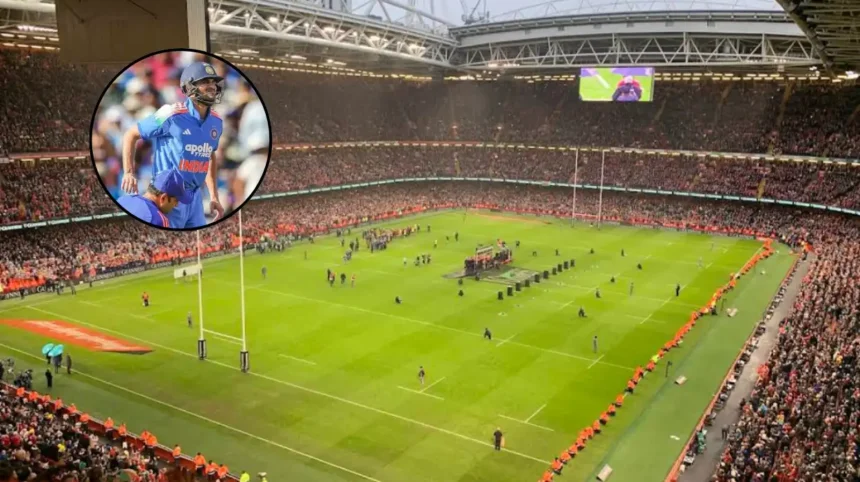
Cardiff (Cardiff Daily) July 17, 2026 – India captain Shubman Gill is expected to be fit for the second ODI against England after the cramps that interrupted his match-winning innings in the series opener, easing concerns over his availability for a game that now carries both on-field and leadership significance.
- Key Points
- What happened in the first ODI?
- Why has Bumrah become part of the debate?
- What does Gill’s fitness mean for leadership?
- How has the media framed the issue?
- What are the selection questions for Cardiff?
- How could this affect India?
- What is the background to this development?
- What is the likely prediction?
As reported by the AFP-backed match coverage carried by Khaleej Times, Gill top-scored with 80 from 75 balls in the first ODI before limping off with what appeared to be cramp, but a team spokesman said after stumps that he was expected to be fit for the Cardiff match.
According to myKhel, Gill later clarified that the issue was severe cramp rather than a serious injury, and he expected to recover in time for the second ODI. That update matters because India are already in a strong position in the series, and Gill’s presence would allow the team to continue with the plan it has built around him as captain.
What happened in the first ODI?
The first ODI produced a straightforward result for India, who beat England by six wickets after Gill’s innings anchored the chase.
Reports say he remained unbeaten on 80 while sharing a century stand with Shreyas Iyer before cramps forced him to stop batting.
The result gave India early control of the series, but it also exposed a separate concern: how the bowling unit functions when the opposition builds partnerships in the middle overs.
Gill’s contribution was important not only because of the runs he made, but because it came in the same match in which India’s tactical choices were scrutinised.
Several reports noted that Kuldeep Yadav’s omission from the side drew criticism, with observers questioning whether India had enough wicket-taking options beyond Jasprit Bumrah.
Why has Bumrah become part of the debate?
The debate around Jasprit Bumrah grew after former India pacer Varun Aaron criticised the balance of the attack during commentary, saying India needed wicket-taking options in the middle overs.
Aaron argued that Bumrah cannot be expected to be the answer to every bowling problem and pointed specifically to the need for more attacking options when England batters were settling in.
That criticism has a broader point for India’s ODI planning, because it suggests the side may be leaning too heavily on one frontline fast bowler to cover multiple phases of the innings.
In the same discussion, former India assistant coach Abhishek Nayar offered a different perspective, saying the difficulty with having a bowler like Bumrah is that teams come to rely on him to produce breakthroughs.
The contrast between those views shows that the selection debate is not only about personnel, but about how India want to structure their attack.
What does Gill’s fitness mean for leadership?
Gill’s availability matters because his role extends beyond batting, with reports indicating he has already been installed as India’s ODI captain for the present cycle.
If he were ruled out, the leadership responsibility would likely shift to Shreyas Iyer, which would turn Cardiff into a test of India’s succession planning as much as a match against England.
That is why the fitness update is significant even though the injury itself appears minor. Gill’s presence allows India to keep the captaincy stable while continuing to assess whether the team’s longer-term structure is working as intended.
It also removes an unnecessary selection headache at the top of the order, where his form and leadership have both become central to the side’s direction.
How has the media framed the issue?
Different outlets have focused on slightly different angles of the same story. Khaleej Times highlighted the fitness update and the team spokesman’s expectation that Gill would be ready for Cardiff. myKhel focused on Gill’s own reassurance that the cramps were not serious.
Hindustan Times and related coverage emphasised the leadership implications if Gill were unavailable, especially for Shreyas Iyer.
On the bowling side, Moneycontrol, NDTV, and Sportskeeda all reported the criticism of India’s decision to leave out Kuldeep Yadav and the concern that Bumrah is being leaned on too heavily.
Taken together, those reports paint a picture of a team that won the first ODI comfortably but still has unresolved questions about balance, depth, and roles.
What are the selection questions for Cardiff?
The first question is whether India keep the same batting structure if Gill is fully available. His return would likely stabilise the top order and reinforce the captaincy setup, while also reducing pressure on the rest of the batting unit.
The second question is whether India stick with the same bowling combination or respond to the criticism by bringing Kuldeep back into the side.
Aaron’s comments suggest that some observers believe India need a more reliable wicket-taking option through the middle overs, rather than asking Bumrah to compensate for every weakness.
If England again build partnerships without losing wickets in clusters, the discussion around selection could become even sharper.
How could this affect India?
If Gill plays, India will likely approach Cardiff with continuity, which strengthens their chances of sealing the series and keeping the leadership model intact.
His fitness would also remove speculation around whether Shreyas Iyer needs to step in as stand-in captain, allowing the side to focus on performance rather than contingency planning.
If the bowling unit again lacks penetration in the middle overs, however, the scrutiny on team selection will increase, especially around the decision to leave Kuldeep out.
That would not only affect the immediate series, but also feed into longer-term conversations about how India want their ODI attack to function in major tournaments.
What is the background to this development?
Gill’s rise to the ODI captaincy has been closely watched because he replaced Rohit Sharma in October 2025 as India prepared for the next World Cup cycle.
Since then, every match involving the new leadership group has carried an added layer of examination, especially when selection decisions or injury scares create uncertainty.
At the same time, Bumrah has remained central to India’s plans, which is why any bowling shortfall quickly becomes a discussion about over-reliance.
The omission of Kuldeep Yadav in the first ODI sharpened that debate because it raised questions about whether India were choosing control over strike power.
Cardiff therefore arrives as more than just the second match of a series; it is also a checkpoint for India’s current tactical direction.
Explore More Sports News
Virat Kohli Scripts History in Cardiff 2026
Cardiff Appeal Dismissed £100m Emiliano Sala Claim – Wales 2026
What is the likely prediction?
The most likely outcome is that Gill plays in Cardiff and India maintain their established leadership structure, because the reported diagnosis is cramp rather than a serious injury.
For India, that would mean the immediate focus shifts back to cricketing choices, especially whether the bowling attack needs more variation and more wicket-taking threat in the middle overs.
For England, Gill’s availability would remove one possible opening, but the larger challenge remains breaking India’s batting rhythm and forcing their bowlers to prove that they can operate without leaning too heavily on Bumrah.
If India respond by restoring a spinner such as Kuldeep, the Cardiff ODI could become a more balanced contest and a clearer test of both teams’ tactical planning.