Key Points
- Emergency Broadcast Issued: The UK Government launched a national emergency alert to residents following a surge in major wildfire incidents across several regions.
- Homes Lost and Evacuations Ordered: Significant wildfires in Staffordshire and the West Midlands have led to residential evacuations and the destruction of property.
- Fire Services Under Pressure: Emergency responders in Merseyside and other parts of the UK are dealing with severe resource strain due to multiple simultaneous outbreaks.
- Prohibitions and Sales Restrictions: The UK Government has implemented a temporary ban on the sale of disposable barbecues to reduce ignition risks during prolonged dry conditions.
- Community Safety Directives: Local authorities are urging the public to avoid open flames, dispose of glass and smoking materials responsibly, and report sightings immediately via 999 using precise location tools like what3words.
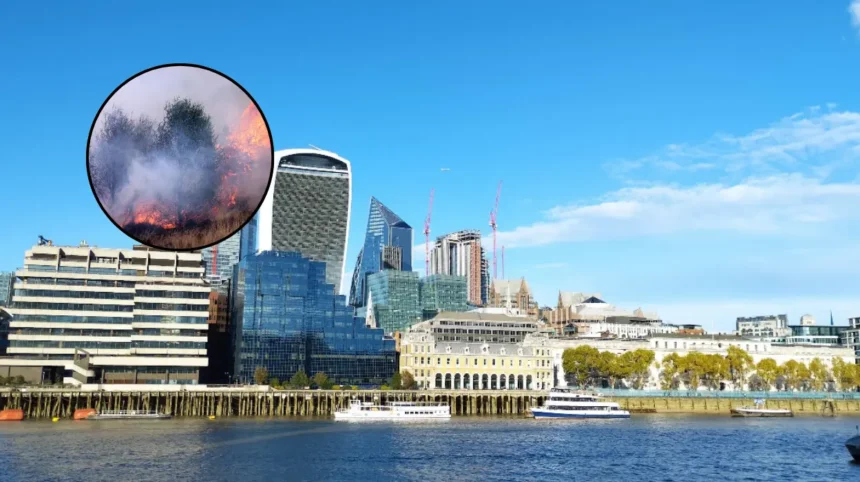
Knowsley (Cardiff Daily) August 15, 2026 – The UK Government issued an emergency notification directly to mobile phones across the nation yesterday evening after a spate of severe wildfires breached containment lines, destroying homes and forcing widespread evacuations in Staffordshire and the West Midlands. Fire and rescue authorities reported that dry conditions and unseasonably warm weather have combined to create an environment where open blazes spread with extreme rapidity. While local officials in Knowsley confirmed there is no immediate direct threat to their specific borough, emergency managers stressed that the government-level alert must be treated with utmost gravity by all residents to prevent further strain on national emergency infrastructure.
- Key Points
- How severe is the current pressure on emergency responders?
- What measures are being implemented to prevent further outbreaks?
- What precautions should residents take in open spaces?
- How should the public respond if a wildfire is discovered?
- Background of the wildfire safety developments
- Prediction: How these developments will affect UK residents and local communities
How severe is the current pressure on emergency responders?
Fire services nationwide are facing a critical challenge as multiple large-scale incidents deplete regional response capacities. In Merseyside, frontline crews have battled complex, fast-moving fires across grass and woodland in recent days, mirroring heavy operational loads reported by services across England and Wales. The concentration of personnel and equipment at major burn sites in Staffordshire has required neighbouring brigades to adjust coverage areas, prompting national coordination centres to issue warnings regarding overall resource availability.
What measures are being implemented to prevent further outbreaks?
To mitigate the primary causes of ignition, the UK Government introduced a temporary nationwide prohibition on the sale of disposable barbecues. Official investigations into past incidents indicate that human activity accounts for the vast majority of wildfire starts in the British countryside. Alongside the commercial restriction, public protection guidance has been updated to explicitly ban open fires in countryside locations, public parks, moorlands, and wooded zones. Barbecues remain restricted strictly to designated public zones, with instructions that all ashes must be fully extinguished and cooled prior to disposal.
What precautions should residents take in open spaces?
Environmental health and safety officials have released a comprehensive list of preventative measures aimed at eliminating incidental sparks. Smokers are instructed to ensure all materials are entirely extinguished before disposal and are strictly warned against discarding cigarette ends from moving vehicles. Furthermore, local authorities emphasized the necessity of removing all litter, highlighting that discarded glass bottles can act as magnifying lenses under direct sunlight, concentrating solar rays to ignite dry vegetation. Access restrictions may also be enforced across high-risk zones, with members of the public required to comply with local warning signage.
How should the public respond if a wildfire is discovered?
Emergency management teams advise anyone who encounters a active wildfire to move immediately to a safe location upwind of the flames rather than attempting to fight the fire independently. Witnesses must call 999 without assuming prior reports have been logged. To assist emergency crews in navigating to remote or poorly marked terrain, callers are asked to provide coordinates using location tools such as what3words or the Ordnance Survey application. Members of the public are requested to avoid travelling towards affected zones to prevent traffic congestion from delaying frontline fire engines.
Background of the wildfire safety developments
Wildfire risk in the United Kingdom has progressively escalated over recent summer seasons due to prolonged periods of low precipitation and higher baseline temperatures. Historically considered a seasonal issue concentrated in specific heathlands or upland moorlands, recent incidents have shown an increased frequency of blazes occurring near urban-rural fringes, directly endangering residential property and critical infrastructure.
The introduction of direct mobile emergency alerts represents a structural shift in how civil protection agencies communicate sudden environmental hazards to the public. Combined with emergency sales bans on high-risk consumer items like single-use barbecues, the strategy mirrors preventative frameworks used during severe weather events to minimize human-caused ignitions before emergency services reach full capacity.
Explore More UK News
Record UK School Leavers Accepted on Degree Courses: UCAS Report London 2026
UK Economic Growth Slows to 0.4% Amid Energy Pressures: UK 2026
Prediction: How these developments will affect UK residents and local communities
The combination of national emergency alerts, sales bans, and heightened fire restrictions is expected to significantly alter public access and recreational activity in green spaces across the UK. In the short term, residents will experience tighter controls in countryside areas, regional parks, and popular outdoor locations, with local councils increasing warden patrols to enforce regulations regarding open fires and litter disposal.
For local communities near high-risk zones, the public response to emergency protocols will directly influence the operational burden on regional fire and rescue services. Adherence to safety guidance is likely to reduce preventable ignitions, allowing emergency personnel to concentrate resources on active containment in Staffordshire, Merseyside, and the West Midlands. Over the longer term, residents can anticipate more frequent use of public warning systems during periods of adverse weather, alongside potential policy discussions regarding permanent restrictions on disposable combustion products in high-risk rural environments.