Key Points
- Cardiff has been shortlisted alongside Bradford, Plymouth and York for the prestigious UK Design Capital of the Year 2026 accolade.
- The award acknowledges municipal leadership in architecture, placemaking, and long-term strategic urban regeneration.
- The Welsh capital’s transformation focuses on reversing decades of industrial decline triggered by the collapse of heavy coal and steel sectors.
- Central to the strategy is a compact, dense, and walkable urban design coupled with high-profile cultural and music events such as the annual Blackweir concerts in Bute Park.
- Prominent architects, civic planners, and regional economic leaders are using historic heritage, adaptive reuse, and strategic investment zones to position South East Wales as an attractive destination for global talent and investment.
Cardiff (Cardiff Daily) August 17, 2026 –As reported by Joey Gardiner of Housing Today, Cardiff has used strategic placemaking to rebuild its future following a potentially existential economic decline precipitated by the collapse of its historic coal and steel industries. Writing in the final installment of the publication’s UK Design Capital of the Year series, Joey Gardiner noted that the Welsh capital is testing forward-thinking urban development models that could establish benchmarks for growth across the United Kingdom.
As detailed by Joey Gardiner of Housing Today, Cardiff held the second installment of its annual Blackweir music concert series in Bute Park during July 2026.
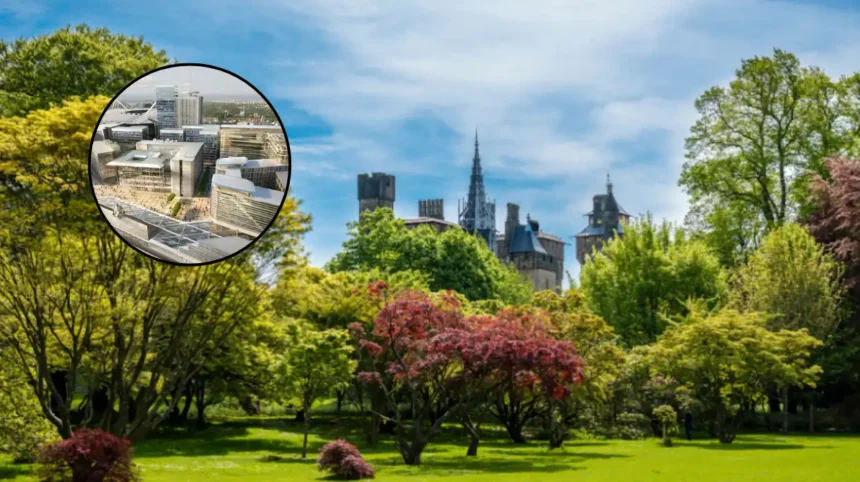
Hosted in the shadow of the city’s 1,000-year-old castle, the festival attracted nightly crowds of 35,000 people. Daniel Lewis, design director at architect HLM, stated to Joey Gardiner of Housing Today that:
“Blackweir is absolutely the best venue ever. It’s outside; it’s like going to a festival, but right in the city. It’s just brilliant”.
Joey Gardiner highlighted that such initiatives exemplify Cardiff’s overarching strategy: transforming the city into an attractive destination for national and international events to recruit and retain young, talented professionals through high-quality physical placemaking and a compact, walkable urban footprint.
What role does strategic regional investment play in South East Wales?
As stated by Kevin Gardiner, Chair of the South East Wales Regional Growth Board, in an economic assessment for the Cardiff Capital Region, the region is working under a clear mandate to create a “stronger, fairer, greener” economy. Kevin Gardiner noted that productivity in South East Wales remains too low, with some communities experiencing significant deprivation.
To tackle these deep-rooted issues, Kevin Gardiner explained that the region must invest in cleaner energy, public transport integration, and foundational sectors like housing and tourism, rather than participating in a low-wage economy.
Furthermore, as outlined by Kevin Gardiner of the South East Wales Regional Growth Board, South East Wales secured £30 million from UK Research and Innovation’s Local Innovation Partnership Fund in late 2025, alongside a £160 million Investment Zone backing.
Kevin Gardiner emphasised that while Cardiff cannot offer bargain-basement tax rates, the local quality of life, rich culture, and relatively affordable housing serve as vital draws for inward investment.
Explore More Local Cardiff News
Busy Cardiff Road Reopened After Police Incident in Gabalfa 2026
Barry Residents Sentenced at Cardiff Magistrates’ Court for Multiple Offences, Barry 2026
Background of Cardiff’s urban redevelopment
The UK Design Capital of the Year Award was launched in 2025 as part of the broader Architect of the Year Awards framework.
The award evaluates holistic municipal vision rather than isolated architectural projects, examining long-term masterplans and urban experiments. Cardiff was shortlisted for the 2026 title alongside Bradford, York, and Plymouth.
The roots of Cardiff’s modern regeneration trace back to the 1970s and 1980s, when the sharp decline of South Wales coal exports and the eventual shutdown of heavy industrial hubs like the East Moors Steelworks crippled the local economy.
In response, successive civic administrations shifted the city’s focus away from heavy industry toward service sectors, sport, tourism, and high-value modern industries.
The foundation of the 2016 Cardiff Capital Region City Deal—a tripartite agreement between the UK Government, the Welsh Senedd, and ten local authorities—established a regional framework to pool resources for major infrastructure, transport networks, and commercial redevelopment.
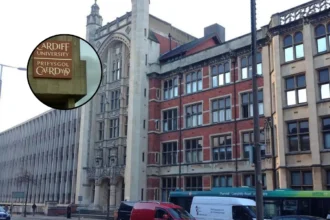
Contemporary projects continue to focus on converting historic properties, such as the refurbished Victorian Hodge House, into modern commercial hubs, while integrating heritage features into central urban corridors.
Prediction: How this development will affect local residents, businesses, and built environment professionals
If Cardiff secures the UK Design Capital of the Year 2026 title or continues on its current trajectory, the impact across the South East Wales built environment and local economy will be significant:
- For Local Residents: The focus on compact, walkable development and event-led urban vitality will lead to improved public spaces, expanded green infrastructure, and better-integrated public transport. However, as urban density increases, local communities will face ongoing debates regarding the architectural quality and scale of high-density residential housing schemes.
- For Businesses and Investors: The city’s designation as an innovation hub and its high quality of life will likely attract higher levels of inward investment, helping corporate sectors compete on quality rather than wage costs. Hospitality, retail, and creative industries will benefit directly from an expanded calendar of city-centre events and increased visitor footfall.
- For Architects and Urban Planners: A successful recognition of Cardiff’s masterplanning strategy will elevate the profile of local architectural practices and development firms. It will set a precedent for adaptive reuse and heritage-led regeneration across the UK, encouraging UK local authorities to adopt similar dense, culture-first urban design models.