Key Points
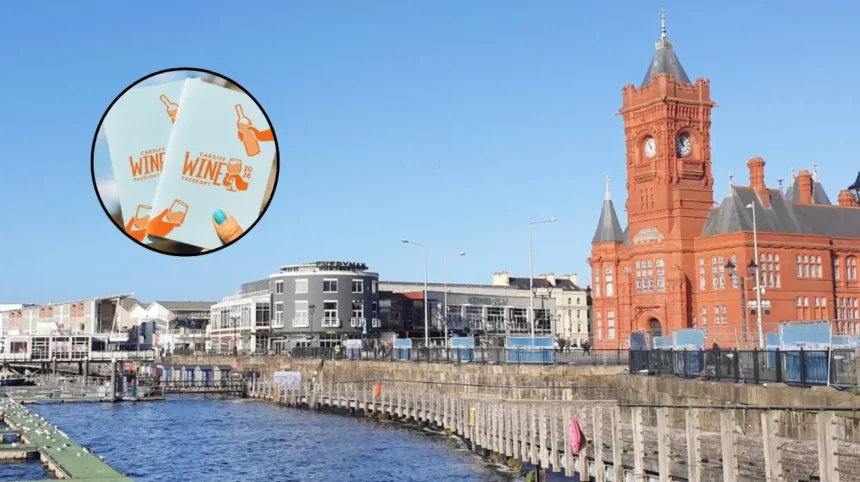
- The sold-out 2026 Cardiff Wine Passport has entered its second week, encouraging residents and visitors to explore the capital’s independent bars and restaurants one glass at a time.
- Running from Thursday 6 August until Sunday 27 September 2026, the seven-week scheme allows passport holders to redeem six stamps for handpicked drinks across 13 participating independent city-centre venues.
- Figures released by scheme organizers show the initiative has generated more than £80,000 in direct revenue for local independent businesses since its initial launch in 2022.
- Key figures and hospitality managers across participating establishments—including Parallel, Khione Sicilian Delicatessen, LowKey, Daffodil, Vermut, and Kindred—have shared insights regarding summer trading, local collaboration, and what independent venues contribute to the city’s identity.
- Participating operators highlighted that despite challenges competing against large national chains, Cardiff’s hospitality scene functions as a supportive network characterized by strong customer loyalty.
Cardiff (Cardiff Daily) August 18, 2026 – As the sold-out 2026 Cardiff Wine Passport enters its second week of operation, local independent venues across the Welsh capital are reflecting on the impact of summer trading, collaborative hospitality, and the distinct identity that non-chain businesses bring to the city centre.
- Key Points
- What Do Independent Venues Bring to Cardiff’s High Street?
- How Do Hospitality Leaders Describe Operating in Cardiff During the Summer?
- What Are the Featured Industry Figures’ Ideal Local Experiences?
- Harrison Standley (Parallel)
- Gloria Arcerito (Khione Sicilian Delicatessen)
- Alexander Taylor (LowKey)
- Jenny Brookes (Daffodil)
- Felix Ray (Vermut)
- Oliver Banks (Kindred)
- Background of the Cardiff Wine Passport Development
- Prediction: How This Development Will Affect Independent Hospitality Stakeholders
Created in 2022 by Cardiff-based hospitality consultant Jane Cook, the Cardiff Wine Passport was designed as an accessible mechanism to encourage footfall toward independent venues rather than corporate chains. Returning for its 2026 run after an 18-month break, the £30 pass enables holders to exchange six physical stamps for specially selected glasses of wine or wine-based drinks across 13 participating city-centre locations over a seven-week window.
According to official economic figures published by scheme organizers, the initiative has injected more than £80,000 in direct revenue into Cardiff’s independent hospitality ecosystem since its inception.
With the latest iteration running from 6 August through 27 September 2026, key managers and venue owners have spoken out regarding the realities of operating during the peak summer season and what sets the capital’s independent scene apart.
What Do Independent Venues Bring to Cardiff’s High Street?
As reported by reporter Jane Cook of the City of Arcades news platform, the fundamental purpose of the scheme is to bring people through the doors of independent establishments during traditionally quieter midweek trading periods.
Cook noted that having brilliant bars and restaurants does not automatically protect businesses from rising operational costs or shifts in consumer spending.
Representatives from participating venues expanded on what independent businesses contribute to the broader urban ecosystem:
- Demystifying Fine Dining: As reported by an editorial writer of It’s On Cardiff, Harrison Standley, Head Waiter at Parallel—a venue best known for its focus on hospitality and regional produce—explained that fine dining can frequently feel like a pretentious sport. Standley stated that Parallel works to make high-end dining accessible by pairing local produce and contemporary cooking with relaxed, personalized hospitality, omitting traditional white tablecloths.
- Cultural Authenticity and Soul: As reported by It’s On Cardiff, Gloria Arcerito, Founder and Owner of Khione Sicilian Delicatessen, stated: “Independent businesses give a city its soul.” Arcerito highlighted that Khione collaborates directly with small Sicilian producers to share regional food, wine, traditions, and backstories directly with Welsh consumers.
- Distinct Personality and Customer Loyalty: As reported by It’s On Cardiff, Alexander Taylor, Owner and Operator at LowKey, noted that independent venues bring genuine personality to the city. Taylor stated that while competing with major national chains remains challenging, independent operators can make service, decor, and drink menus feel individual. He added that once an independent business wins over Cardiff consumers, those customers demonstrate fierce loyalty.
- Economic Value and Diversity: As reported by It’s On Cardiff, Felix Ray, General Manager at Vermut, stated that independent businesses provide community, local economic retention, and a true reflection of Welsh hospitality, offering locals and visitors a diverse culinary landscape.
How Do Hospitality Leaders Describe Operating in Cardiff During the Summer?
Operating an independent hospitality venue during the peak summer months presents unique operational opportunities and network dynamics across the Welsh capital.
As reported by It’s On Cardiff, Jenny Brookes, General Manager at Daffodil, explained that the local hospitality community operates with a high level of mutual support. Brookes stated that independent venues in Cardiff celebrate one another rather than viewing neighboring trade solely as direct competition.
She added that partnering with regional suppliers allows venues to showcase Welsh food, drink, and culture to high volumes of summer visitors.
Corroborating this sentiment, Oliver Banks, Owner of Kindred, described the operational ecosystem of the Welsh capital as exceptionally close-knit. As reported by It’s On Cardiff, Banks stated:
“Cardiff may be a capital, but it feels like one very large village – the Kevin Bacon theory on speed.”
Banks noted that the interconnected nature of the city creates a supportive network among independent business owners.
What Are the Featured Industry Figures’ Ideal Local Experiences?
To highlight the interconnected nature of the city’s trade, It’s On Cardiff surveyed the hospitality figures behind the 2026 passport regarding their personal choices for a dream dinner, drinks, and live event combination in Cardiff:
Harrison Standley (Parallel)
- Dinner & Drinks: Confit garlic flatbread and whipped feta at Parallel.
- Live Event: Sade performing live at Cardiff Castle.
Gloria Arcerito (Khione Sicilian Delicatessen)
- Dinner & Drinks: A long dinner with close friends paired with a bottle of Sicilian wine.
- Live Event: Zucchero or Mario Biondi performing live.
Alexander Taylor (LowKey)
- Dinner & Drinks: Food at Curado, a drink at Picton & Co, and a freezer Martini at LowKey.
- Live Event: Live comedy performance at Glee Club.
Jenny Brookes (Daffodil)
- Dinner & Drinks: Small plates and Sauvignon Blanc at Parallel, wine and charcuterie at Nighthawks, ending with an Espresso Martini at Lab 22.
- Live Event: A live concert at Cardiff Castle.
Felix Ray (Vermut)
- Dinner & Drinks: An aperitif at Vermut, ramen at Matsudai, and post-show cocktails at LowKey.
- Live Event: Lorna Shore performing at Utilita Arena Cardiff.
Oliver Banks (Kindred)
- Dinner & Drinks: Sobrasada pintxos and vermouth at Curado, côte de bœuf and Malbec at Silures, accompanied by Welsh cakes from Cardiff Market paired with Pedro Ximénez from The Bottle Shop.
- Live Event: Tom Misch performing live.
Explore More Local Cardiff News
Depot Live Record Breaking Summer Music Series Cardiff 2026
Cardiff Council Approves 33-Storey Co-Living Skyscraper in Cardiff 2026
Background of the Cardiff Wine Passport Development
The Cardiff Wine Passport was launched as a pilot project in 2022 to address footfall disparities between corporate hospitality chains and independent businesses within Cardiff city centre. Operating as a physical booklet, the scheme was modeled around promoting exploration during off-peak trading windows—specifically Sunday through Thursday—when independent footfall traditionally declines relative to Friday and Saturday peak hours.
In its debut run, the initiative engaged 11 original independent venues and successfully generated over £10,000 in direct sales. Over subsequent iterations in 2023, 2024, and early 2025, the scheme expanded its venue partner network to include premium cocktail bars, wine taverns, and specialty food destinations.
Following a planned 18-month hiatus after its Spring 2025 run, the program returned in August 2026. The current 2026 iteration represents the largest scale in the scheme’s history, incorporating 13 venue partners, including three newly established venues: Khione, Kindred, and LowKey.
The program continues to operate on a capped ticket model to ensure participating venues can comfortably manage capacity while driving sustainable customer acquisition.
Prediction: How This Development Will Affect Independent Hospitality Stakeholders
The continued growth and sell-out performance of the Cardiff Wine Passport is anticipated to have several distinct structural effects on local consumers, independent venue owners, and the broader Cardiff city-centre economy:
- For Independent Venue Owners: The direct injection of revenue during midweek shifts (Sunday through Thursday) will provide crucial cash flow stability amidst rising energy costs, ingredient inflation, and business rates. Furthermore, because passport holders frequently purchase optional food pairings and secondary drinks, participating venues are projected to see higher average spend per head beyond the baseline cost of the pass.
- For Local Consumers and Food Tourism: The scheme lowers the barrier to entry for consumers hesitant to visit unfamiliar establishments or try niche product categories, such as specialty vermouths or natural wines. By establishing a structured, walkable trail, the passport fosters long-term customer habits, converting casual passport holders into repeat patrons of independent businesses long after the seven-week event concludes.
- For the Broader Urban High Street: The success of collaborative campaigns like the Wine Passport offers a blueprint for city-centre resilience. By positioning independent venues as a collective network rather than isolated competitors, Cardiff is likely to see increased retention of unique culinary venues, preserving the cultural distinctiveness of its urban core against retail homogenisation.