Key Points
- False Claims Spark Protests: Far-right demonstrations outside the Holiday Inn Express near Cardiff Airport falsely alleged that illegal migrants and paedophiles were being accommodated at the site.
- True Identity of Residents: The individuals housed in the hotel are Afghan nationals and their families who were relocated under the Ministry of Defence’s Afghan Resettlement Programme after serving alongside British troops in Afghanistan.
- Legal Status: Local authorities confirmed the residents are categorised as Entitled Persons (EPs) with indefinite leave to remain in the UK, rather than illegal immigrants or asylum seekers.
- Documentary Exposes Fear: A BBC Radio Wales documentary presented by journalist Amy Derrick revealed that the protests left families and children terrified inside the accommodation.
- Political Controversy: Welsh Conservative leader Andrew RT Davies faced criticism for questioning the scheme on social media, despite having previously called for former Afghan staff to be supported.
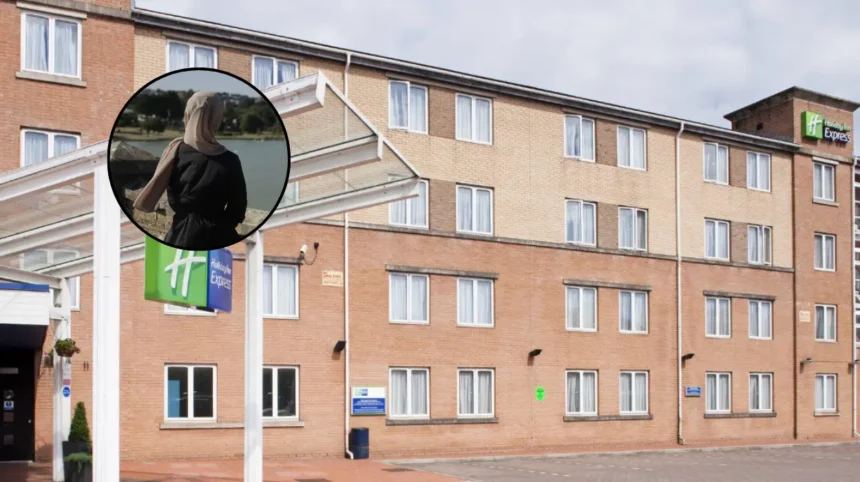
Rhoose (Cardiff Daily) August 31, 2026 – Far-right demonstrations staged outside a hotel in South Wales have caused distress and terror amongst Afghan translators and their families who were resettled in the United Kingdom after saving the lives of British soldiers. As reported by Martin Shipton of Nation.Cymru, a BBC Radio Wales documentary presented by Cardiff journalist Amy Derrick has revealed the impact of anti-immigration demonstrations outside the Holiday Inn Express near Cardiff Airport in Rhoose. The protests were driven by online claims falsely alleging that illegal migrants and individuals posed a threat to local children, despite official confirmation that the hotel was housing legitimate Afghan allies granted indefinite leave to remain by the UK Government.
The documentary detailed how families, including young children, were subjected to high-decibel demonstrations and intimidation as crowds gathered outside the premises. As reported by Amy Derrick of BBC Radio Wales, local organisers and far-right figures mobilised demonstrations under banners such as “Concerned Local Families,” causing severe panic among families who had fled Taliban retribution in Afghanistan.
What Triggered the Protests Outside the Cardiff Airport Hotel?
The demonstrations began following announcements that the Ministry of Defence (MOD) had selected the Holiday Inn Express in Rhoose to provide temporary transitional accommodation for Afghan families under the UK’s Afghan Resettlement Programme. As reported by Damian Edmunds of the Barry & District News, the initial intake comprised 19 families with children, three couples, and one single individual, with the site intended as temporary accommodation for up to nine months whilst permanent housing was arranged across the UK.
However, false claims began circulating online and on social media platforms. Groups such as ‘Voice of Wales’, an online platform challenging official immigration policy, alongside figures associated with nationalist movements, called for rallies outside the hotel. Protesters gathered along the access road, holding signs and chanting, claiming that the local community was being put at risk.
As reported by Damian Edmunds of the Barry & District News, Stan Robinson of ‘Voice of Wales’ challenged official government statistics regarding the residents during a demonstration, stating that
“only one in sixteen is genuine, and all their families are entitled to come.”
In response to the anti-immigration gatherings, counter-demonstrations were organised by groups including Stand Up to Racism (SUTR) Wales and local trade union representatives. As reported by Damian Edmunds, human rights lawyer Hussein Said, who led the SUTR demonstration, stated:
“These people fought for this country and are in danger. We have a duty to take them in.”
How Did Local Authorities and Officials Clarify the Situation?
Following escalating tensions and public concern, the Vale of Glamorgan Council issued statements to clarify the legal status of the individuals residing at the hotel. As reported by WalesOnline, council officials confirmed that the hotel residents were not asylum seekers, refugees awaiting decisions, or illegal entrants.
The council stated that the occupants held ‘Entitled Person’ (EP) status under the UK Government’s relocation scheme. This designation is reserved for Afghan citizens who directly assisted British Armed Forces operations during the military campaign in Afghanistan and were exposed to severe risks following the Taliban’s return to power.
The Ministry of Defence also confirmed that all individuals brought to the UK through official resettlement routes undergo strict security checks prior to entry and are granted indefinite leave to remain.
Despite these clarifications, political debate surrounding the site continued. As reported by Emily Price of Nation.Cymru, former Welsh Conservative leader Andrew RT Davies posted messages on social media platform X questioning the suitability of the hotel location and accusing the MOD and local council of keeping the community in the dark. Davies later submitted a Freedom of Information request and reported the MOD to the Information Commissioner’s Office over delayed responses regarding crime statistics and scheme eligibility.
Davies faced public criticism from political opponents and campaigners who highlighted his previous public statements from August 2021. As reported by Emily Price, Davies had written in 2021:
“We must do everything we can to support Afghan staff who helped our efforts, veterans who made such a difference over the last 20 years, and families who lost loved ones must continue to be supported.”
Background of the Development
The resettlement of Afghan nationals in the UK stems from the conclusion of Western military operations in Afghanistan in August 2021. Following the withdrawal of NATO forces and the rapid collapse of the Afghan national government, thousands of Afghan interpreters, contractors, cultural advisors, and military staff who worked alongside British forces faced direct threats of violence or execution from the Taliban regime.
In response, the UK Government established two primary resettlement pathways:
- Afghan Relocations and Assistance Policy (ARAP): Designed for former staff directly employed by or supporting the UK Government in Afghanistan.
- Afghan Citizens Resettlement Scheme (ACRS): Aimed at vulnerable individuals, women’s rights activists, and minorities.
Under these programmes, individuals admitted to the UK are granted immediate Indefinite Leave to Remain (ILR), allowing them full rights to work, access public services, and receive housing assistance. Due to a national shortage of long-term social housing, the Ministry of Defence and local authorities have utilised temporary transitional facilities, including contracted hotels, to house families while permanent homes are identified across local council areas.
The placement of resettled families in hotel accommodation across the UK has coincided with broader national demonstrations surrounding immigration policy and the use of hotels for housing asylum seekers. Far-right networks and political activists have frequently targeted hotel sites, leading to counter-demonstrations and increased policing operations across regions in England and Wales.
Prediction: How This Development May Affect the Audience
This ongoing development carries significant implications for various key groups across Wales and the wider UK:
- Resettled Afghan Families: The fear created by public demonstrations outside transitional housing can impede the psychological recovery and social integration of families fleeing conflict. Continued exposure to hostility may cause heightened trauma, particularly among children, and create hesitation in engaging with the wider community.
- Local Communities in Wales: Persistent protests and counter-demonstrations place increased pressure on local policing resources and council services. Community cohesion may be tested as misinformation spreads through social media channels, leading to polarisation between local residents, anti-racism campaigners, and anti-immigration groups.
- Veterans and Military Personnel: For British Armed Forces veterans who served in Afghanistan alongside local interpreters, hostility towards former allies can cause distress. Many veteran organisations advocate strongly for the welfare of Afghan staff, viewing their protection as a moral obligation and a matter of national honour.
- Government Policy and Local Housing: The friction surrounding hotel usage is likely to increase pressure on the Ministry of Defence and the Home Office to accelerate the transition of Afghan allies from temporary hotel facilities into permanent council housing. This could prompt changes to how government departments communicate relocation plans with local authorities to mitigate misinformation.