Key Points
- The Cardiff Capital Region (CCR) Regional Cabinet has approved exploratory development studies to investigate a potential tidal lagoon prospect in the Severn estuary.
- CCR has committed up to £6.4 million over the next three years using City Deal funding to finance the project’s first substantive phase.
- Initial estimates indicate the proposed lagoon could deliver approximately 600MW of predictable renewable electricity, capable of powering around 500,000 homes.
- The structure is expected to have an operational lifespan exceeding 120 years, generate an estimated £3.5 billion in economic value, and offer coastal protection against rising sea levels.
- The upcoming initial phase will focus on environmental considerations, engineering design, modelling, and commercial viability assessments.
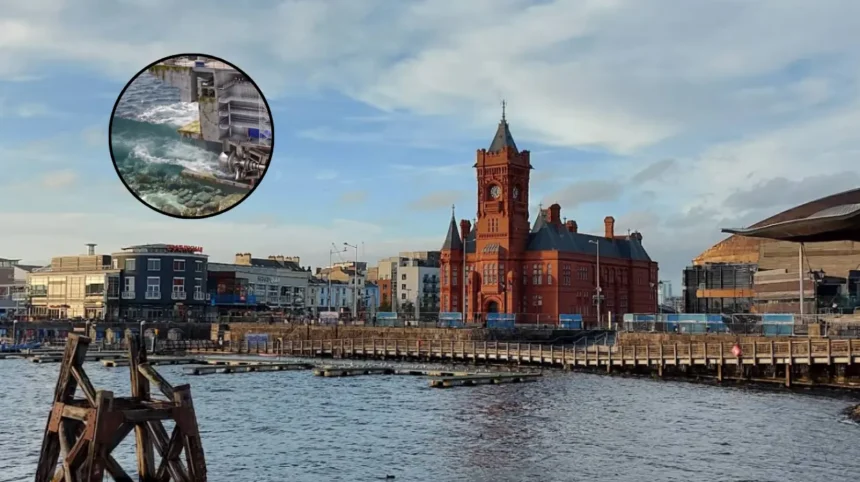
Cardiff (Cardiff Daily) September 16, 2026 – The Cardiff Capital Region (CCR) Regional Cabinet has formally approved exploratory development studies for a proposed tidal lagoon within the Severn estuary, allocating up to £6.4 million in City Deal funding over the next three years to finance the initial assessments. This decision marks an opening phase in evaluating what could become one of the United Kingdom’s largest marine renewable energy projects.
- Key Points
- What do key regional and national leaders say about the Severn estuary development?
- How will the initial £6.4 million phase be structured and executed?
- Background of the Severn tidal lagoon development
- Prediction: How will this development affect energy consumers, local businesses, and regional communities?
The three-year exploratory framework is set to examine environmental considerations, engineering design, hydrodynamic modelling, and commercial viability. Initial projections indicate that a completed tidal lagoon in the Severn estuary could deliver approximately 600 megawatts (600MW) of predictable renewable electricity—an output sufficient to supply around half a million homes—with a operational lifespan estimated to exceed 120 years. Beyond power generation, preliminary forecasts suggest the infrastructure could generate £3.5 billion in economic value, support thousands of local jobs, and provide long-term coastal defense benefits against rising sea levels along the South Wales coastline.
What do key regional and national leaders say about the Severn estuary development?
Highlighting the strategic importance of the energy resource, Regional Cabinet Chair Cllr Mary Ann Brocklesby stated that the decision represents a potentially game-changing moment for renewable energy generation in the United Kingdom. Brocklesby noted that the Severn Estuary possesses one of the highest tidal ranges in the world, offering an opportunity to produce homegrown energy that complements variable solar and wind power. She added that during an era where energy security is increasingly essential, accessing reliable and cost-effective renewable energy to power a significant number of homes while positioning Wales as an innovation hub represents a generational opportunity for CCR and its regional partners.
Adding the Welsh Government’s perspective, Cabinet Minister for Enterprise, Connectivity and Energy Adam Price MS stated that the national vision is for Wales to become a global leader in marine renewables. Price highlighted that with the second largest tidal range on the planet, the Severn Estuary presents immense potential to deliver significant renewable energy generation along with broad economic benefits across Wales. He affirmed that ministers will continue working closely with regional partners to ensure opportunities offered by the project are fully maximised as development progresses.
Reflecting central government support for developing marine energy infrastructure, Minister for Climate Transition Katie White OBE MP stated that the Severn Estuary remains one of the United Kingdom’s most significant tidal resources.
How will the initial £6.4 million phase be structured and executed?
The newly approved allocation of up to £6.4 million will be drawn directly from Cardiff Capital Region’s City Deal funds, spanning a three-year operational window. The upcoming phase will adopt an environmental and engineering co-design approach to determine the precise scale, footprint, and physical configuration of the tidal lagoon.
By integrating marine, ecological, and environmental evidence directly into the early design process, project planners aim to address historical ecological concerns associated with Severn estuary developments while ensuring the infrastructure maintains long-term commercial viability. The technical studies will also model potential supply chain integration, regional employment creation, and baseline infrastructure demands required to support eventual construction and grid connection.
Background of the Severn tidal lagoon development
The Severn Estuary features the second highest tidal range in the world, with water levels fluctuating by up to 15 metres (49 feet) during spring tides. Because of these unique geographic and hydrodynamic characteristics, the estuary has been identified as a focal point for UK tidal energy proposals for several decades.
Historical attempts to harness the estuary’s tidal power—most notably large-scale barrage proposals during the late 20th century and early 2010s—struggled to proceed due to high initial capital expenditure requirements and concerns regarding environmental impact on sensitive mudflats, migratory fish populations, and intertidal habitats.
In recent years, attention has shifted from full-span estuaries barrages toward impoundment tidal lagoons. Lagoons enclose a specific area of the estuary using a breakwater wall embedded with hydro-turbines, generating electricity on both incoming and outgoing tides with a smaller spatial footprint. The establishment of the Cardiff Capital Region City Deal provided a regional governance structure equipped with dedicated capital funds to evaluate major infrastructure proposals, leading directly to this current £6.4 million exploration framework.
Prediction: How will this development affect energy consumers, local businesses, and regional communities?
If the initial exploratory phase successfully demonstrates commercial and ecological viability, the project will significantly impact multiple stakeholder groups across South Wales and the broader UK energy landscape.
- Energy Consumers & Grid Stability: Households across South Wales and the UK stand to benefit from increased energy grid resilience. Unlike solar and wind energy, which depend on weather conditions, tidal power is entirely predictable years in advance. A reliable 600MW baseline supply capable of powering 500,000 homes would reduce reliance on imported fossil fuels and help buffer consumers against volatile wholesale energy price spikes over its 120-year lifespan.
- Local Businesses & Supply Chain: Regional businesses within engineering, marine construction, environmental consultancy, and heavy manufacturing are likely to see substantial commercial opportunities. The projected £3.5 billion economic output would stimulate local procurement, drive demand for specialized engineering services, and create thousands of direct and indirect jobs throughout the construction and operational cycles.
- Coastal Communities: Localities along the South Wales coastline could gain crucial long-term infrastructure protection. The physical presence of lagoon walls can act as a buffer against storm surges and rising sea levels driven by climate change, reducing long-term flood risk and potential property mitigation costs for coastal residents.
- Environmental & Conservation Stakeholders: Ecological organisations and local fisheries will closely scrutinize the co-design process. The outcome of the environmental assessments will determine whether modern marine turbine designs can operate without severely disrupting the estuary’s protected intertidal ecosystems and bird habitats.