Key Points
- Cardiff Council has initiated an immediate investigation after the discovery of very poor living conditions at Adams Court, a temporary accommodation center for homeless people in the Adamsdown area.
- The poor conditions were exposed by Nation.Cymru through TikTok videos showing the presence of dirt, leftover food, used syringes, and a cockroach.
- A former council member who has many years of experience working in homelessness services provided the videos and said that the workers have felt that despite reporting the matter on several occasions, no action had been taken by the management.
- Adams Court is one of the hostels that has received millions of pounds of funding for renovations in the past few years, making one wonder about how the facilities have been maintained and how the administration has been overseeing matters.
- A spokesman for Cardiff Council has acknowledged that the conditions are far below the required standards and have raised a lot of concern.
- There have been complaints against Adams Court before as there was a complaint of mouse infestations in 2019.
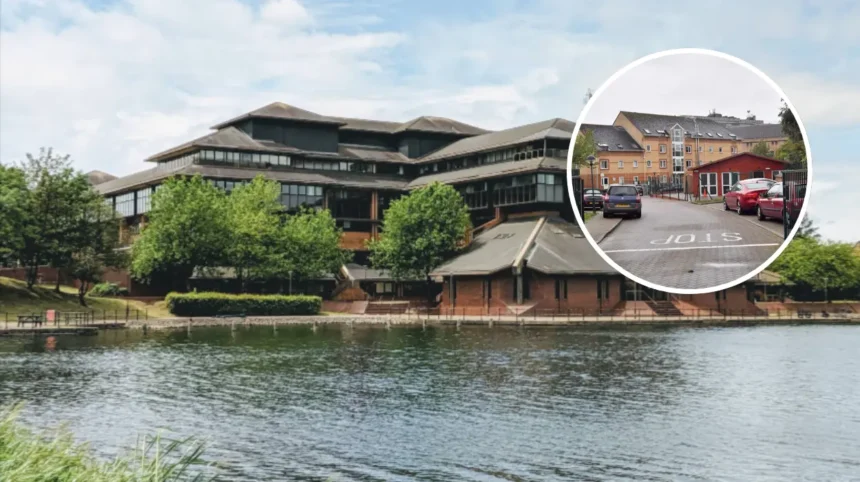
Cardiff (Cardiff Daily) September 25, 2026 – Cardiff Council has initiated an immediate investigation into severe health and hygiene failures at Adams Court, a council-run temporary housing facility for homeless individuals in the capital’s Adamsdown area. The probe follows the circulation of disturbing video footage exposing widespread filth, structural neglect, and hazardous waste inside the building.
What Did the Leaked TikTok Videos Reveal About Adams Court?
As reported by Martin Shipton of Nation.Cymru, three TikTok videos exposed the interior conditions of Adams Court, depicting deeply encrusted dirt across residential rooms, food scraps strewn across corridors, a discarded syringe on the floor, and a cockroach.
According to Nation.Cymru, one of the videos featured the Mission Impossible theme as background music, pausing while a woman was heard shouting abuse, alongside a textual caption asking viewers:
“Would you live here? Come with me to view my temporary accommodation from the council?”
Why Did Whistleblowers Leak the Footage to the Press?
As reported by Martin Shipton of Nation.Cymru, an ex-council employee with many years of professional experience working within homelessness services forwarded the videos after receiving them from active staff members on site.
The former employee stated to Nation.Cymru:
“I have been sent these videos relating to Adams Court, a Cardiff council hostel, by workers currently based there who are at a loss as to what more they can do to get the situation addressed.”
The whistleblower further claimed to Nation.Cymru:
“I understand that staff have repeatedly raised concerns and asked for managers to intervene, but feel that their concerns have been ignored. As a former Cardiff council employee, with many years’ experience working within homelessness services, I am genuinely appalled by the conditions shown in these videos.”
The source added:
“That hostel has approximately three to four support staff and two security staff on each day along with cleaning staff. The fact nobody is around and it is in that state is appalling. I’m informed by people who still work in there and other hostels that it is like that as standard now and management has fallen off a cliff. People feel unsafe and at risk and as for the poor vulnerable residents I despair.”
Furthermore, the source pointed out to Nation.Cymru that
“Adams Court is one of several hostels that has had approximately £5m-plus spent on it during the last four to five years. Appalling. This needs to be properly investigated and called out.”
How Has Cardiff Council Responded to the Allegations?
As reported by Martin Shipton of Nation.Cymru, a Cardiff Council spokesperson released an official statement addressing the crisis:
“We are very concerned by the conditions shown in these videos of Adams Court temporary accommodation.”
The local authority spokesperson added, as noted by Nation.Cymru:
“Cleaning staff are based on site and a cleaning regime is in place to maintain the building’s corridors and communal areas. However, the conditions shown in the footage fall well below the standards we expect and are unacceptable. We are urgently investigating the matter and addressing the situation as a priority.”
Concluding the local authority’s remarks, the spokesperson told Nation.Cymru:
“The Council is committed to providing safe, clean and well-managed accommodation for residents and will take the steps needed to ensure standards are maintained.”
Explore more Cardiff Council News
Major Roadworks Cause Severe Traffic Gridlock in Cardiff City Centre Cardiff 2026
Cardiff Launches Soft Plastic Recycling Trial Across Capital City Cardiff 2026
Are There Previous Instances of Poor Conditions at Adams Court?
As reported by Martin Shipton of Nation.Cymru, structural and maintenance grievances at Adams Court are not isolated to the current incident. In 2019, WalesOnline published an investigation featuring a single mother who had resided in a one-bedroom flat within the complex for over a year alongside her 19-month-old daughter.
During that 2019 report, the resident described her living environment as unbearable and depressing, highlighting a severe mouse infestation where approximately 30 mice had chewed through apartment walls, her child’s first shoes, and chocolate, with droppings even discovered inside her toddler’s cot.
Background of the Particular Development
The recent exposure of Adams Court places a sharp focus on the long-term management and operational oversight of temporary housing provisions in South Wales. Over the past five years, Cardiff Council has allocated multi-million-pound investments—exceeding £5 million for facilities like Adams Court alone—to modernize hostel infrastructure and expand capacity amidst rising homelessness demands. However, structural improvements have repeatedly clashed with systemic maintenance hurdles, staff shortages, and administrative breakdowns. Historical precedents, such as the 2019 rodent infestation reports at the same facility, indicate that temporary accommodation sites have struggled with sustained upkeep standards long before the post-pandemic housing crisis strained local council resources to unprecedented levels.
This developing scrutiny over temporary accommodation standards is likely to intensify pressure on Cardiff Council to overhaul its internal management structures, facilities oversight, and response protocols regarding staff-raised grievances. For vulnerable homeless residents, individuals reliant on emergency housing, and frontline council workers, heightened public transparency may accelerate accountability measures and force immediate deep-cleaning interventions across municipal hostels. Conversely, if systemic management failures persist, the local authority could face escalating legal challenges, deeper union friction from neglected support workers, and a further erosion of public trust in the city’s emergency social support framework.