Key Points
- The astronomers at Cardiff University will provide far-infrared filters and internal calibrators for the newly approved $1.2 billion PRIMA (PRobe far-Infrared Mission for Astrophysics) space telescope from NASA.
- The PRIMA telescope would be the first of its kind as a part of the category of astrophysics missions under the NASA probe explorer series planned for launch in 2033 with a life expectancy of five years.
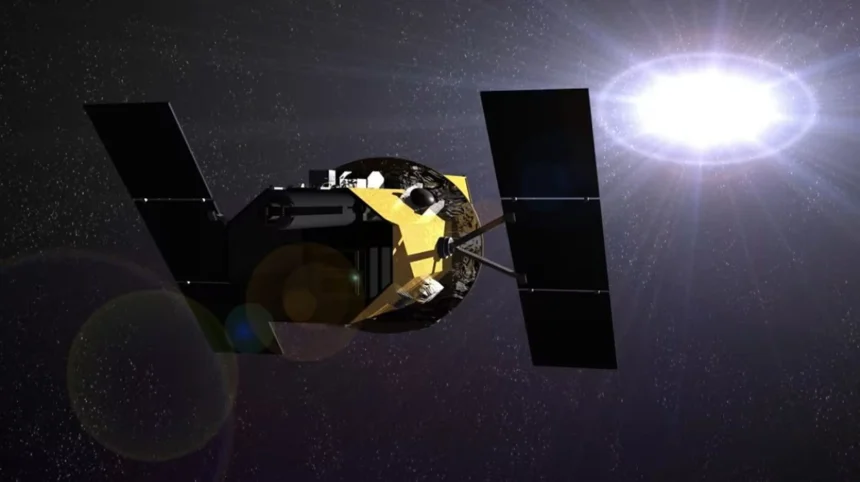
- The space telescope would have an 1.8-meter telescope to conduct surveys using far-infrared wavelength on the origin of exoplanets, galaxy evolution, black holes, and formation of dust in the universe.
- The team from the United Kingdom includes researchers from Cardiff University, University of Sussex, Imperial College London, RAL Space, and Celtic Terahertz Technology Ltd (CTT) with the support of the UK Space Agency.
- The Astronomy Instrumentation Group (AIG) at Cardiff has built on its legacy of instruments used since the 1980s including IRAS, ISO, Spitzer, and Herschel Space Observatory.
Cardiff (Cardiff Daily) September 25, 2026 – Cardiff University is set to play a pivotal role in a landmark $1.2 billion international space telescope initiative after NASA officially selected the PRobe far-Infrared Mission for Astrophysics (PRIMA) to advance to its next phase of development. Announced on September 28, 2026, the ambitious project will harness decades of British academic engineering, with local astronomers supplying critical far-infrared filters and internal calibration sources to help humanity peer deeper into the cold, distant universe.
What is the PRIMA mission and how does it advance space exploration?
The PRIMA mission represents the inaugural project within a brand-new category of NASA astrophysics endeavors named Probe Explorers, structured to bridge structural gaps between massive flagship observatories and smaller-scale scientific missions. Equipped with a specialized 1.8-metre telescope, the spacecraft will execute deep, highly sensitive surveys utilizing far-infrared light wavelengths.
As reported by staff reporters of Cardiff University News, the observatory will effectively bridge the technological gap remaining between existing infrared instruments—such as NASA’s James Webb Space Telescope—and traditional radio telescopes. Commenting on the broader implications of the project, NASA’s Science Mission Directorate Associate Administrator Nicky Fox noted in a statement distributed via RAL Space, “The PRIMA mission is humanity’s next window into the deep universe,” adding that it will “unveil the obscure across cosmic time to better understand the formation of planets, stars, black holes, and even how water on Earth came to be.”
Scheduled for an anticipated launch in 2033 for an initial five-year mission layout, the $1.2 billion project (excluding launch costs) will examine radiant energy that exclusively emerges in far-infrared spectrums. This capability aims to resolve several outstanding questions regarding the origins of extrasolar planets, the growth cycles of galaxies alongside their central black holes, and the accumulation of heavy elements and cosmic dust over time.
What specific technologies will Cardiff University contribute to the PRIMA observatory?
The UK participation in PRIMA is coordinated through a robust academic consortium involving the University of Sussex, Imperial College London, RAL Space, Celtic Terahertz Technology Ltd (CTT), and Cardiff University, with core financial support provided by the UK Space Agency.
Within this consortium, researchers from Cardiff University’s Astronomy Instrumentation Group (AIG) will draw upon heritage technologies extending back through decades of landmark global missions, including IRAS, ISO, Spitzer, and the Herschel Space Observatory.
As reported by Professor Matt Griffin of Cardiff University, a UK PRIMA team member and Emeritus Professor, as detailed by Cardiff University News:
“PRIMA’s selection is fantastic news for astronomers worldwide and for Cardiff University. The observatory will study the Universe at far infrared wavelengths with a spectacular leap in sensitivity compared to previous space satellites.”
Professor Griffin further emphasized that the new hardware will allow researchers to observe how galaxies transformed across cosmic eras, investigate magnetic fields influencing star formation within our galaxy, and evaluate the gas, dust, and ice surrounding infant stars where planetary bodies eventually coalesce.
The UK team’s primary hardware deliverables include specialized far-infrared filters—a niche field where Cardiff University and industrial partner CTT have established an internationally recognized capability. Professor Pete Hargrave, Head of the AIG and Co-Director of the Cardiff Hub for Astrophysics Research and Technology (CHART), remarked on the collaborative milestone:
“We are really excited to be working with a fantastic international team to collectively provide a new space observatory that will push the boundaries of our understanding of the Universe.”
Furthermore, Cardiff will deliver internal calibration sources modeled on design heritage originating from the SPIRE instrument utilized previously on the Herschel Space Observatory, alongside crucial structural elements for the mission’s ground segment.
Explore more Local Cardiff News:
Cardiff Council Acquires Lime Tree Mansions Apartment Scheme in Maindy 2026
Cardiff Airport Direct Winter Lapland Flights and Packages Cardiff 2026
How are other British institutions supporting the mission?
While Cardiff University spearheads critical optical filter systems and calibration units, other key players across the United Kingdom are contributing essential software, operational oversight, and scientific leadership.
The overarching UK contribution to PRIMA is coordinated by Professor Seb Oliver from the University of Sussex. As highlighted by RAL Space, Professor Oliver noted:
“The UK’s contributions in instrumentation, calibration and mission operations demonstrate the strength of our national capability. It is a tremendous honour to be part of such an exceptional international team.”
Additionally, RAL Space is heading the development group tasked with managing the mission’s ground segment, which carries responsibility for processing and interpreting the massive influx of data transmitted from the space telescope. Dr Chris Pearson, Astrophysics Programme Lead at RAL Space, emphasized the historical significance of the venture by stating:
“As the first mission dedicated to observing the infrared universe for over a decade, PRIMA will usher in a new era of infrared astronomy.”
Space Minister Liz Lloyd also praised the endeavor, noting that the initiative—bolstered by £3.3m in government backing via the UK Space Agency—will lift the veil on regions of space previously deemed impenetrable to standard investigative instruments.
Background of the Particular Development
The selection of the PRIMA mission builds upon more than forty years of British leadership and technological refinement in far-infrared space astronomy, tracking a lineage through missions such as the Infrared Astronomy Satellite (IRAS) in 1983, the Infrared Space Observatory (ISO), and notably the European Space Agency’s Herschel Space Observatory launched in 2009. Over the past two decades, Cardiff University’s Astronomy Instrumentation Group (AIG) and spin-out enterprise Celtic Terahertz Technology Ltd (CTT) have specialized in manufacturing high-precision metal mesh grids, capacitive-inductive filters, and calibration hardware. Because Earth’s atmosphere naturally blocks far-infrared radiation, capturing these wavelengths requires space-borne deployment. Following a competitive initial review cycle where NASA shortlisted two concept proposals in late 2024 for a 12-month study phase, PRIMA successfully cleared its milestone evaluations, positioning the international consortium to proceed toward construction ahead of its scheduled 2033 launch window.
This technological development is expected to significantly elevate the global standing of the United Kingdom’s space engineering and astronomical hardware sectors. For the academic and scientific community—specifically researchers, astrophysicists, and university students specializing in space sciences—the selection of PRIMA opens up unprecedented avenues for direct data access, cementing UK institutions at the forefront of international space exploration. Economically and industrially, the integration of specialized university spin-outs like Celtic Terahertz Technology Ltd into a $1.2 billion NASA framework demonstrates commercial viability for domestic high-tech manufacturing. Over the next decade leading up to the 2033 launch, this collaboration will likely drive further domestic investment, foster specialized STEM employment opportunities across British laboratories, and secure long-term technological partnerships for future space observation endeavors.