Key Points
- Severe Delays Reported: A commuter traveling on a bus in Cardiff encountered heavy delays, stating that it took them two hours to cover just six miles of distance.
- Major Roadworks Underway: Major infrastructural and utility works in Cardiff, including works in Castle Street, Callaghan Square, and Kingsway, have caused traffic disruptions.
- Suburban Roadworks: There are ongoing roadworks in the eastern part of Cardiff in Lamby Way and gas main replacement works in the north suburbs of Llandaff North and Whitchurch.
- Public Dissatisfaction: Concerns of commuters as well as members of the public reading the paper have been raised about the execution of more than one road project simultaneously.
- Upcoming Events Stressing Factor: Public opinion suggests growing fears about the capacity of the city’s transport system to handle traffic during future events such as the Autumn Internationals at Principality Stadium, Christmas season, and sporting events.
- Position of the Council and Contractor: According to the council, major construction projects are planned carefully enough and, despite some adjustments in the schedule because of the nature of the ground, the works are still within completion range.
Cardiff (Cardiff Daily) September 26, 2026 – Cardiff commuters are facing severe traffic gridlock as concurrent major road infrastructure projects and utility works cause widespread disruption across the Welsh capital. Public frustration has intensified following reports of exceptionally delayed public transport journeys, prompting questions about the timing and coordination of multiple simultaneous construction schemes. As local authorities defend the scheduling of these essential engineering undertakings, residents and regular travellers brace themselves for further congestion amidst a looming calendar of major autumn and winter events.
- Why Are Cardiff Commuters Facing Severe Bus Delays and Traffic Gridlock?
- How Are Ongoing Schemes on Castle Street and Callaghan Square Affecting Travel?
- What Are Local Residents and Commuters Saying About the Congestion?
- What is the Council’s Response Regarding Project Schedules and Traffic Management?
- Background of the Particular Development
- How This Development Can Affect Commuters and Local Businesses
Why Are Cardiff Commuters Facing Severe Bus Delays and Traffic Gridlock?
As reported by senior reporter Holly Morgan of Wales Online, transport users in the Welsh capital have encountered intense congestion, with one passenger stating that
“It took me two hours to travel six miles! On the bus”.
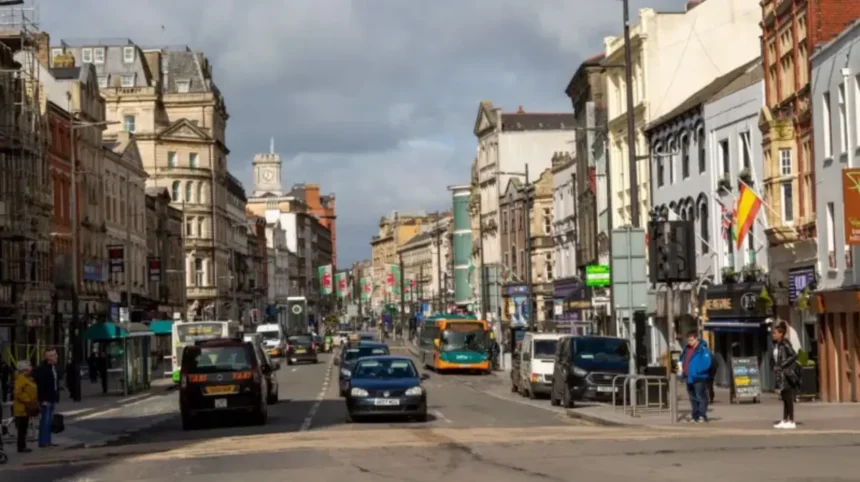
The severe delays come as active construction and engineering projects converge on multiple key arteries throughout Cardiff. Significant capital works are currently underway on major thoroughfares including Castle Street, Callaghan Square, and Kingsway. Simultaneously, utility and infrastructure developments are impacting peripheral communities, notably major roadworks situated in the eastern sector of the city on Lamby Way, as well as extensive gas main replacements managed in the northern suburbs of Llandaff North and Whitchurch.
How Are Ongoing Schemes on Castle Street and Callaghan Square Affecting Travel?
The complex network changes across the city are at various stages of completion. On Castle Street, construction commenced on February 23 with an initial projection of roughly 52 weeks to finalize adjustments that render the temporary road layout and cycleway permanent. According to project outlines, the scheme encompasses comprehensive upgrades such as a fully segregated cycleway, modernized junctions, road resurfacing, enhanced footways, improved bus infrastructure, and fresh landscaping.
Further south, a twin-track tramway is actively being constructed through Callaghan Square, introducing temporary traffic management adjustments. Although Bute Street from Butetown at its junction with Callaghan Square was reopened to northbound traffic on September 20, the broader area remains heavily constrained by ongoing building efforts.
What Are Local Residents and Commuters Saying About the Congestion?
Public response to the widespread disruptions has highlighted deep-seated frustrations regarding urban planning and the synchronization of road closures. As documented by Wales Online, local readers expressed acute exasperation over the cumulative effect of concurrent repairs.
One reader remarked:
“It feels like there’s roadworks and temporary traffic lights on every other road in Cardiff right now – the one off Lamby Way clearly wasn’t given much thought. Causing mayhem!”
Another citizen added:
“Traffic is stupid at the moment. I know, let’s do all the street repairs all at once at the same time”,
while another argued that population growth has exacerbated underlying capacity limits, stating:
“It’s because Cardiff is a growing city its population has grown in the last decade by 15,000 people! Every street is chock-a-block with cars!”
Further criticism targeted alterations to historic bus lanes. As noted by a local commuter via Wales Online:
“The road system in Cardiff has been tinkered with so much now that it’s becoming impassable, not even the busses can move easily anymore as many bus lanes around the city have been made into cycle lanes which for the most part are mainly empty”.
What is the Council’s Response Regarding Project Schedules and Traffic Management?
Addressing the engineering timelines, project authorities noted that construction of this magnitude and complexity requires built-in contingencies to accommodate unexpected structural findings. Ground conditions discovered during excavation necessitated minor adjustments to the operational programme; however, officials emphasized that they are working in close cooperation with contractors to ensure the project stays within its overarching completion schedule. Furthermore, representatives indicated that the council had not formally registered public complaints concerning specific traffic bottlenecks associated with the scheme.
Explore more Local Cardiff News:
Cardiff Council External Borrowing Hits Near £1.2 Billion in Cardiff 2026
South Wales Police Rated Requiring Improvement in Cardiff Watchdog Report 2026
Background of the Particular Development
The current wave of traffic congestion in Cardiff is rooted in a multi-year municipal strategy aimed at overhauling the city’s transport infrastructure to prioritize active travel, public transport efficiency, and long-term environmental sustainability. Projects like the permanent transformation of Castle Street and the installation of integrated cycle networks follow broader European and national policy trends seeking to reduce urban carbon emissions and modernize post-industrial city centres.
Over recent years, Cardiff Council has progressively introduced altered traffic layouts, restricted certain private vehicle lanes, and expanded pedestrian and cycling corridors. However, these structural changes have frequently intersected with essential utility upgrades—such as ageing gas main replacements by utility providers—and post-pandemic economic shifts. Because major public realm schemes, tramway extensions, and utility updates often run concurrently due to distinct funding cycles and statutory requirements, they frequently culminate in intense localized disruption, testing the resilience of a road network originally laid out for lower population densities and private vehicle dominance.
How This Development Can Affect Commuters and Local Businesses
The continuation of widespread roadworks alongside systemic traffic bottlenecks carries significant implications for Cardiff’s commuters, retail sector, and public transport operators in the near future. As local stakeholders have warned, the upcoming weeks will introduce compounding pressures on the transport network, driven by peak seasonal activities such as Christmas shopping rushes, high-profile sporting fixtures including the Autumn Internationals at the Principality Stadium, and planned high-capacity entertainment events.
For daily commuters and bus passengers, these converging pressures threaten to prolong journey times significantly, increasing commuter fatigue and potentially driving a temporary decline in public transport reliability. If transit times remain unpredictable, local retail and hospitality businesses in the city centre could experience dampened footfall during critical trading periods if shoppers choose to avoid urban congestion altogether. Conversely, the friction caused by these developments is likely to intensify public debate concerning urban mobility policies, placing mounting pressure on local policymakers to refine traffic signal timings, improve real-time passenger communication, and carefully sequence future infrastructure interventions to balance green transit goals with immediate economic accessibility.