Key Points
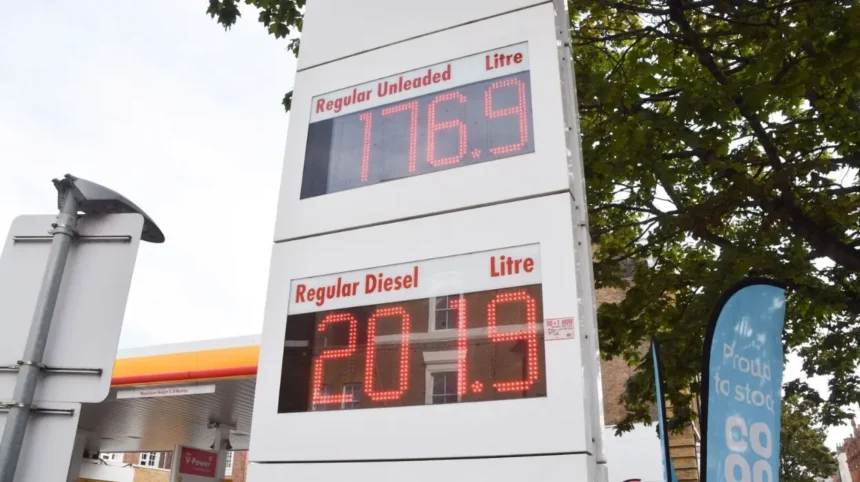
- For the first time ever, the average price of diesel in the UK has exceeded £2 per litre, hitting 200.01p per litre, according to the RAC motoring organization.
- Meanwhile, the price of petrol has also gone up to 174.71p per litre.
- Global supply issues have been the result of a seven-month long war in Iran hampering oil extraction and transport, Ukraine strikes against Russian refineries, as well as export bans from China.
- The G7 countries had an emergency meeting on Friday and reached a consensus that 100 million barrels of oil should be released into global circulation to prevent any more hikes, as well as that no export bans would be imposed on each other.
- The US President Donald Trump has previously considered a plan to ban diesel exports from America to relieve the pressure at home before the November midterms.
- According to Simon Williams, RAC policy director, £2 is “a price point we didn’t want to reach,” as refilling an average family car with diesel currently costs £110, up £32 since the beginning of the war between US and Iran.
- It now costs £96.09 to fill a normal car, with a price increase of £23.03 in the month of February.
- Many people and companies in the UK have noted that there is economic pressure for them, such as Mark Means from Norfolk and Steven Tompkins, a Leicester driving instructor.
- The government of the United Kingdom says that they have enough fuel diversity and therefore, there is nothing to worry about diesel shortage, as less than a third of the imported fuel in the UK comes from the United States.
Cardiff (Cardiff Daily) October 3, 2026 – For the first time in history, the average price of diesel across the United Kingdom has surpassed the psychological barrier of £2 a litre, mounting severe financial pressure on motorists, businesses, and agricultural sectors. According to data released by the motoring group RAC, diesel has climbed to an average of 200.01p a litre, while petrol prices have simultaneously edged upward to an average of 174.71p a litre. As reported by Lucy Hooker and Archie Mitchell of BBC News, the soaring figures are driven by a convergence of international conflicts and trade restrictions, prompting urgent global interventions including a G7 agreement to release 100 million barrels of oil.
Why have UK diesel prices surged past £2 a litre?
The escalating cost of fuel is primarily rooted in severe international supply disruptions that have rippled across the global energy market. As reported by Lucy Hooker and Archie Mitchell of BBC News, over the past seven months, the Iran war has heavily disrupted the production and transportation of wholesale oil and refined products from the Middle East, causing prices to surge worldwide.
Compounding these regional issues, Ukrainian attacks on Russian refiners have further constrained global supplies of diesel. Simultaneously, China has implemented restrictions on its exports of refined fuels, choking off alternative supply routes for European nations.
Addressing the gravity of the situation, RAC policy head Simon Williams stated that £2 was a “price threshold no one wanted to cross”, adding that price rises were “showing no signs of slowing, heaping more misery onto motorists”. As detailed by Lucy Hooker and Archie Mitchell of BBC News, the cost of filling an average family car with diesel now stands at £110, which marks an increase of nearly £32 since the start of the US-Iran war. Meanwhile, filling a typical petrol car has risen to £96.09, up by £23.03 since February.
Explore More UK News
Jordan Burton Convicted Of Murdering Daniel Allright In Lewisham 2026
Second Child Dies After Alleged Blue Mountains Stabbing Incident In Blue Mountains 2026
How are G7 nations and world leaders responding to the fuel crisis?
In an effort to stabilise surging global energy markets, G7 nations convened an urgent meeting on Friday. As reported by Lucy Hooker and Archie Mitchell of BBC News, the coalition agreed to release 100 million barrels of oil to head off further price increases.
Furthermore, the G7 pact established that member countries would refrain from imposing export restrictions on one another. This diplomatic agreement came in the wake of threats from US President Donald Trump, who had considered banning shipments of American diesel overseas. While such a ban would have eased immediate pressure on US consumers ahead of November’s midterm elections, it would have severely exacerbated global prices.
Despite these international measures, domestic anxiety remains palpable. A UK government spokesperson strove to reassure the public earlier on Friday, stating,
“We have a diverse and resilient supply. We continue to engage with our international partners and the UK fuel industry.”
The government has explicitly stressed that there is no cause for concern regarding potential diesel shortages. Official statistics note that over half of the diesel consumed in the UK is imported, with American imports accounting for less than a third of those imports, translating to roughly 17% of total UK supply.
What is the local impact on UK businesses and motorists?
While international diplomats negotiate supply releases, the trickle-down effect is severely straining domestic households and commercial enterprises. RAC policy head Simon Williams noted, as reported by Lucy Hooker and Archie Mitchell of BBC News, that the milestone
“will be very challenging for households and companies that drive a lot of miles, from commuters, haulage and delivery firms, businesses with large fleets all the way through to sole traders.”
The economic fallout is keenly felt across industries. Mark Means, a farmer in Norfolk with over 50 years of experience, told BBC reporters that he was “frightened to death” by the escalating costs. Having invested £50,000 on new diesel tanks to secure adequate supplies for harvesting and planting crops, Means explained that the rising prices are severely eroding his operational margins. Describing the situation, he stated, “It feels like it’s an assault.”
Similarly, small business owners are forced to pass rising overheads down to consumers. Steven Tompkins, a driving instructor in Leicester, explained to BBC journalists that spiking fuel prices are compelling him to adjust his tuition rates.
“When you’ve got kids who are working part time, they’re on a tight budget and we’re telling them that the prices are going to have to go up because of the fuel, it’s hurting,”
he said.
Beyond direct drivers, economists warn that the crisis carries a significant knock-on effect. Even citizens who do not operate diesel vehicles face inflated costs for basic consumer goods due to soaring delivery expenses and heightened agricultural production costs.
Background of the Development
The crossing of the £2-per-litre threshold for diesel represents the culmination of a protracted structural energy crisis that has been building since early 2026. The foundational shock originated from the outbreak of the Iran war, which severely destabilised crude oil extraction and maritime logistics across the Persian Gulf—a vital artery for global petroleum trade. This foundational deficit was compounded by geopolitical friction in Eastern Europe, where strategic military strikes on Russian energy infrastructure reduced the export capacity of refined middle distillates like diesel, upon which European markets heavily depend.
Historically, the UK fuel market relies on a diversified import strategy to satisfy more than 50% of its diesel demand, balancing supplies from European refiners, the Middle East, and North America. However, simultaneous export tightening by Asian economies like China and protectionist political pressures in the United States created a synchronized supply squeeze. While historic precedents like the 1973 oil crisis or the 2022 European energy crunch triggered sharp inflationary spikes, the convergence of active military conflicts affecting primary extraction, refining, and transportation simultaneously has left modern supply chains uniquely vulnerable, ultimately forcing prices into uncharted territory.
The escalation of diesel prices past £2 a litre is projected to exert immediate, cascading effects on the British public, particularly low-income households, logistics-dependent small businesses, and the agricultural sector. For everyday commuters and sole traders, elevated transport costs will directly compress disposable incomes, forcing reductions in non-essential spending as household budgets absorb higher costs for commuting, home deliveries, and food items. Small enterprises operating vehicle fleets—such as independent hauliers, delivery services, and tradespeople—will face compressed profit margins unless they successfully pass these overhead costs onto consumers, potentially stoking broader domestic inflation.
In the agricultural sector, heightened fuel expenses for heavy machinery, tractors, and distribution will likely translate into higher farmgate prices, which will eventually manifest as increased grocery bills for shoppers in the coming months. While the G7’s coordinated release of 100 million barrels of oil may offer temporary psychological relief and marginal wholesale stabilization, sustained geopolitical instability in the Middle East and ongoing refinery constraints suggest that fuel prices will remain volatile well into the autumn and winter seasons, keeping cost-of-living pressures elevated across the UK.