Key Points
- Topping Out Ceremony Success: Cardiff and Vale College (CAVC) has successfully held its topping out ceremony at both of its new campuses in the Vale of Glamorgan.
- £119 Million Project: This £119m twin campus project consists of the Barry Waterfront Campus and the Advanced Technology Centre situated right next to Cardiff Airport.
- Opening Date: These two modern learning centers will be operational for students from the summer of 2027, with the first intake of students beginning from September 2027.
- First Net Zero Project in Wales: These projects make up the first-ever net zero carbon scheme in the further education sector within Wales that has been developed through the Sustainable Communities for Learning Programme of the Welsh Government.
- Participating Parties: All parties involved including representatives from CAVC, Bouygues UK, WEPCo, and the Welsh Government were present at the topping out ceremony along with CAVC engineering students.
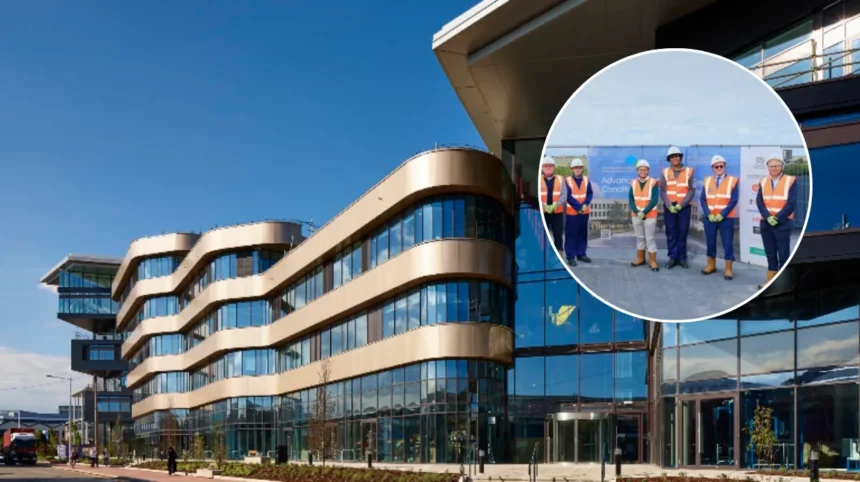
Cardiff (Cardiff Daily) October 16, 2026 – Cardiff and Vale College has formally celebrated reaching a major milestone in its landmark £119 million investment programme, as construction on its two new campuses in the Vale of Glamorgan officially hit their highest structural point. The landmark topping out milestone was marked at the site of the new Advanced Technology Centre opposite Cardiff Airport, celebrating the completion of the structural frames for both the airport-adjacent facility and the new Barry Waterfront Campus. Delivered via the Welsh Government’s Sustainable Communities for Learning Programme in partnership with WEPCo and lead developer Bouygues UK, both sites will form the first net zero further education development in Wales when they open to students in September 2027.
- Key Points
- What Progress Has Been Made on the £119m Campuses?
- What Role Will the Advanced Technology Centre Play in Wales’ Future Economy?
- How Will the Barry Waterfront Campus Serve the Local Community?
- What Did Project Leaders and Partners Say During the Ceremony?
- Background of the Development
- How This Development Will Affect Learners, Businesses, and the Vale of Glamorgan Community
What Progress Has Been Made on the £119m Campuses?
As reported by Rhys Gregory of Wales 247, the milestone marks the full structural completion of both the Barry Waterfront Campus and the Advanced Technology Centre to their highest point. The dual-site project now shifts into its next construction phase, which includes external envelope completion, window installations, building services integration, and interior fit-outs ahead of its planned completion.
The topping out event took place on-site at the Advanced Technology Centre, bringing together key project partners, civic representatives, and students. Attending the official site visit were senior leadership figures from Cardiff and Vale College (CAVC), WEPCo, and the Welsh Government, who were guided around the development by contractor Bouygues UK. Among the attendees were two CAVC engineering learners, Max Lewis and Dayron Buckler, who are set to be among the very first cohort to study at the facility when it officially opens for the academic year in September 2027.
The gathering featured key personnel including Bouygues UK Operations Director Kevin McElroy, WEPCo General Manager Neal Cutting, CAVC Principal Sharon James-Evans, CAVC Chair of Corporation Geraint Evans, CAVC Group Chief Executive Mike James, CAVC Chief Operating Officer Richard Pugsley, CAVC Director of Estates Jeff Thomas, and Neal O’Leary, Programme Director for the Welsh Government’s Sustainable Communities for Learning Programme.
What Role Will the Advanced Technology Centre Play in Wales’ Future Economy?
Located directly opposite Cardiff Airport, the Advanced Technology Centre is strategically positioned alongside the college’s existing International Centre for Aerospace Training (ICAT). The 13,000-square-metre building has been specifically designed to accommodate specialized training programs aimed at fulfilling the evolving skills requirements of regional employers, industrial apprentices, and workers operating within high-tech sectors.
As detailed in the coverage by Rhys Gregory of Wales 247, the Advanced Technology Centre will focus on developing expertise required to support Wales’ wider transition towards a Net Zero economy. Modern curriculum areas housed in the facility will cover clean technologies, advanced engineering, and futuristic industrial applications.
In addition, as outlined in technical descriptions provided by project designers Sheppard Robson and project specifications from WEPCo, the Advanced Technology Centre will accommodate nearly 2,000 full-time and part-time learners. Key specialized spaces inside the multi-storey hub will include:
- Robotics and mechatronics laboratories.
- Advanced composites manufacturing hubs.
- Artificial intelligence, rapid prototyping, and electronics design suites.
- Automotive workshops specifically configured to train technicians on electric and hydrogen-powered vehicles.
- A Higher Education Business Centre and dedicated green skills house.
How Will the Barry Waterfront Campus Serve the Local Community?
While the Advanced Technology Centre focuses heavily on high-end engineering and clean energy, the 6,000-square-metre Barry Waterfront Campus is situated in the dockside regeneration zone to cater directly to broader community education needs.
According to reported details from Wales 247 and WEPCo project archives, the Barry Waterfront site will provide a full spectrum of facilities and vocational courses tailored for both young adults and adult learners who are seeking to upskill, reskill, or progress into higher career paths.
The Barry Waterfront Campus has been engineered as an active community hub. Ground-floor areas will feature public-facing street frontages including a student-run hair and beauty salon, an IT suite, and a hospitality training bistro/restaurant. The upper levels will contain general classrooms, creative arts spaces, and an independent learning skills centre complete with an outdoor study terrace.
What Did Project Leaders and Partners Say During the Ceremony?
As reported by Rhys Gregory of Wales 247, Cardiff and Vale College Group Chief Executive Mike James highlighted the wider economic and educational benefits of the investment, stating:
“We are delighted with the progress being made and to mark this important milestone for the two new campuses that will make a real difference to the communities of the Vale of Glamorgan and beyond. These developments reflect our commitment to creating high-quality learning environments for our community and employers, as well as our drive to invest in skills for the future.”
Mike James further added:
“We now look forward to further engaging with young people, families, community groups and employers, ensuring all are part of the journey as these campuses take shape. When the doors open in September 2027, these spaces will belong to the communities they serve, delivering long-term educational, social and economic benefits for the Vale.”
Highlighting the collaborative construction effort, Kevin McElroy, Operations Director at Bouygues UK, stated:
“Reaching this milestone is a testament to the strong, collaborative approach our partners have brought to this project. The commitment from all partners has been instrumental in delivering this transformational investment for Wales.”
Kevin McElroy continued by emphasizing the national significance of the construction project:
“These campuses represent a genuine partnership between education, industry and government – and that collaborative spirit extends to our onsite team, whose dedication has been crucial in bringing this vision to life. It’s rewarding to be part of a project that will deliver world-class facilities for the next generation of engineers, manufacturers and sustainability experts, whilst also setting a benchmark as Wales’s first net zero further education campus.”
Reflecting on the vision for the new learning environments, Neal Cutting, General Manager at WEPCo, noted:
“What better way to celebrate the tangible passion and commitment of the Cardiff and Vale College to its learners and the communities they serve, than to mark the completion of the inspiring spaces taking shape at the Advanced Technology Centre. We are honoured to be entrusted to deliver the College’s vision for innovative, modern education spaces on this site and the Barry Waterfront Campus.”
Neal Cutting concluded:
“Together with our experienced delivery partners, who have carefully designed and are now building for future generations, we look forward to the next set of milestones as we work towards completion in time for the start of the upcoming academic year. We are committed to ensuring that the new facilities will inspire all learners for many years to come and open new doors of opportunity for Wales and communities in the Vale of Glamorgan.”
Explore more Local Cardiff News:
King Charles Met with Loud Anti-Monarchy Protest at Cardiff Senedd Opening Cardiff 2026
BBC Journalist Explores Clean Energy Transition Fallout in Cardiff 2026
Background of the Development
The £119 million college development represents one of the largest capital investments in further education in Welsh history. Formally approved through planning committees between late 2024 and 2025, ground was broken on both sites in early 2026 under lead contractor Bouygues UK.
The financing and execution of the twin sites are facilitated through WEPCo (Welsh Education Partnership Company) as part of the Welsh Government’s Sustainable Communities for Learning Programme. The initiative was established to systematically replace aging educational infrastructure across Wales with modern, energy-efficient, and future-proofed spaces.
Both campuses were intentionally designed from the outset to achieve net zero operational carbon emissions, incorporating fabric-first construction approaches, photovoltaic solar arrays, high-efficiency heat recovery systems, and low-carbon building materials. Beyond physical construction, contractor Bouygues UK has integrated local employment targets into the build phase, committing to hundreds of weeks of local training, apprenticeships, and direct student ambassador involvement throughout the construction lifecycle.
How This Development Will Affect Learners, Businesses, and the Vale of Glamorgan Community
The completion and operational launch of the £119m CAVC development in 2027 is anticipated to produce significant, structural effects across three primary stakeholder groups: local learners, regional industry employers, and the surrounding local economy.
For Students and Adult Learners
The creation of Wales’ first net zero further education campuses will grant over 2,800 full-time and part-time students access to cutting-edge technical equipment that mirrors real-world modern workplaces. Learners pursuing qualifications in advanced manufacturing, green energy, robotics, electric/hydrogen transport, and digital technologies will gain direct practical experience on industry-grade infrastructure. This is expected to directly enhance graduate employability and establish direct pathways into high-wage technical careers without requiring students to travel outside the region.
For Local Industry and Regional Employers
Businesses across South Wales—particularly within the aerospace, automotive, manufacturing, and green technology sectors—frequently report skills gaps in emerging fields. The co-location of the Advanced Technology Centre alongside the International Centre for Aerospace Training (ICAT) creates a specialized innovation quarter. Local companies will benefit from a direct pipeline of job-ready apprentices and customized upskilling modules for existing staff, helping local firms remain competitive during the wider industrial transition toward automation and decarbonisation.
For the Barry Waterfront and Vale of Glamorgan Community
The Barry Waterfront Campus acts as a cornerstone for urban regeneration in the dockside area. By incorporating public-facing commercial facilities—such as a student-run salon and restaurant—the campus will generate footfall, stimulate local retail expenditure, and enhance community cohesion. Furthermore, by establishing sustainable, net zero educational infrastructure, the project sets an environmental benchmark for future public developments throughout Wales.