Key Points
- Historical Notoriety: Charlotte Street and Whitmore Lane in Cardiff served as the first major brothel area of Cardiff between the 1830s and 1870s, but they have now vanished off the map.
- Severe Portrayal: According to historical narratives cited in media articles, these areas were notorious in nature, with critics asserting that every stone on the pavement had a criminal reputation.
- Transition to Bute Street: After the fall of this first area, the next location for the red-light and crime center of the city was Bute Street in Tiger Bay starting from the 1870s.
- Community Dynamics in Bute Street: Historian and author Neil Sinclair pointed out that even though Bute Street was quite notorious, there existed a close-knit community in which the neighborhood kids were taught to refer to prostitutes in the area as “aunty”.
- Archival Accounts: The academic and municipal archival accounts mainly portray the concern of the police department about criminality and prostitution at that time rather than any moral crusade.
Cardiff (Cardiff Daily) October 17, 2026 – Historical investigations into Cardiff’s urban development have resurfaced the dark, illicit legacy of two central Victorian streets that grew so notoriously crime-ridden and infamous that authorities ultimately scrubbed them from the map altogether. While the Welsh capital is widely celebrated today for its rich industrial heritage and vibrant cultural evolution, its past holds severe chapters of social decay, poverty, and vice that were systematically cleared away as the city modernized.
What Were the Details of Cardiff’s First Notorious Red-Light District?
As detailed by Thomas Deacon of WalesOnline, Cardiff possesses a long and intriguing history, yet certain neighbourhoods harbor a considerably darker and more unsavoury past that has largely been relegated to history books. Over the past two centuries, specific pockets of the capital functioned as notorious red-light districts.
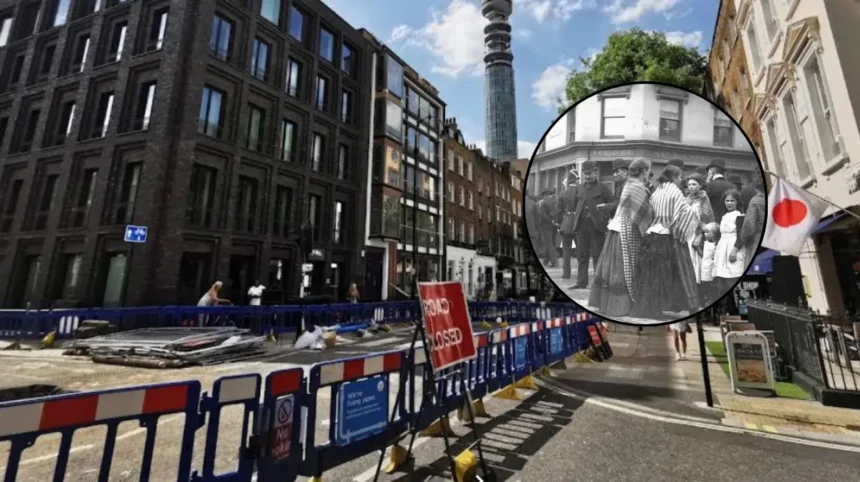
Cardiff’s very first recognized red-light area centered around Charlotte Street and Whitmore Lane, which operated extensively from the 1830s until the 1870s. As reported by Thomas Deacon of WalesOnline, Charlotte Street and Whitmore Lane were collectively known during the Victorian era for their deep association with criminality and social distress, eventually leading to structural clearances and their total erasure from official maps.
The social conditions of mid-19th-century Cardiff were heavily strained by rapid industrialisation, an influx of transient sailors, and extreme poverty surrounding the expanding docks. The concentration of illicit activities in Charlotte Street and Whitmore Lane eventually prompted severe municipal and police intervention, leading to structural clearances and the eventual physical erasure of the streets from official maps in the late 1800s.
How Did the Seedy Reputation Shift Toward Bute Street and Tiger Bay?
Following the suppression and demolition associated with Charlotte Street and Whitmore Lane, the focal point of Cardiff’s underground economy shifted geographically. As reported by Thomas Deacon of WalesOnline, Bute Street took on this turbulent reputation from the 1870s onwards, becoming deeply embedded in the identity of the historic Tiger Bay area.
Historical commentary captured by Thomas Deacon of WalesOnline underscores the intense public scrutiny directed at the area during its peak. As documented in archive reports cited by Thomas Deacon of WalesOnline, contemporary observers complained that
“The curse of this street in particular, more than any other in Cardiff, is the horde of debased women who parade its pavements, and are everywhere and always to be seen”.
Providing personal insight into the lived reality of the district, author and historian Neil Sinclair—who was himself raised by the docks—spoke to Thomas Deacon of WalesOnline regarding the social ecosystem of the area. As reported by Thomas Deacon of WalesOnline, Neil Sinclair stated that
“Tiger Bay’s seedy and criminal side tended to be along Bute Street”.
Illustrating how families navigated the environment, Neil Sinclair stated to Thomas Deacon of WalesOnline that
“Mothers would make up reasons for their kids not to play on there. ‘There’s too much traffic,’ they would say. There could have been something going on in one of the cafés parents didn’t want us to see”.
Explore more Cardiff Crime News
Cardiff Landlord Fined Over £3,500 Following Rent Smart Wales and Prohibition Breaches
Organised Crime Gang Targeted Child in Retaliation Shooting in Bridgend 2026
What Was the Nature of Community Life Amidst the Criminality?
Despite the pervasive presence of vice and criminal elements along the docklands, local social structures maintained a unique internal code of conduct. As outlined by Thomas Deacon of WalesOnline, the community spirit within the shadow of Bute Street remained surprisingly robust and tightly knit.
Detailing the social acceptance and localized protection within the neighbourhood, Neil Sinclair stated to Thomas Deacon of WalesOnline that
“If a lady of the night lived in the local area she held the respect of her fellow sisters”.
Furthermore, Neil Sinclair added, as reported by Thomas Deacon of WalesOnline, that
“Children were told to call her ‘aunty’ without knowing her nightly endeavours. But it was tolerated as long as you lived with respect”.
Archival and academic assessments cited by Thomas Deacon of WalesOnline indicate that while modern researchers can infer various elements of informal economies from historical documentation, surviving evidence predominantly offers a map of official police anxieties. As reported by Thomas Deacon of WalesOnline, the evidence mainly offers a map of police concerns over particular areas that were linked to prostitution, rather than reflecting a continuously sustained public perception of prostitution as an isolated, distinct social problem. Ultimately, the physical restructuring of Cardiff’s city centre and docklands through urban renewal programs permanently altered these landscapes, turning notorious Victorian alleys into footnotes of municipal history.
Background of the Particular Development
The historical excavation of Cardiff’s erased Victorian red-light districts stems from ongoing archival research into the capital’s rapid 19th-century transformation. During the Industrial Revolution, Cardiff evolved rapidly from a small market town into one of the world’s busiest coal-exporting ports. This unprecedented economic boom attracted tens of thousands of transient sailors, migrant workers, and impoverished labourers, creating immense population pressures around the docklands. Municipal authorities and police forces struggled to manage sanitation, housing shortages, and street-level criminality, leading to heavy-handed policing, moral reform campaigns, and late-Victorian urban clearance schemes. Streets like Charlotte Street, Whitmore Lane, and parts of Bute Street became prime targets for municipal redesign, leading local authorities to demolish problematic tenements and physically alter the street grid to suppress entrenched vice networks.
Impact on the Local Audience
For modern Cardiff residents, historians, and urban planners, the rediscovery of these erased streets serves as a crucial reminder of how urban spaces are continuously shaped by socioeconomic pressures and municipal policy. Local communities, heritage groups, and Cardiff residents engaging with regional journalism will likely see an increased emphasis on preserving and understanding the complex, multicultural, and sometimes gritty history of Tiger Bay and the city centre. As Cardiff continues modernising its transport networks, docks, and central commercial zones, awareness of past urban renewal projects highlights the permanent impacts that municipal restructuring can have on community identity and heritage preservation.