Key Points
- Main Contractor Departure: McLaren Construction is no longer part of the £280m project to build Cardiff’s new 16,500-capacity arena.
- Direct Control: The consortium behind the project is now taking direct control over the next phase of construction alongside Cardiff Council.
- Subcontractors Retained: Existing expertise and subcontractors currently on site are being kept on to ensure continuity.
- Project Scale and Costs: The development forms part of a wider 30-acre mixed-use regeneration at Atlantic Wharf in Cardiff Bay, with costs having spiralled following the pandemic and rising inflation.
- Scheduled Opening: The multi-purpose venue remains on track to open in 2028.
Cardiff (Cardiff Daily) November 14, 2026 — The major regeneration of Cardiff Bay has hit a notable turning point as McLaren Construction has stepped away from its role as the primary builder for the city’s highly anticipated 16,500-capacity indoor arena. As reported by WalesOnline, the development consortium is stepping in to manage the construction directly.
- Key Points
- What Led to the Departure of McLaren Construction from the Cardiff Arena Project?
- How Will the Consortium and Cardiff Council Manage the Next Construction Phase?
- What Are the Design and Acoustic Features Planned for the 16,500-Capacity Venue?
- Background of the Particular Development
- Prediction: How This Development Can Affect the Local Community and Economy
What Led to the Departure of McLaren Construction from the Cardiff Arena Project?
The multi-million-pound scheme, which has seen costs spiral from initial estimates following the COVID-19 pandemic and subsequent rise in inflation, will no longer feature McLaren Construction as its principal contractor. As reported by WalesOnline, it is now understood that McLaren is no longer part of the project, prompting the consortium behind the development to assume direct command over the upcoming phases of construction.
The venue, which is scheduled to open its doors to the public in 2028, forms an integral centerpiece of the broader Atlantic Wharf regeneration masterplan in Cardiff Bay. McLaren Construction was originally appointed to the high-profile role after winning the contract following a competitive tender process. However, shifting operational dynamics have necessitated a change in site leadership.
How Will the Consortium and Cardiff Council Manage the Next Construction Phase?
To maintain momentum on the ambitious £280m scheme, the delivery group is collaborating closely with local authorities. As reported by WalesOnline, a spokesperson for the consortium behind the Cardiff arena stated:
“We are committed to delivering a world-class arena for Cardiff and Wales. Working with Cardiff Council, we are taking direct control of the next phase of construction, keeping on the expertise of the subcontractors already on site.”
By retaining the specialist subcontractors already operating at the Atlantic Wharf location, project leaders aim to protect continuity and minimize disruption. The initiative is a cornerstone of the wider 30-acre mixed-use regeneration zone, which encompasses contemporary office spaces, a vibrant public square, leisure facilities, and a planned 182-room hotel.
What Are the Design and Acoustic Features Planned for the 16,500-Capacity Venue?
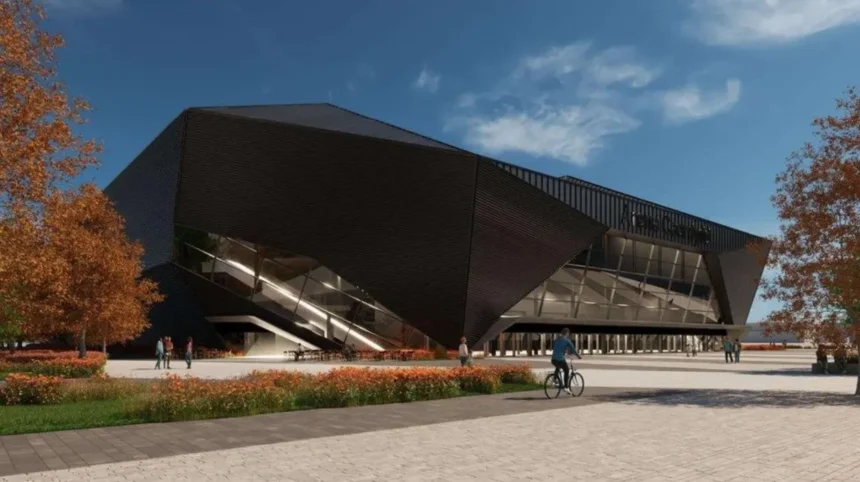
Designed by architectural firm Populous, the arena aims to accommodate a diverse schedule spanning major musical performances, live entertainment, and high-profile sporting fixtures. Planners have emphasized that the building will feature cutting-edge acoustic engineering.
According to project disclosures, the venue is engineered to provide fans and artists with an elite sound experience while simultaneously reducing external noise emissions to preserve a peaceful environment for the surrounding residential community. The distinctive architecture utilizes corrugated panelling inspired by Cardiff Bay’s historical prominence in the region’s iron trade.
Background of the Particular Development
The journey toward a modern, large-scale arena in Cardiff spans over half a decade of strategic planning, political debate, and economic shifts. Initially conceived to replace or supplement aging entertainment infrastructure in the Welsh capital, the Atlantic Wharf regeneration project was designed to catapult Cardiff Bay into a top-tier European visitor destination.
The consortium driving the initiative unites major stakeholders, including entertainment giant Live Nation and Robertson Property, working alongside Cardiff Council.
Initial project horizons anticipated earlier completions, but economic pressures, supply chain disruptions, and inflationary spikes significantly altered financial parameters. Despite these hurdles, financial close was achieved, and physical construction commenced in July 2025, setting the stage for the structural milestones witnessed throughout 2026.
Prediction: How This Development Can Affect the Local Community and Economy
The transition to a consortium-led direct management model is projected to test the operational resilience of the project team as it navigates the final two years leading up to the 2028 launch window. For local residents, businesses, and taxpayers in Cardiff, the successful completion of the £280m arena is expected to act as a powerful economic catalyst, drawing an estimated 1.5 million additional visitors annually and injecting vital footfall into the Cardiff Bay economy.
However, the departure of a major tier-one contractor like McLaren introduces heightened scrutiny regarding adherence to timelines and budget caps. If the consortium successfully harnesses existing subcontractors without missing milestones, the venue will likely fulfill its promise of transforming regional leisure and tourism; conversely, any prolonged administrative friction risks delaying the scheduled 2028 opening and affecting local commercial partners relying on the influx of event-driven patronage.