Key Points
- National Farmers’ Union President Tom Bradshaw warned that imported food made to standards unlawful in the United Kingdom could undermine domestic farming.
- He linked the warning to a Salmonella Enteritidis outbreak associated with eggs imported from Ukraine.
- Food authorities ordered withdrawals and recalls of eggs from Ukrainian supplier Yasensvit Ltd after Salmonella was identified in the products.[2][4]
- Bradshaw said two people died and the British egg industry risked being tarnished, while official reports cited confirmed outbreak cases and ongoing investigations.[1][3]
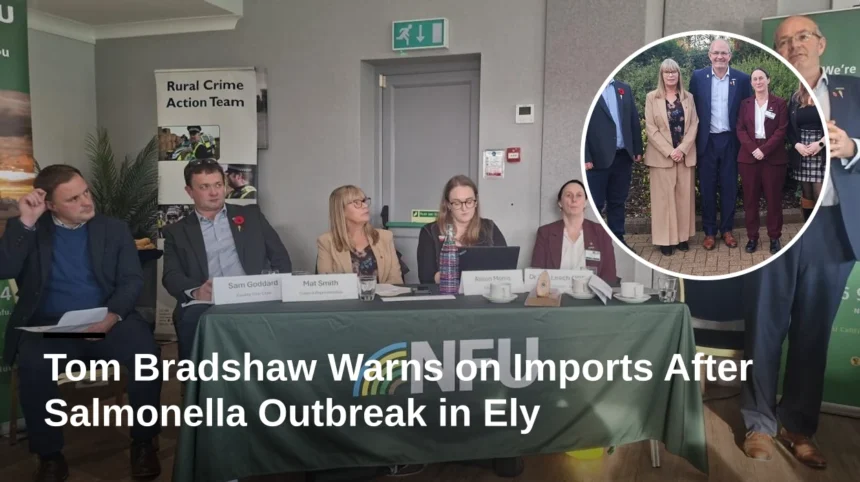
- He made the remarks at the National Farmers’ Union Cambridgeshire annual general meeting at City of Ely Golf Club.
Inverted pyramid:
Ely (Cardiff Daily) November 10, 2026 – National Farmers’ Union President Tom Bradshaw warned that lower-standard food imports could threaten British farmers and consumer confidence after a Salmonella outbreak linked to imported Ukrainian eggs. Speaking at the National Farmers’ Union Cambridgeshire annual general meeting at City of Ely Golf Club, Bradshaw said the United Kingdom must establish core food-production standards and ensure imported food meets comparable requirements. He said two people had died and the egg industry risked being tarnished, while food authorities confirmed withdrawals and recalls connected to eggs from Ukrainian supplier Yasensvit Ltd.[1][2][4]
What did Tom Bradshaw say about imported food standards?
As reported by Peterborough Today in its report “NFU President urges Cambridgeshire farmers to keep championing the industry”, Tom Bradshaw said government policy allowed food to enter the United Kingdom that would be illegal to produce domestically.[1] He called for a level playing field and said establishing core standards was vital.
Bradshaw said the Salmonella outbreak involving eggs imported from Ukraine demonstrated the need for stronger safeguards. He also urged farmers to keep farming on the political agenda ahead of a general election, saying engagement with Members of Parliament, councillors and other stakeholders was necessary to support a resilient farming industry.[1]
What is known about the Salmonella outbreak?
The Food Standards Agency’s chief executive said recent action followed an outbreak of Salmonella Enteritidis linked to imported eggs from a supplier in Ukraine, leading to product withdrawals and recalls across the supply chain.[2] Food Standards Scotland and the Food Standards Agency advised consumers and businesses not to eat, sell or distribute eggs originating from Yasensvit Ltd in Kyiv after Salmonella was detected.[4]
A separate report said the outbreak investigation identified 78 confirmed cases in England and Wales, with more than 70 per cent reported in London and the East of England. It said testing of nearly 3,000 eggs detected the outbreak strain in three samples from a Ukrainian producer, with whole-genome sequencing linking the bacteria to the investigation.[3]
Reports differed on the total number of cases, with other coverage describing three clusters and substantially higher figures at a later stage of reporting.[5] The confirmed recalls and official food-safety warnings remain the clearest documented outcomes.
What other issues were discussed at the meeting?
The meeting also covered the United Kingdom Budget, trade negotiations between the United Kingdom and European Union, water security and environmental support schemes.[1] Cambridgeshire representatives Alison Morris and Mat Smith highlighted the importance of farmers supporting one another and looking after their physical and mental health.[1]
Bradshaw said the country’s population represented a substantial domestic market for British agriculture and that the National Farmers’ Union would continue seeking support for the sector.[1]
What is the background to the food-import standards dispute?
British farmers have argued that imports should meet standards comparable with those required of domestic producers. The dispute intensified after food authorities linked imported Ukrainian eggs to a Salmonella Enteritidis outbreak and ordered supply-chain action.[2][4] The episode also prompted calls from the egg sector for tighter border controls and clearer distinction between imported eggs and eggs produced under the British Lion scheme.[5] The National Farmers’ Union has connected the issue to wider concerns about farm resilience, trade policy and the competitiveness of domestic producers.[1]
How could the development affect consumers, farmers and food businesses?
Consumers may face more prominent advice about the origin and handling of eggs, while food businesses could face additional checks, withdrawals and recall procedures when imported products are implicated. British egg producers may benefit from stronger demand if confidence shifts towards domestic supply, although any new controls could also increase costs for importers, caterers and retailers. Farmers and industry representatives are likely to press political parties for enforceable import standards and clearer supply-chain accountability. The effect on public confidence will depend on the continuing investigation, the scope of official controls and how clearly businesses communicate which products are affected.