
Key Points
- West Midlands Police horses Belgravia and Yve joined an after-school patrol in Wolverhampton city centre.
- Officers Laura Johnson and Jen Tweedle used the patrol to engage with young people and discuss safety.
- The patrol formed part of the HomeSafe initiative and wider work addressing knife crime and anti-social behaviour.
- Police said neighbourhood patrols are based on intelligence about crime hotspots and times of heightened risk.
- The operation followed wider knife-crime education work involving campaigner Pooja Kanda and Project Guardian officers.
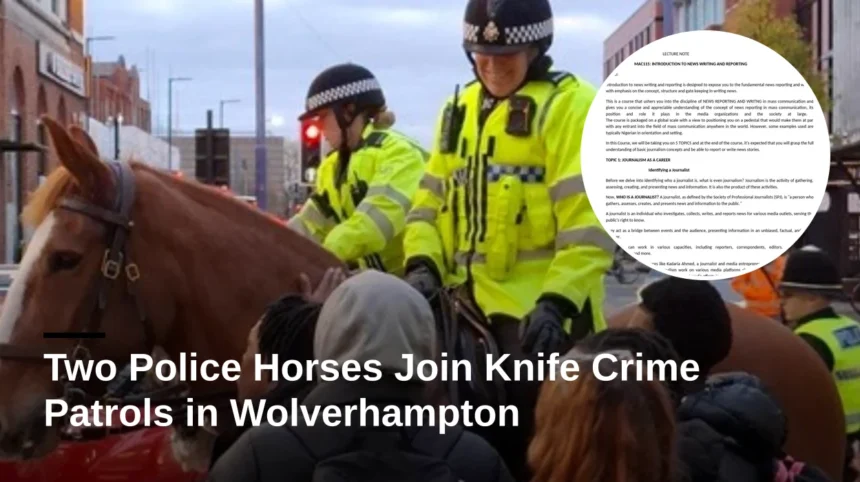
Wolverhampton (Cardiff Daily) November 27, 2026 – West Midlands Police horses Belgravia and Yve joined mounted officers Laura Johnson and Jen Tweedle on an after-school patrol in Wolverhampton city centre. The patrol aimed to engage with young people, build positive relationships and support wider efforts to tackle knife crime and anti-social behaviour. Young people and adults stopped to speak with officers, stroke the horses and take photographs. Police said the patrol was part of regular neighbourhood activity under the HomeSafe initiative.
How did mounted police support the Wolverhampton patrol?
As reported by the Express & Star, Belgravia and Yve joined officers in the city centre after the school day ended. Their presence attracted dozens of young people and created opportunities for conversations that might not otherwise have taken place.
West Midlands Police said the patrols are intended to engage with young people, identify places where anti-social behaviour may occur and encourage early intervention through partnership working. Officers also invited members of the public to approach them and talk during the patrol.
How does the patrol relate to the knife-crime crackdown?
The mounted patrol formed part of wider knife-crime awareness work in Wolverhampton. Police neighbourhood teams carry out targeted patrols using information about suspected hotspots and periods when people may be carrying knives.
West Midlands Police has also described regular school and college engagement as part of its prevention work. Dedicated schools intervention and prevention officers work with education providers and partners to advise young people about staying safe, exploitation and the risks of carrying knives.
What other knife-crime work took place in Wolverhampton?
Earlier in November, Pooja Kanda joined officers from West Midlands Police’s Project Guardian team at Khalsa Academy, where they spoke to Year 8 and Year 9 pupils about the dangers of knife crime. Kanda’s son, Ronan Kanda, attended the school before he was fatally stabbed in 2022.
The police response has included specialist operations, neighbourhood patrols and education sessions. Separate reports also described Guardian patrols involving uniformed and plain-clothes officers across Wolverhampton and the wider West Midlands, with a focus on removing weapons and reducing criminality.
What is the background to the HomeSafe patrols?
HomeSafe patrols are designed to improve engagement between police officers, young people and local partners in Wolverhampton. City-centre teams regularly conduct after-school patrols and focus on areas where intelligence indicates a risk of anti-social behaviour or serious violence. The approach combines visible policing with early intervention and community conversations. Wolverhampton City Council has also considered additional community safety enforcement officers to work alongside West Midlands Police on high streets and in the city centre.
What could the patrols mean for young people and residents?
The mounted patrols could give young people more opportunities to speak with officers in an informal setting while allowing police to identify concerns earlier. For residents and businesses, the visible presence may provide reassurance in the city centre after school. The approach is likely to remain part of a wider programme combining engagement, targeted patrols, school education and enforcement. Its effect will depend on continued partnership work and whether conversations lead to early support or action where risks are identified.