Cardiff’s Butetown district has long sat at the heart of the city’s debates over regeneration, transport and social equity. The area’s long‑standing questions about road‑building and through‑traffic—particularly proposals to route major routes either through or under Butetown—have resurfaced in various forms over decades, with the so‑called “Butetown tunnel” or associated tunnelled‑road schemes becoming shorthand for a much broader dispute. Today, when Cardiff residents talk about “Butetown tunnel plans,” they are often referring not to one single, fixed project but to a recurring set of transport‑and‑regeneration proposals that threaten to reshape the fabric of Bute Street, Lloyd George Avenue and the wider Bay area.
- What people mean by “the Butetown tunnel” (and why it’s so confusing)
- Transport logic: why planners keep coming back to tunnels
- Cardiff Bay regeneration and the legacy of the “Bay divide”
- Voices from Butetown: why opposition is so strong
- Why some residents cautiously support tunnel‑linked schemes
- The role of the Cardiff Council and South Wales Metro
- Environmental and social‑justice concerns
- How history shapes today’s arguments
- The search for compromise: what a “balanced” scheme might look like
- Why this debate will remain relevant for years
Public opinion in Cardiff, especially among Butetown residents, is deeply divided. Some see a tunnel or similarly engineered road solution as essential for easing congestion, unlocking economic growth and modernising the city’s transport spine. Others view it as a reincarnation of old top‑down planning that risks deepening the “Bay divide,” reinforcing social segregation, and prioritising through‑traffic and visitor traffic over the wellbeing of local communities.
This article unpacks the Butetown tunnel idea in a way that will remain relevant for years to come: explaining the underlying transport logic, the historical context of Cardiff Bay regeneration, the lived‑experience concerns of Butetown residents, and why political and technical compromises have yet to satisfy the full range of stakeholders. The goal is to equip readers of Cardiff Daily with a clear, evergreen understanding of the controversy, grounded in Cardiff‑specific history and contemporary planning documents, rather than a fleeting news‑style report.
What people mean by “the Butetown tunnel” (and why it’s so confusing)
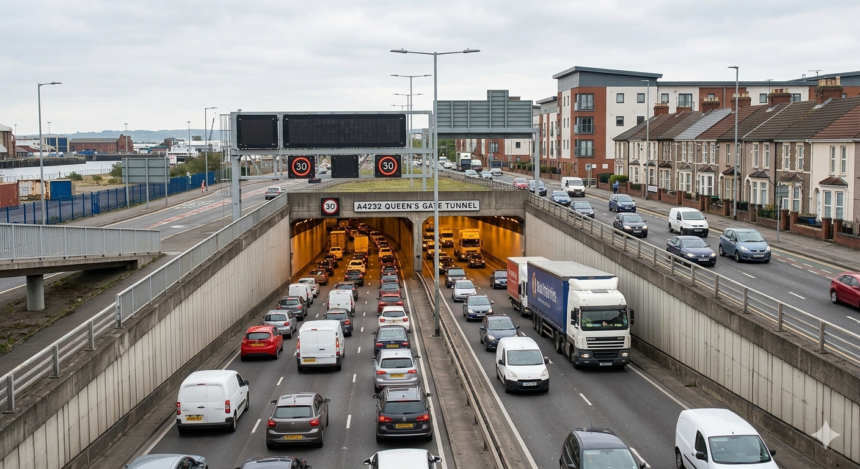
In everyday conversation, “Butetown tunnel” is rarely a precise technical term. Locals and commentators often use it to refer to any proposal that would route a major road under Bute Street or the adjacent Butetown area instead of building an elevated viaduct or widening existing surface roads. In Cardiff’s planning folklore, the most famous example is the tunnel that carries the A4232 “Queen’s Gate” road under the old Butetown route, which was routed underground in part to avoid splitting the community in two with a massive overpass.
Because of this history, the phrase “Butetown tunnel plans” can trigger different mental images:
- Some people think of the existing Queen’s Gate tunnel and any schemes to extend or modify its alignment.
- Others think of hypothetical proposals to bore a new tunnel under Bute Street or the inner harbour to resolve traffic bottlenecks between the Bay, the city centre and the M4 corridor.
- A third group associates “tunnel plans” with broader Cardiff Bay regeneration packages, including the Atlantic Wharf and Lloyd George Avenue upgrades, in which significant road‑reconfiguration plays a central role.
This definitional fuzziness is itself part of why Cardiff residents are divided: the same slogan can mean congestion‑relief engineering for one person and a symbol of insensitive urban‑renewal to another.

Transport logic: why planners keep coming back to tunnels
From a traffic‑engineering and regional‑growth perspective, routes through or around Butetown are critical nodes in the South Wales road network. The A4232 and the surrounding link roads connect the M4, the city centre, Cardiff Bay and the developing mixed‑use zones around Atlantic Wharf. Congestion at peak times, combined with the city’s wider ambitions for the South Wales Metro and Cardiff Bay regeneration, has kept pressure on planners to redesign how vehicles move through this corridor.
Tunnels are attractive in such contexts because they can, in theory, remove heavy through‑traffic from surface streets, calm local road patterns, and open up land for public space or development. For example, several strategic planning studies for Cardiff Bay have suggested closing or realigning the western carriageway of Bute Street / Lloyd George Avenue and converting it to green space, while shifting the main road function into a tunnel or other below‑grade structure.
From this perspective, a “Butetown tunnel” or tunnel‑linked road scheme is framed as a technical fix: reduce noise, pollution and visual intrusion on Bute Street itself, free up the waterfront for pedestrian‑friendly spaces, and still keep vehicles moving efficiently between the Bay and the city.
Cardiff Bay regeneration and the legacy of the “Bay divide”
Butetown’s reputation as a “divided” neighbourhood is not just about roads; it stretches back decades of regeneration policy and social change. The Cardiff Bay Development Corporation, established in the late 1980s, launched what was billed as the largest urban‑regeneration project in Wales, transforming the old docklands into a mixed‑use and tourist‑oriented waterfront. That project, while credited with revitalising the Bay’s image, also created a widely noted psychological and physical divide between the affluence of the Bay and the more deprived Butetown area to the north.
Local minority‑community leaders and long‑standing business owners in Butetown have repeatedly pointed out that regeneration schemes often bring external investment, new bars, hotels and offices, but rarely translate into stable employment or improved day‑to‑day facilities for residents. The construction zones around the Bay, combined with property‑price rises and the perceived targeting of visitor traffic over local needs, have fuelled a sense that Butetown is being “built around” rather than “built with.”
Against this backdrop, any new road or tunnel proposal can feel less like neutral engineering and more like another chapter in a familiar story: Cardiff’s authorities reshaping the city’s transport spine while Butetown residents worry about being left out, air‑quality impacts, and the loss of familiar streetscapes.
Voices from Butetown: why opposition is so strong
Many residents of Butetown see any new tunnel or road‑realignment plan as a continuation of past grievances. Long‑term residents have described how earlier regeneration projects failed to create meaningful apprenticeships or local hiring pipelines, even though they promised thousands of jobs. Community members worry that future tunnel‑backed schemes will follow the same pattern: contracts and skilled jobs going to firms and workers from outside the area, while Butetown shoulders environmental and social costs such as noise, vibration and construction‑related disruption.
Business owners along Bute Street, many of whom run small, family‑run shops and services, also express anxiety. They note that Cardiff Bay’s polished attractions do not automatically translate into footfall for their local shops, yet road‑works and long‑term construction can damage their trade. Some fear that a tunnel‑centric plan might further emphasise the Bay as a destination for visitors arriving by car, while leaving Butetown’s local economy on the margins.
There is also a strong undercurrent of concern about health and environment. Without careful mitigation, tunnelling and associated road‑works can increase local air pollution, noise and vibration, which matter especially in a densely populated urban ward. For residents who already feel that their concerns have been overlooked in previous regeneration rounds, proposals framed as “necessary infrastructure” can feel like a top‑down decision in disguise.
Why some residents cautiously support tunnel‑linked schemes
Despite the opposition, not everyone in Butetown or Cardiff more broadly is instinctively against the idea of a tunnel or other major road‑engineering project. Some residents see potential benefits if the scheme is properly designed and accompanied by local‑benefit guarantees.
For example, a well‑engineered tunnel or realigned road spine could, in principle, reduce the dominance of vehicles on surface streets, allowing more space for pedestrians, cyclists and public‑realm improvements. Planners and urban‑design advocates have long argued that a good scheme would close or narrow the western carriageway of Lloyd George Avenue and convert it into green space or shared public space, while shifting the main traffic‑flow underground. In that scenario, Butetown’s streets might feel calmer and more attractive, even if the city still needs to move large volumes of traffic between the Bay and the motorway network.
Property‑owners and investors, meanwhile, sometimes see transport upgrades as a way to stabilise or increase the long‑term value of land and housing in the area. Some residents acknowledge that congestion and traffic‑related pollution are real problems that need structural fixes, and that tunnelled or otherwise re‑engineered routes are often the only way to achieve both movement and environmental goals in a constrained urban corridor.
In short, the divide in Cardiff is not simply “pro‑growth versus anti‑growth”; it is about whose growth and whose quality of life the tunnel plans are meant to serve.
The role of the Cardiff Council and South Wales Metro
Cardiff Council and the wider South Wales Metro programme sit at the centre of the current debate over Butetown‑linked transport schemes. The Metro agenda, which aims to transform public‑transport capacity and connectivity across the region by the mid‑2020s, has highlighted the need for a comprehensive regeneration and landscaping project along Bute Street and Lloyd George Avenue. This includes not only rail and bus improvements but also the re‑engineering of road layouts that intersect with train‑lines and major bus corridors.
Within that context, a tunnel or tunnel‑linked road scheme is one of several technical options being weighed. The official line tends to emphasise long‑term benefits: better‑connected public transport, reduced road congestion, and more coherent movement between the Bay and the city centre. Council documents and planning statements for the Atlantic Wharf and Cardiff Arena areas often frame road‑reconfiguration as an enabling step for broader regeneration, including housing, leisure and commercial development.
However, the same documents can feel remote to Butetown residents who do not see explicit, binding commitments to local employment, apprenticeships, affordable housing or community‑led design. Where consultation is provided, there is a recurring concern that views are heard but not genuinely incorporated into the final design. This disconnect between technical planning language and lived‑experience grievances is one reason why the divide over “Butetown tunnel plans” persists.
Environmental and social‑justice concerns
Environmental‑impact assessments and urban‑planning studies for Cardiff Bay‑area projects increasingly stress the need to mitigate air quality, noise and vibration. Tunnel‑centred or tunnel‑linked proposals are often presented as part of that mitigation strategy, on the argument that moving heavy traffic below ground can reduce surface‑level noise and pollution and improve the quality of the public space above.
Yet residents in Butetown argue that the benefits are not equally distributed. The Bay’s waterfront is transformed into a leisure and tourism destination, while nearby residential streets must cope with the cumulative effects of construction, lorries, and on‑going traffic feeding into the tunnel portals. Community groups have also raised questions about how such projects are appraised in terms of social equity: are the impacts of noise, pollution and visual intrusion falling disproportionately on lower‑income and minority communities that already face higher health‑risk burdens?
In that sense, the “Butetown tunnel” debate is not only about roads and tunnels as physical objects, but about how planning decisions allocate environmental and social costs in a city with stark spatial inequalities.
How history shapes today’s arguments
The arguments currently swirling around Butetown tunnel plans are deeply rooted in the city’s regeneration history. The 1987‑era Cardiff Bay Development Corporation era is frequently invoked by residents and commentators as a precedent: a time when large‑scale redevelopment was promised as a route to prosperity, yet many local residents felt marginalised, their views were not fully integrated, and tangible local‑benefit guarantees were weak. That historical memory colours the way people interpret new proposals, even if the technical details differ.
There is also a more specific planning memory: the decision to route the A4232 through the Queen’s Gate tunnel under Butetown, which was itself a compromise to avoid an over‑ground viaduct that would have split the area in two. For some, the fact that planners once chose a tunnel to protect community cohesion is a reason to insist on similar sensitivity now. For others, it is a reminder that such compromises can still leave local communities with long‑term environmental and social costs.
When Cardiff residents argue about “Butetown tunnel plans,” they are, therefore, often arguing about the lessons of the past as much as about future engineering.
The search for compromise: what a “balanced” scheme might look like
Policy papers and expert commentary on Cardiff’s transport and regeneration landscape have suggested that a “balanced” Butetown‑linked scheme would have several features:
- A clear, legally backed package of local‑benefit measures, including apprenticeships, local‑hiring preferences and community‑wealth‑building mechanisms so that the construction and ongoing operation of any tunnel or major road project actually benefit Butetown residents.
- Strong environmental‑mitigation and monitoring provisions, including air‑quality controls, noise‑attenuation measures, and transparent reporting on how the project affects health and wellbeing in the surrounding neighbourhoods.
- A commitment to high‑quality public‑realm improvements on Bute Street and the adjacent waterfront, so that any reduction in surface‑level traffic is matched with tangible gains in green space, walkability and safety for pedestrians and cyclists.
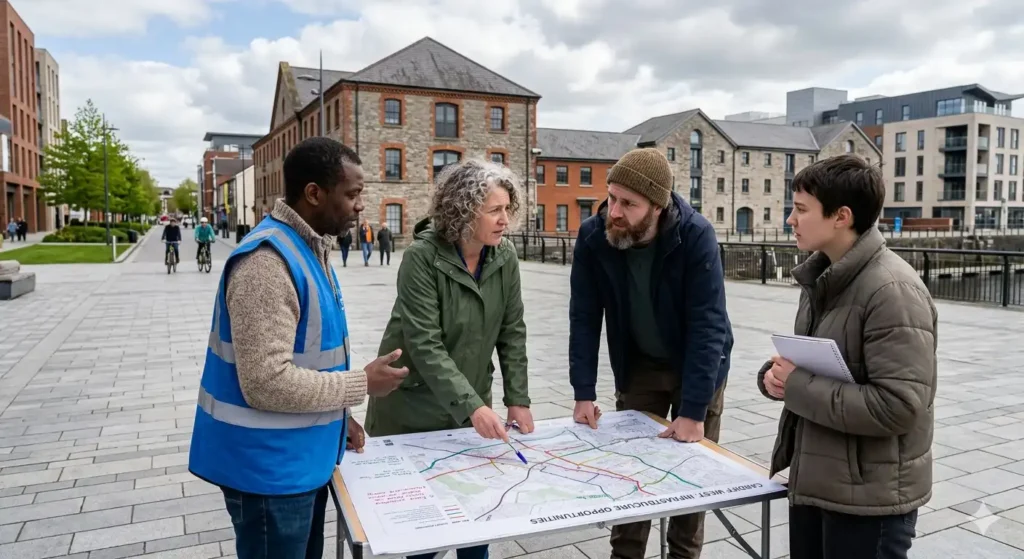
- A participatory design process that goes beyond checkbox‑style consultations and involves local residents, business‑owners and community organisations at key stages of route‑selection and design.
Whether such compromises are technically and financially feasible at any given moment depends on a wider range of factors, including government‑funding priorities and the balance struck between road‑capacity needs and active‑travel ambitions. However, the absence of explicit commitments in this direction is itself one of the main reasons why Cardiff residents remain sharply divided over Butetown‑linked tunnel proposals.
Why this debate will remain relevant for years
The Butetown tunnel question is unlikely to be a one‑and‑done issue. Cardiff’s growth, the South Wales Metro programme, and the ongoing Atlantic Wharf and Cardiff Bay regeneration mean that the movement of people and vehicles through this corridor will continue to attract scrutiny. As environmental standards tighten and public expectations for community‑led planning rise, any new road or tunnel proposal will be judged against the legacy of past regeneration projects and the very visible contrast between the Bay and Butetown.
For readers of Cardiff Daily, understanding the Butetown tunnel debate is about far more than a specific engineering option. It is about how a city balances growth against equity, how transport‑planning decisions become symbols of inclusion or exclusion, and how long‑standing feelings of being “built around rather than with” can shape the reception of even the most technically sound proposals. As future councils, developers and consultants revisit Butetown‑linked schemes, the underlying tensions—between congestion‑relief and community‑impact, between Bay‑centred tourism and local‑resident wellbeing—will remain as central as ever.