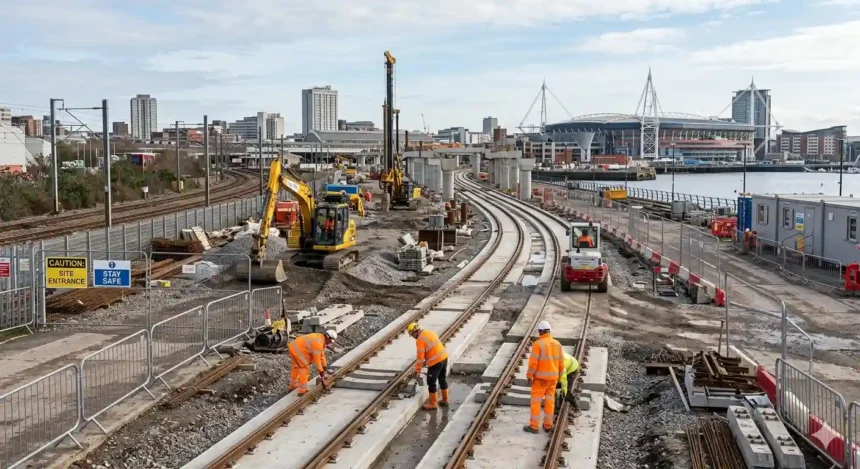
Cardiff Crossrail represents a transformative step forward in the city’s public transport infrastructure, promising seamless connectivity between key hubs like Cardiff Central and Cardiff Bay. As construction advances into its critical phases, passengers can anticipate enhanced reliability, reduced travel times, and integration with broader rail networks, all designed to support Cardiff’s growing population and economy.
Project Origins and Vision
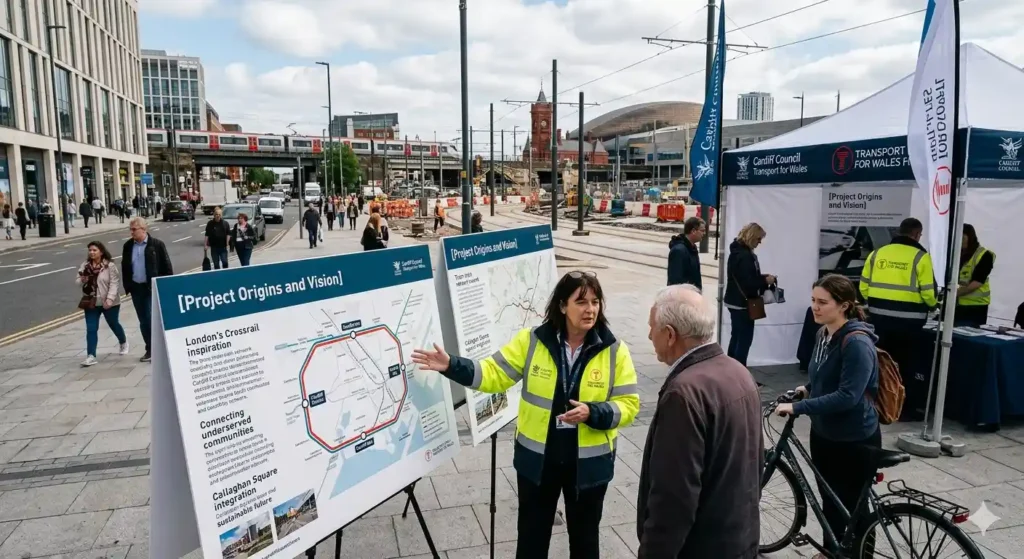
The Cardiff Crossrail initiative emerged from a long-standing need to modernize Wales’ capital transport system, drawing inspiration from London’s successful Crossrail project while adapting it to local geography and demands. Envisioned as a tram-train network, it aims to blend the flexibility of trams with the speed of heavy rail, creating a loop that links underserved communities to employment centers, leisure districts, and major developments. Cardiff Council, in partnership with Transport for Wales, first outlined the scheme in the city’s 10-year transport vision, emphasizing sustainability and accessibility as core principles.
This vision addresses chronic congestion on existing bus and rail routes, particularly between the bustling city center and the regenerating Cardiff Bay area. By introducing dedicated tram tracks through areas like Callaghan Square, the project seeks to alleviate road traffic while fostering economic growth around landmarks such as the new 16,500-seat indoor arena. Historical context reveals that Cardiff’s transport evolution has been incremental— from horse-drawn trams in the 19th century to the modern South Wales Metro—but Crossrail marks a bold leap toward a fully integrated, greener network.
Current Progress Milestones
As of March 2026, Cardiff Crossrail has transitioned from planning to active construction preparation, with councillors approving GRAHAM as the preferred contractor for Phase 1. This phase focuses on the vital link from Cardiff Central station to Cardiff Bay, incorporating new tram platforms, twin-track tramways, and redesigned road layouts for enhanced safety. The approval follows a rigorous procurement process, including public consultations and a potential inquiry under the Transport and Works Act 1992, with a Welsh Government report expected by mid-2026 and final decisions by September.
Key milestones include the completion of design phases and securing £100 million in joint funding from the Welsh Government and the UK Government’s Levelling Up Fund. Site preparations in Callaghan Square have begun, featuring segregated cycle routes, pedestrian crossings, and sustainable drainage systems to minimize environmental impact. While broader timelines for the full network remain fluid, Phase 1a—fully funded and prioritized—stands on track, with physical works accelerating post-approval.
Transport for Wales’ Chief Infrastructure Officer has highlighted ongoing collaboration with Cardiff Council, underscoring the project’s role in redeveloping Cardiff Central for increased capacity and better accessibility. Recent updates confirm that tram-trains, already tested on Core Valley Lines, will integrate seamlessly, bringing early benefits like level boarding ahead of full rollout.
Infrastructure Developments Underway
At the heart of Cardiff Crossrail’s progress lies ambitious infrastructure upgrades tailored to modern passenger needs. New platforms at Cardiff Central and Cardiff Bay will accommodate both trams and trains, eliminating the need for transfers and streamlining journeys. The twin-track tramway through Callaghan Square will weave through urban spaces, incorporating landscaping to blend seamlessly with Cardiff’s Victorian architecture and contemporary waterfront.
Road redesigns prioritize safety, with signalized crossings and widened pavements reducing vehicle-pedestrian conflicts. Sustainable features, such as permeable surfaces for flood management, reflect Cardiff’s commitment to climate resilience in a city prone to heavy rainfall. These elements not only support the tram but also enhance the surrounding ecosystem, connecting to the Atlantic Wharf regeneration and future Parkway station in the east.
Complementing this, Cardiff Central’s overhaul will introduce step-free access, dynamic signage, and expanded waiting areas, drawing from best practices in European tram-train systems like those in Karlsruhe, Germany. These developments ensure the network can handle projected demand spikes from events at the new arena and business districts.
Passenger Experience Enhancements
Passengers boarding Cardiff Crossrail will step into vehicles designed for comfort and efficiency, featuring air-conditioned interiors, spacious seating, and real-time digital displays. Tram-trains, capable of operating on both street-level tracks and mainline rails, promise journey times slashed by up to 20% compared to current options, with direct services bypassing busy interchanges. Expect intuitive ticketing via the contactless TfW app, integrated with bus and rail fares for hassle-free multimodality.
Accessibility stands paramount: low-floor designs and priority spaces for wheelchairs, prams, and bicycles will make the system inclusive for Cardiff’s diverse population. Enhanced lighting, CCTV, and staff presence will bolster security, particularly during evening peaks when Bay nightlife thrives. Audio announcements in English and Welsh, coupled with multilingual apps, cater to tourists flocking to attractions like the Senedd and Mermaid Quay.
Sustainability defines the ride—electric tram-trains powered by renewable sources will cut emissions, aligning with Wales’ net-zero goals. Quiet operation minimizes urban noise pollution, offering a serene contrast to diesel buses, while bike racks encourage last-mile connectivity.
Timeline for Operations
Phase 1a targets operational status by summer 2028, with construction ramping up from autumn 2026 following contractor mobilization. Initial testing on the Cardiff Central to Bay route will precede public services, allowing for fine-tuning of signals and power systems. Full integration into the South Wales Metro could extend to 2029, incorporating extensions toward Plasdwr in the northwest.
Delays from consultations and funding have pushed timelines, but recent approvals signal momentum. Passengers might see trial runs by late 2027, building confidence ahead of launch. Long-term, the network envisions a city-spanning loop by the mid-2030s, contingent on phased funding and land acquisitions.
Ken Skates, Cabinet Secretary for Transport, has emphasized the project’s role in easing daily commutes, positioning 2028 as a pivotal year for Cardiff’s mobility landscape.
Economic and Social Impacts
Cardiff Crossrail’s progress extends far beyond tracks, fueling economic vitality in a city where transport shapes opportunity. The Bay link will shuttle workers to tech hubs and finance firms, while arena proximity boosts tourism revenue projected at millions annually. Regeneration in Callaghan Square and Atlantic Wharf will spawn retail, housing, and green spaces, creating thousands of jobs in construction and operations.
Socially, it bridges deprived areas to prosperity, connecting residents in Ely and Llanedeyrn to city-center jobs via future extensions. Improved access reduces inequality, with studies showing rail investments yield high returns in employment and health outcomes. Environmentally, modal shift from cars promises cleaner air, supporting Cardiff’s 2030 carbon reduction targets.
Local businesses anticipate footfall surges, from Bay eateries to Central shops, while property values along routes climb, mirroring trends in Manchester’s Metrolink expansion.
Integration with Existing Networks
Crossrail will dovetail with the South Wales Metro, where Class 398 tram-trains already enhance Core Valley Lines. Passengers transferring from Treherbert or Radyr will find unified branding and fares, with through-ticketing simplifying complex trips. Cardiff Central’s redesign ensures fluid interchanges, potentially halving wait times.
Bus rapid transit and cycle superhighways will feed into stops, creating a cohesive ecosystem. Digital hubs at stations offer charging, Wi-Fi, and journey planners, rivaling airport amenities. This interoperability positions Cardiff as a transport innovator in the UK.
Challenges and Mitigation Strategies
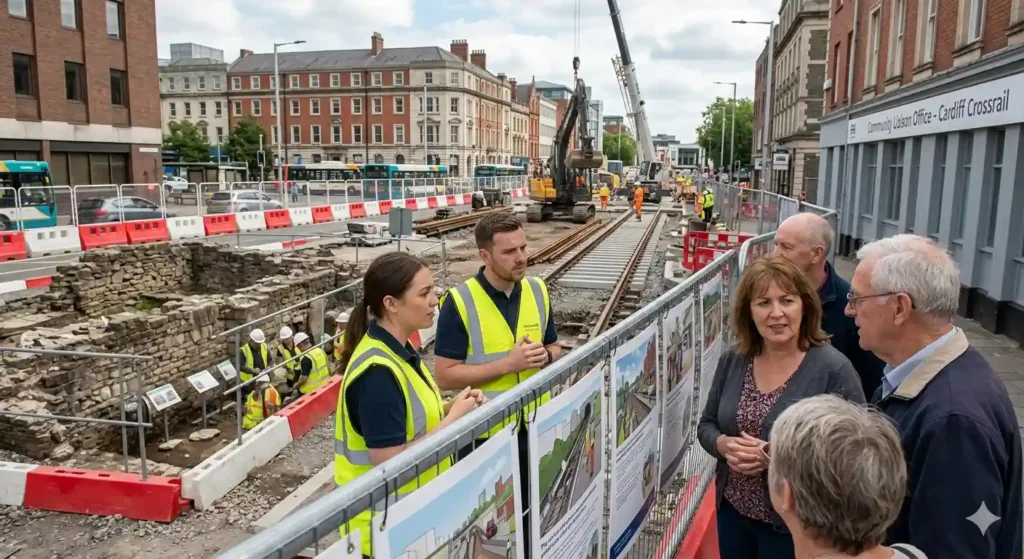
No megaproject escapes hurdles, and Cardiff Crossrail has navigated funding shortfalls, archaeological concerns in historic Callaghan Square, and resident disruptions. Noise and traffic management during construction employs phased works and community liaison teams, with compensation for affected properties. Welsh Government oversight ensures compliance with rigorous environmental assessments.
Inflation and supply chain issues, common post-pandemic, prompted value engineering without compromising safety. Public feedback shaped designs, fostering buy-in and minimizing legal challenges.
Future Extensions and Legacy
Beyond Phase 1, Crossrail eyes eastward to Parkway station and westward loops, potentially encircling Cardiff by 2040. These expansions hinge on metro successes, promising 15-minute frequencies citywide. Legacy-wise, it cements Cardiff’s status as a connected European capital, inspiring regional schemes.
For passengers, the wait heralds a future of effortless travel, where Bay sunsets and Central vibrancy feel worlds closer. As spades hit soil, anticipation builds for a network redefining daily life in Wales’ heartbeat.
What is the current progress of the Cardiff Crossrail project?
The Cardiff Crossrail is in active development, with early-phase works and planning approvals progressing, especially around the Bay Link section.