Travelling from Cardiff to Caerphilly is a common journey for commuters working in South Wales. Cardiff is the Welsh capital and a major employment centre, while Caerphilly is a neighbouring town in Caerphilly County Borough, known for Caerphilly Castle, residential communities and connections to the wider South Wales transport network.
- What Is the Cardiff to Caerphilly Commute?
- How Far Is Caerphilly from Cardiff?
- How Long Does the Train Take from Cardiff to Caerphilly?
- Is the Bus a Good Alternative for the Cardiff to Caerphilly Commute?
- Is Driving from Cardiff to Caerphilly a Practical Commuting Option?
- How Much Does the Cardiff to Caerphilly Commute Cost?
- What Are the Best Travel Options During Peak Commuting Hours?
- Can You Cycle from Cardiff to Caerphilly for Work?
- Is the Cardiff to Caerphilly Commute Suitable for Hybrid Workers?
- What Is the Historical Background of the Cardiff to Caerphilly Railway?
- Which Cardiff and Caerphilly Areas Are Best for Commuters?
- How Can Commuters Handle Delays and Service Disruptions?
- Is the Cardiff to Caerphilly Commute Accessible for Different Travellers?
- What Should You Check Before Starting a Cardiff to Caerphilly Commute?
- Is Cardiff to Caerphilly a Good Daily Commute?
The Cardiff to Caerphilly commute is suitable for rail passengers, bus users, drivers and cyclists. The best option depends on the starting point in Cardiff, the destination in Caerphilly, working hours, transport costs and the need for reliable connections.
This guide explains the available transport options, journey planning, commuting costs, peak-time considerations and practical factors for people travelling between the two locations.
What Is the Cardiff to Caerphilly Commute?
The Cardiff to Caerphilly commute is the regular journey between Cardiff and Caerphilly for work, education or other daily activities. Rail services, local buses and road links connect the two places, giving commuters several ways to travel depending on their destination, budget and timetable.
Cardiff is the main urban centre in the region, with employment across public administration, healthcare, education, retail, finance, professional services and hospitality. Cardiff Central and Cardiff Queen Street are important railway stations, although the most convenient departure station depends on the commuter’s location and route.
Caerphilly lies north of Cardiff and forms part of the wider South Wales urban and commuter area. The town provides residential accommodation, local employment, schools, shops and public services. Some residents travel into Cardiff for work, while others make the reverse journey to workplaces and businesses in Caerphilly.
The route is relevant to people living in either location, including employees travelling five days a week, hybrid workers commuting on selected days, students attending educational institutions and workers with shifts outside standard office hours.
The commute involves more than the distance between the two town centres. Walking to a station, waiting for a train, changing services and travelling from the arrival station to the workplace all affect the door-to-door journey.
How Far Is Caerphilly from Cardiff?
Caerphilly is approximately 7 to 9 miles north of central Cardiff by road, depending on the starting point and route. The distance between individual homes, workplaces and stations varies, so commuters should calculate the complete journey rather than rely on town-centre distance alone.
The geographical distance between Cardiff and Caerphilly is relatively short compared with many regional commuting journeys. However, actual travel distance depends on whether the journey begins in central Cardiff, northern Cardiff, Cardiff Bay or an outer residential area.
Caerphilly town centre is located near Caerphilly railway station and the historic Caerphilly Castle. Cardiff has several employment and residential districts, including the city centre, Cathays, Roath, Cardiff Bay and areas to the north of the city.
A person travelling from Cardiff city centre to Caerphilly town centre has different transport requirements from someone travelling from Cardiff Bay to an industrial estate outside central Caerphilly.
Road distance also differs from rail distance. Rail passengers follow the railway alignment, while drivers use the available road network. Bus routes can include intermediate stops that increase the total journey time.
For accurate planning, commuters should enter their exact departure and arrival addresses into a journey planner. This provides a more realistic estimate of travel time, walking distance and interchange requirements.
How Long Does the Train Take from Cardiff to Caerphilly?
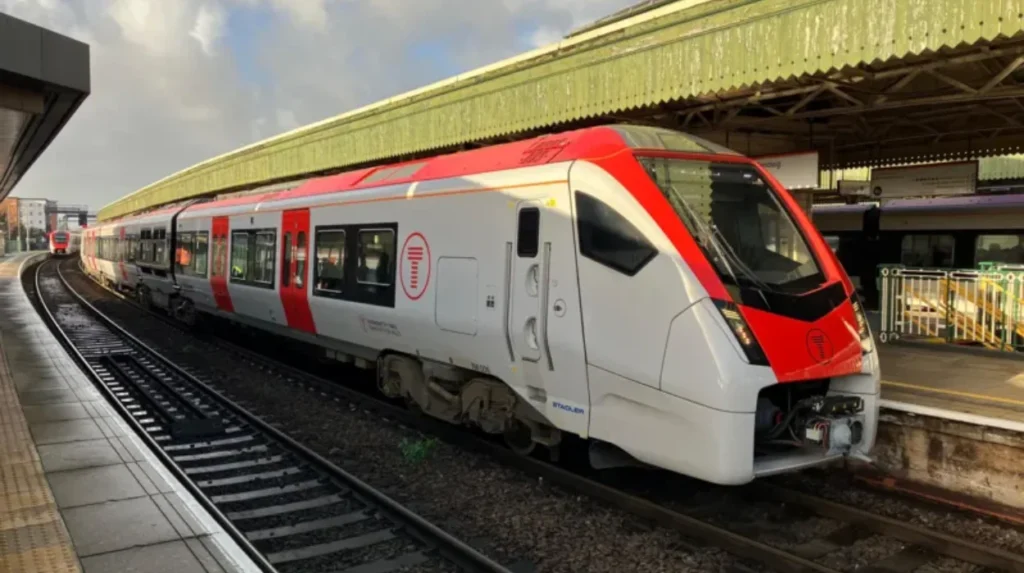
Direct trains between Cardiff and Caerphilly generally provide one of the most practical commuting options. The rail journey typically takes around 15 to 25 minutes, depending on the service and departure station. Check the current Transport for Wales timetable for exact departure times.
Rail travel connects Cardiff with Caerphilly through the South Wales local railway network. Services operate on routes serving communities north of Cardiff, and Caerphilly is an established station on this network.
Cardiff Queen Street is particularly relevant for passengers travelling from the eastern side of the city centre, while Cardiff Central is convenient for people near the main railway hub. The available service depends on the timetable and the selected route.
A rail commute has several practical advantages. Passengers avoid the need to drive through road congestion, do not have to find parking at their destination and can use the journey for reading or other activities. Train travel also provides a predictable route between the two town centres when services run normally.
However, the total journey takes longer than the time spent on the train. Walking to the departure station, waiting for the service and reaching the workplace after arrival all contribute to the door-to-door duration.
Which Cardiff Station Should Commuters Use?
Cardiff Queen Street and Cardiff Central are two important departure options, but the closest station depends on where the journey begins.
Cardiff Queen Street serves the eastern part of the city centre and provides connections across the local rail network. Cardiff Central serves the mainline railway network and is convenient for many central Cardiff workplaces.
Commuters should compare the available departure stations before choosing a route. A slightly longer train journey from a nearby station can be more convenient than travelling across Cardiff to reach a different departure point.
How Reliable Is the Train Journey?
Rail reliability depends on service frequency, engineering work, weather disruption, signalling problems and operational conditions. Commuters with fixed start times should check live departures before leaving home.
Transport for Wales provides timetable and service information for its railway network. Passengers should also review planned engineering works, especially when travelling at weekends or during public holidays.
A practical routine is to identify an alternative train and allow additional time for the first few weeks of a new commuting arrangement. This helps establish a realistic door-to-door journey time.
Is the Bus a Good Alternative for the Cardiff to Caerphilly Commute?
Bus travel is a useful alternative for commuters whose homes or workplaces are close to suitable stops. Journey times depend on the route, traffic, stopping patterns and departure time. Check current services through Traveline Cymru before relying on a bus for daily travel.
Buses provide access to residential neighbourhoods and destinations that are not immediately next to railway stations. This makes them relevant to commuters who live outside central Cardiff or work in areas away from Caerphilly town centre.
The correct bus route depends on the exact addresses involved. A service passing through northern Cardiff can be convenient for someone near its stops, but less useful for a passenger travelling from Cardiff Bay or the western side of the city.
Traffic is the main variable affecting bus journey times. Congestion during morning and evening peaks can increase travel duration, particularly around busy junctions and major urban roads.
How Should Commuters Find the Right Bus?
Use the Traveline Cymru journey planner to compare departure times, stops and connections. The Cardiff Bus journey planner also provides route information for its network.
Check the entire route rather than searching only for a bus labelled Cardiff or Caerphilly. The departure stop, arrival stop and walking distance determine whether the service is practical for work.
Passengers should confirm whether the selected journey runs on weekdays, weekends, school holidays or public holidays. Timetables differ between operating periods, and a route that suits a weekday morning does not necessarily provide the same service late in the evening.
When Is Bus Travel More Practical Than Rail?
Bus travel is particularly useful when a workplace is closer to a bus stop than a railway station. It also suits commuters who need to reach residential streets, retail locations or workplaces outside the immediate town centre.
Rail is often more predictable for the main journey between central Cardiff and Caerphilly. A bus becomes more competitive when it avoids a separate connection or substantially reduces walking at either end.
The most useful comparison is the complete journey, including waiting time, transfers and walking. Commuters should compare both options for their actual departure time before committing to a regular travel routine.

Is Driving from Cardiff to Caerphilly a Practical Commuting Option?
Driving from Cardiff to Caerphilly offers flexibility for commuters travelling between locations that are difficult to reach by public transport. The road journey depends on traffic, parking availability and the chosen route, so peak-hour travel requires additional planning.
A car is useful for people with irregular shifts, equipment to carry, multiple work locations or responsibilities that require travelling beyond the town centre. It can also simplify journeys from residential areas with limited direct public transport.
The short regional distance does not guarantee a quick drive. Traffic builds around major junctions, urban roads and approaches to busy employment areas. School traffic, roadworks, collisions and adverse weather also affect journey times.
Drivers should use a live navigation service before departure and allow extra time during weekday commuting periods. A route that is clear outside peak hours can become slower when commuter traffic increases.
Which Roads Connect Cardiff and Caerphilly?
The road journey uses the local road network north of Cardiff, with route selection depending on the departure area and destination. Drivers travelling from northern Cardiff often have different options from those starting in the city centre or Cardiff Bay.
The A469 corridor is relevant to travel between Cardiff’s northern districts and Caerphilly. Other local roads connect residential areas, business premises and neighbouring communities. A navigation service identifies the most suitable route for the current traffic conditions.
The M4 provides wider regional access around Cardiff, but it is not automatically the most direct route for a short journey to central Caerphilly. Drivers should compare the route suggested for their precise destination instead of assuming that motorway travel saves time.
What Should Drivers Know About Parking?
Parking is an important part of the total commuting cost. A workplace with free, secure parking can make driving more attractive, while limited parking or daily charges can reduce its value.
Caerphilly County Borough Council provides information about local parking arrangements and permits through its official services. Commuters should confirm the current charges, operating restrictions and eligibility conditions for the specific car park or controlled parking zone they intend to use.
Cardiff commuters should also consider whether their workplace provides staff parking or requires a paid parking arrangement. The cost of parking at work can be as significant as fuel for a short regional commute.
How Much Does the Cardiff to Caerphilly Commute Cost?
The cost of commuting from Cardiff to Caerphilly depends on the transport mode, ticket type, travel frequency and parking requirements. Rail fares, bus tickets, fuel, vehicle maintenance and parking all affect the total budget. Compare current prices before selecting a regular commuting option.
There is no single cost that applies to every Cardiff-to-Caerphilly commuter. A person travelling by train from Cardiff Queen Street to Caerphilly station has different expenses from someone driving from Cardiff Bay to a workplace outside the town centre.
Rail passengers should compare single tickets, return tickets and available season-ticket products. Transport for Wales provides ticketing information and journey-specific options for the route. Its Cardiff Queen Street to Caerphilly service information also identifies the journey as a short direct rail trip.
Bus users should compare single fares with day tickets or other available travel products. The best-value ticket depends on how often the service is used and whether the passenger needs additional journeys during the day.
Drivers need to calculate fuel, parking, maintenance, insurance and depreciation where relevant. Fuel alone does not represent the full cost of operating a car for commuting.
How Can Regular Commuters Reduce Travel Costs?
Commuters can reduce costs by matching their ticket to their actual travel pattern. Someone travelling five days a week should compare the total cost of individual tickets against available season tickets or multi-journey products.
Hybrid workers need a different calculation. A person travelling two days each week does not automatically benefit from the same ticket arrangement as someone commuting every weekday. Flexible products are worth comparing where the operator offers them.
Other practical steps include the following:
- Compare train fares for the exact stations and travel dates.
- Check bus day tickets and multi-journey options.
- Share a car journey where schedules and destinations align.
- Check workplace parking benefits before driving every day.
- Walk or cycle to a station when the route is safe and practical.
- Compare the monthly cost of commuting rather than looking only at a single fare.
The cheapest option is not always the most practical. A slightly more expensive direct journey can save enough time to justify the additional cost, especially for people with fixed working hours.
What Are the Best Travel Options During Peak Commuting Hours?
Peak commuting hours usually cover the weekday morning and late-afternoon periods when employees travel to and from work. Train departures, road congestion and bus reliability differ by time, so commuters should check live information and compare alternative departure times.
Morning journeys generally need to account for arrival deadlines, while evening journeys depend on finishing times and the availability of return services. Employees working standard office hours should assess both directions before deciding on a route.
A train that arrives in Caerphilly shortly before the working day begins might suit an office near the station. A workplace farther away requires extra time for walking or onward transport.
Drivers should allow for congestion on the approach to Cardiff and on roads connecting residential districts with Caerphilly. Bus passengers need to consider delays caused by the same traffic conditions.
How Can Commuters Avoid Being Late?
The most effective approach is to plan for the required arrival time rather than aim for the last possible service. Commuters should identify a backup train or bus and understand what happens if the first service is cancelled.
For rail passengers, live departure information helps identify delays before leaving home. Transport for Wales publishes current service information and timetable resources for the Rhymney Valley and Cardiff corridor.
Drivers should check traffic before departure and avoid relying on a single estimated journey time. People attending important meetings, starting clinical shifts or working to strict opening times should leave a reasonable buffer.
Hybrid workers have greater flexibility to travel outside the busiest periods when their employer permits it. Shifting the journey by even a short interval can change the experience of travelling on crowded services or congested roads.
Can You Cycle from Cardiff to Caerphilly for Work?
Cycling between Cardiff and Caerphilly is an option for commuters who are comfortable with the distance, terrain and traffic conditions. The suitability of the journey depends on the chosen route, fitness, weather, available cycling infrastructure and secure storage at work.
Cycling provides direct door-to-door travel without waiting for a train or searching for parking. It also combines commuting with physical activity, although the journey requires appropriate preparation and route selection.
The road distance varies according to the start and end points. Commuters should use a cycle-specific route planner to identify quieter roads, available cycle paths, gradients and potentially difficult junctions.
Not every route suitable for a car is appropriate for a bicycle. Motorway sections are prohibited for ordinary cycling, and busy roads require careful consideration of traffic speed, visibility and road layout.
What Equipment Does a Cycle Commuter Need?
A commuter should use a roadworthy bicycle with working brakes, tyres and lights. A properly fitted helmet, reflective clothing and weather-appropriate layers also support safer travel.
A secure lock is important when parking at a railway station or workplace. Employers with covered cycle storage and changing facilities make regular cycling easier, especially during wet weather.
Cyclists should check the forecast and carry basic repair equipment. A puncture, strong headwind or heavy rain can increase the journey time, so a backup transport option is useful when conditions are unsuitable.
Is the Cardiff to Caerphilly Commute Suitable for Hybrid Workers?
The Cardiff to Caerphilly commute suits hybrid workers who travel between home and the workplace on selected days. Flexible schedules allow commuters to compare different departure times, choose suitable tickets and avoid some peak periods when their employment arrangements permit.
Hybrid working combines remote work with attendance at a workplace. For people living in Caerphilly and working in Cardiff, this can reduce the number of weekly journeys and the associated travel expenditure.
The reverse arrangement also applies to Cardiff residents employed in Caerphilly. Their preferred transport mode depends on office location, required attendance days and the availability of suitable connections.
A hybrid commuter should calculate the monthly travel cost using the expected number of office days. This provides a better basis for comparing individual fares with season tickets.
How Should Hybrid Workers Plan Their Weekly Travel?
Employees should identify which days require office attendance and establish a reliable route for those days. They should also check whether their employer permits flexible start times, as this affects the ability to travel outside peak periods.
Remote working does not eliminate the need to consider occasional travel disruptions. Employees attending important meetings or scheduled training should confirm return options and allow additional time when travelling during engineering work.
For workers travelling only occasionally, flexible rail or bus products can be more suitable than a ticket designed for frequent daily travel. Current conditions and prices should always be checked with the operator.
What Is the Historical Background of the Cardiff to Caerphilly Railway?
The Cardiff to Caerphilly railway forms part of the wider transport network that developed around the South Wales coalfield and regional towns. Railways supported industrial movement, passenger travel and urban growth, and the corridor continues to serve everyday journeys across the region.
The development of rail transport in South Wales is closely connected to the region’s industrial history. Coal mining, iron production, manufacturing and port activity created demand for transport between inland communities and Cardiff’s docks and commercial districts.
Caerphilly and the surrounding valleys became connected to wider economic networks through railway development. Cardiff expanded as a commercial and administrative centre, while local communities developed residential and industrial links with the capital.
Over time, rail services became important for more than industrial freight. Passenger trains enabled people to travel for employment, education, shopping and other activities. Modern commuting between Cardiff and Caerphilly reflects this long-standing relationship between the city and the surrounding communities.
Today, Transport for Wales operates services along the corridor linking Cardiff with Caerphilly and destinations farther north into the Rhymney Valley. The current railway is therefore both a practical commuting route and part of the wider transport infrastructure of South Wales.
Which Cardiff and Caerphilly Areas Are Best for Commuters?
The best areas for Cardiff-to-Caerphilly commuters depend on proximity to railway stations, bus stops, workplaces and major roads. Residents should compare their actual door-to-door journeys, housing costs, parking requirements and access to essential services before choosing where to live.
In Cardiff, areas with convenient access to Cardiff Queen Street, Cardiff Central or suitable northern transport links can simplify travel. The best location depends on whether the workplace is near a station or requires another connection.
Cardiff’s northern neighbourhoods can be practical for commuters travelling towards Caerphilly, depending on their individual route. Residents elsewhere in the city should compare the time required to reach the departure station with the time spent on the main journey.
In Caerphilly, living near the railway station can benefit people who travel regularly to Cardiff by train. However, a home farther from the station can still be practical when local buses, cycling routes or convenient road connections provide suitable alternatives.
What Should Renters and Homebuyers Compare?
Transport is only one part of choosing a home. Renters and buyers should also consider property prices, council tax, household bills, schools, healthcare, shopping and access to leisure facilities.
A property with a lower monthly rent does not automatically provide the lowest overall living cost. Additional transport expenditure and longer daily journeys can offset some of the housing savings.
Commuters should calculate the expected monthly cost of travel alongside housing expenses. They should also consider how the location works for other household members, especially when different people travel to different workplaces or educational institutions.
How Can Commuters Handle Delays and Service Disruptions?
Commuters can manage Cardiff-to-Caerphilly travel disruptions by checking live departure information, monitoring road conditions and identifying alternative routes. Planning a backup journey reduces the impact of cancellations, engineering work, congestion and unexpected changes to the usual transport service.
Rail passengers should consult Transport for Wales before leaving home. The operator publishes live service information, timetables and advice about disruption. Planned engineering work can change departure times or introduce replacement buses, which often take longer than trains.
Drivers should check live traffic conditions and consider an alternative road when a major delay affects their usual route. Bus passengers should check revised timetables and stop information rather than assume the service operates normally.
What Happens When a Train Is Cancelled?
When a train is cancelled, the next suitable service is not necessarily the best alternative. The next departure might be crowded, involve a different route or arrive too late for the required start time.
Passengers should check whether the operator provides a replacement bus or advises using another rail service. Replacement transport can involve different stops and longer travel times, so the full journey needs to be reassessed.
Transport for Wales also provides information about Delay Repay compensation. Eligibility depends on the applicable scheme rules and the circumstances of the delay. Passengers should review the current conditions and keep the relevant ticket and journey details.
Is the Cardiff to Caerphilly Commute Accessible for Different Travellers?
Accessibility on the Cardiff-to-Caerphilly route depends on station facilities, vehicle access, walking distances and the needs of each passenger. Travellers requiring step-free access or assistance should confirm arrangements with the relevant transport operator before making a regular journey.
People with mobility requirements should check station access, platform arrangements and the availability of assistance. A station that is geographically close to a workplace is not automatically the most accessible option.
Passengers travelling with pushchairs, luggage or mobility equipment should consider the entire route, including footpaths, station entrances, crossings and onward connections. They should also confirm whether lifts or other facilities are available and operating.
Travellers who need assistance should arrange it through the operator where appropriate. Checking these details before the first journey reduces uncertainty and helps establish a dependable commuting routine.
Explore More Area Guide
Cardiff to Bridgend Commute Guide | Trains & Buses
Cardiff to Newport Commute Guide: Trains, Buses and Costs
What Should You Check Before Starting a Cardiff to Caerphilly Commute?
Before starting a regular commute, confirm the departure station, arrival point, timetable, ticket price and onward travel arrangements. A short trial journey helps establish realistic travel times and identifies practical issues involving walking, parking, accessibility and connections.
A successful commuting routine starts with a realistic assessment of the complete journey. Travellers should avoid choosing an option solely because its advertised train or bus time appears short.
The following checklist helps commuters prepare:
- Confirm the home and workplace addresses.
- Compare direct rail services with available bus and driving routes.
- Check live timetables for the actual working days.
- Calculate return fares and monthly transport costs.
- Identify a backup option for delays and cancellations.
- Check parking arrangements or secure bicycle storage.
- Allow time for walking and onward travel.
- Review the return journey, particularly after late shifts.
Testing the route before the first working day provides a practical understanding of how long the commute takes. Reassess the arrangement when work hours, transport timetables or workplace locations change.
Is Cardiff to Caerphilly a Good Daily Commute?
Cardiff to Caerphilly is a practical commuting corridor for many workers because the locations are relatively close and connected by rail and road. The best choice depends on workplace location, travel frequency, current fares, service reliability and personal transport needs.
For journeys between central Cardiff and Caerphilly town centre, the train is often a strong starting point for comparison because direct services connect the locations. Bus travel is useful where stops align with the journey, while driving provides flexibility for destinations away from public transport.
Cycling suits commuters who can manage the distance and identify a suitable route. Hybrid workers can reduce travel expenditure by matching ticket purchases and departure times to their office attendance.
The most reliable decision comes from comparing door-to-door journey time and total cost rather than distance alone. Check official timetables and current fares before travelling, then review the route after the first few commuting days.
How long does the train take from Cardiff to Caerphilly?
Direct trains from Cardiff to Caerphilly generally take around 15–25 minutes, depending on the service and departure station. Check Transport for Wales for current timetables and live departures.