A circular walk around Roath is an urban walking route centred on Roath Park, Roath Park Lake, its historic gardens and surrounding neighbourhoods. The area combines Victorian parkland, formal horticulture, residential streets, active-travel connections and established local landmarks.
- What is a circular walk around Roath?
- Why is Roath Park the centre of the walk?
- When was Roath Park created?
- Where should you start a circular walk around Roath?
- What can you see during the Roath circular walk?
- Is the Roath circular walk suitable for different walkers?
- How does Roath connect with Cardiff’s active-travel network?
- What should you know before walking around Roath?
- Why is a circular walk around Roath important for Cardiff?
Roath is an inner-eastern area of Cardiff, the capital of Wales. The neighbourhood sits close to Cathays, Plasnewydd, Penylan and Cyncoed. Roath Park provides the principal green-space destination, while surrounding streets create practical connections for a wider circular route.
The route is particularly suitable for visitors who want to explore Cardiff beyond the city centre without travelling far from central attractions. Visit Cardiff provides a dedicated Roath Park and Lake map and identifies an accessible walk around the park and lake.
The central attraction is Roath Park, which contains a 30-acre man-made lake. The park opened in 1894 and retains its Victorian landscape character, including the Scott Memorial Lighthouse, formal gardens, conservatory and lakeside promenades.
What is a circular walk around Roath?
A circular walk around Roath combines Roath Park Lake, gardens, residential streets and nearby green spaces in an urban Cardiff route. The walk connects historic landscapes, local landmarks, active travel corridors and everyday neighbourhood scenery within one compact Cardiff area.
A circular walk differs from a simple out-and-back walk because the route returns to its starting point through a different section. Around Roath, the most practical structure uses Roath Park as the central anchor and extends into nearby neighbourhood streets.
The exact distance depends on the chosen starting point and the amount of the surrounding neighbourhood included. A lake-focused circuit is shorter, while a wider Roath, Penylan and Plasnewydd loop creates a longer urban walk.
Visit Cardiff describes Roath as an area with scenic walking routes and specifically highlights an accessible walk around Roath Park and Lake. It also identifies the neighbourhood as a short cycle from Cardiff city centre and approximately a 20-minute walk from Heath High Level and Heath Low Level railway stations.
The route therefore works as both a local recreation walk and a visitor itinerary. It does not require a countryside excursion because the principal landscape, heritage and pedestrian connections are contained within Cardiff’s urban area.
Understanding the route type
The walk includes several surface types. These include park paths, paved promenades, pavements and residential streets. The route therefore has an urban character rather than being a rural footpath.
Cardiff Council manages an extensive public rights-of-way network. The council states that Cardiff has approximately 200 kilometres of public rights of way and bridleways. Footpaths provide walking rights, while bridleways also accommodate horse riders and cyclists.
The Roath circular route itself should not be confused with a single legally designated long-distance trail. It is better understood as a visitor-created circuit using established public paths, streets and park routes.
Why is Roath Park the centre of the walk?
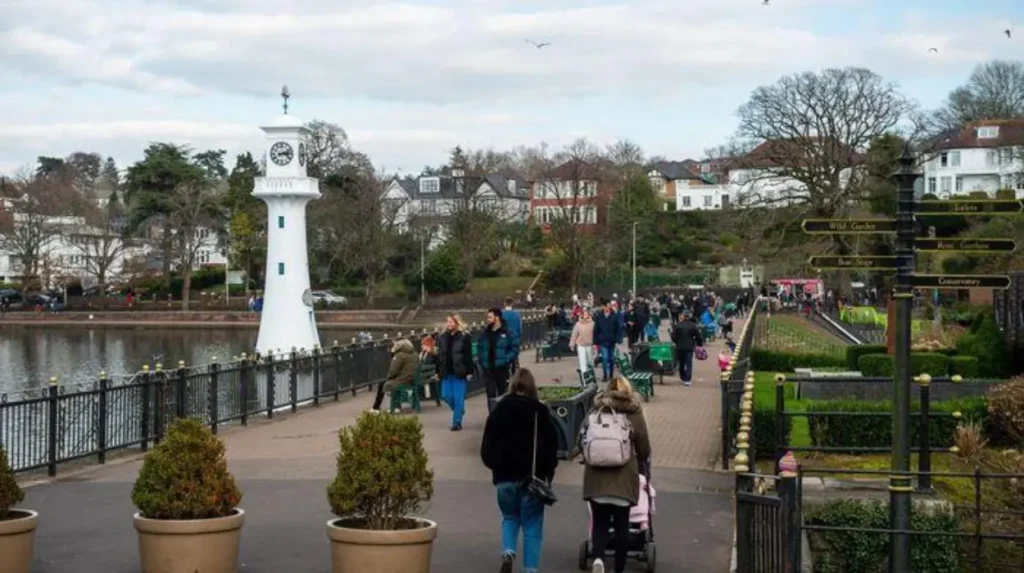
Roath Park forms the central landmark of a circular walk because its lake, gardens, woodland, promenade and historic features provide continuous walking interest. The park also connects naturally with Penylan, Plasnewydd, Cyncoed and nearby streets through established pedestrian routes today.
Roath Park is one of Cardiff’s historic public parks. Visit Cardiff identifies it as one of the city’s first public parks and records its 30-acre man-made lake as a major recreational feature. Fishing and boating are established activities on the lake.
The park has several distinct landscape components. These include the lake, formal gardens, botanical planting, recreational areas and historic structures. This variety makes the park suitable for a walk that combines scenery with heritage.
The lake is the easiest orientation point. Its shoreline provides a continuous reference and reduces navigation complexity. Walkers can follow the water before moving through other sections of the park.
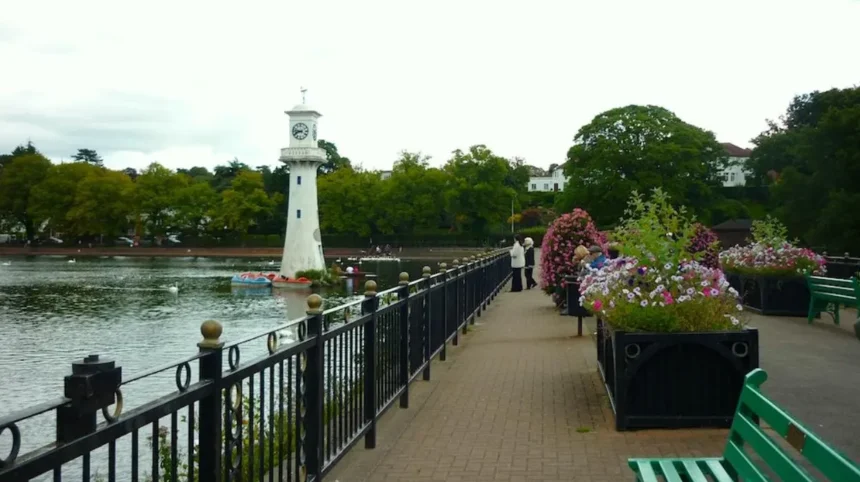
The Scott Memorial Lighthouse is one of the best-known landmarks. Cadw records that the Grade I registered Roath Park includes a clock-tower lighthouse at the southern end of the lake. The structure commemorates Captain Robert Falcon Scott and members of his Antarctic expedition of 1910–1912.
The park also has a conservatory containing plants and trees. Visit Cardiff describes Roath Park Conservatory as a Grade I listed feature and notes that the park’s lake covers 30 acres.
The lake as a navigation anchor
The lake provides a simple way to understand the route geographically. A walker can establish the starting point beside the water, complete the lakeside section and then use nearby streets to extend the circuit.
This structure also allows the walk to be shortened. Visitors with limited time can concentrate on the park and lake rather than completing the wider neighbourhood loop.
When was Roath Park created?
Roath Park was created from donated bogland in the late nineteenth century and opened to the public on 20 June 1894. Work began in 1889, creating a municipal landscape that remains important to Cardiff’s heritage, recreation and urban green-space network.
The history of Roath Park is closely connected with Cardiff’s rapid development during the nineteenth century. Landowners, including the Marquis of Bute, donated an area of bogland to Cardiff in 1887. Work on creating the park began in 1889.
The park officially opened on 20 June 1894. Its development established a large public landscape at a time when Cardiff was expanding as an industrial and commercial city.
The design incorporated recreation, horticulture and landscape management. The resulting park included the lake and formal areas that remain recognisable today.
The historic importance of Roath Park is formally recognised. Cardiff Council lists both Roath Park and Roath Park Lake and Gardens as conservation areas. The council explains that conservation areas are designated for special architectural or historic interest and are subject to planning controls intended to protect their character.
Cadw also identifies Roath Park as a Grade I registered historic park and garden. The Register of Historic Parks and Gardens in Wales is an important national heritage framework for significant designed landscapes.
Roath Park and Victorian Cardiff
The park represents the development of municipal green space during the Victorian period. Public parks provided formal gardens, recreational areas and open landscapes within rapidly expanding cities.
Roath Park continues that function. Its historic landscape is now combined with modern recreation, walking, active travel and community use.
In 2026, Roath Park received Green Heritage Site Accreditation for the first time. Visit Cardiff reported that the accreditation recognises parks that protect historic features and help visitors understand their heritage. Roath Park joined Bute Park as one of two Cardiff Council parks with the accreditation.
Where should you start a circular walk around Roath?
A practical circular route can start at Roath Park Lake, follow the lake perimeter, continue through the park gardens, leave toward Penylan, loop through nearby residential streets, and return to the lake using connected pavements and park entrances clearly and safely.
Roath Park Lake Road and Lake Road West provide recognisable access points. Visit Cardiff lists Roath Park at Lake Road West, Cardiff, with postcode CF23 5PH.
Starting beside the lake provides an immediate reference point. The water makes it easy to establish direction before entering the wider park.
A straightforward route structure begins with the lakeside section. The walker then continues through the gardens and parkland before moving toward the surrounding streets.
The wider circuit can incorporate parts of Penylan and Plasnewydd. These neighbourhoods sit around Roath Park and provide the urban sections needed to create a larger loop.
Suggested route sequence
A practical sequence is:
Roath Park Lake → lakeside promenade → Scott Memorial Lighthouse → formal gardens → upper park → Penylan streets → Plasnewydd connections → return toward Roath Park → lake.
This is a suggested walking structure rather than an officially designated named trail. Exact street choices should be checked against current maps and local access conditions.
Visit Cardiff provides a dedicated city-centre and Roath Park map, which is useful for planning the park section and identifying nearby connections.
The route can also begin closer to the city centre. Visit Cardiff describes Roath as walkable from central Cardiff and notes that the area is served by bus routes including Cardiff Bus 28.
What can you see during the Roath circular walk?
The lake section provides the clearest orientation point because the water, embankment, promenade and Victorian features create a continuous reference. Walkers can combine the lakeside circuit with the Botanical Garden, Rose Garden and upper park before returning toward the starting point.
The main attraction is the lake itself. The 30-acre artificial lake forms the centre of Roath Park and supports boating and fishing activities.
The Scott Memorial Lighthouse provides a major heritage landmark. Its clock-tower design distinguishes it from conventional lighthouses and links Roath Park with the history of Captain Scott’s Antarctic expedition.
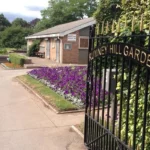
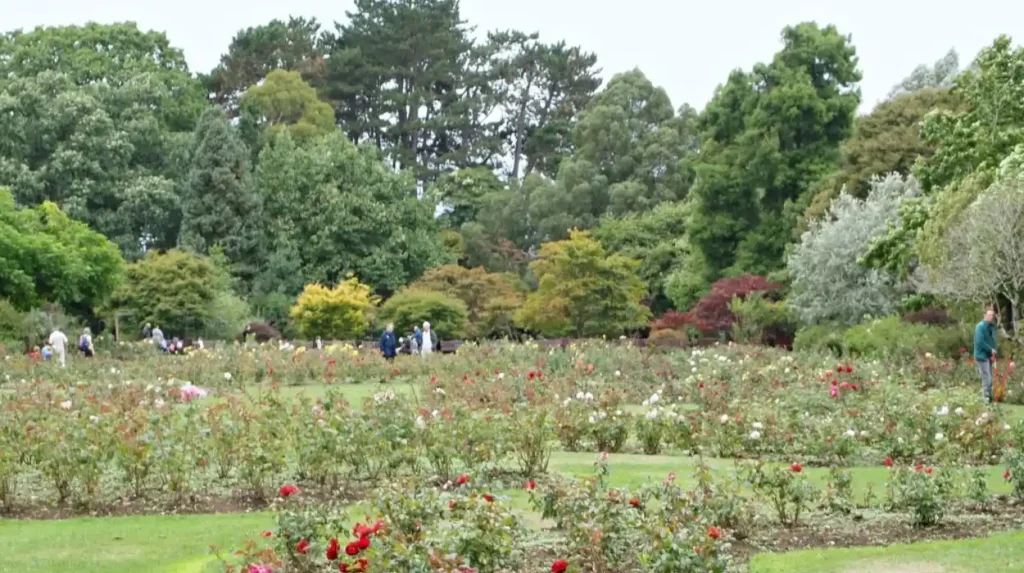
The formal gardens provide another important component. Their planting and landscape design reflect the original horticultural purpose of the park.
The conservatory adds a protected horticultural environment. Visit Cardiff identifies the Roath Park Conservatory as a Grade I listed structure and highlights its collection of unusual plant and tree species.
The park’s Rose Garden also has historical significance. The new 2026 heritage trail explains that the Rose Garden contributed to the war effort during the Second World War.
The 2026 heritage trail
Roath Park now has a ten-step heritage trail. The trail uses signage and QR codes to explain elements of the park’s history.
Topics include the park’s creation, historic concerts, the Rose Garden and connections with the Pettigrew family of gardeners.
The heritage trail adds an educational layer to the circular walk. Visitors can therefore combine physical activity with information about Cardiff’s municipal and horticultural history.
Is the Roath circular walk suitable for different walkers?
The route suits walkers who want an urban circuit without leaving Cardiff. Most of the experience uses park paths and pavements, while the wider loop introduces road crossings, residential streets and shared spaces that require normal pedestrian awareness year-round.
Roath Park is accessible from surrounding neighbourhoods and has established pedestrian routes. Visit Cardiff specifically identifies an accessible walk around Roath Park and Lake.
However, the wider circular route has different conditions from the lakeside section. A route that leaves the park uses public pavements and requires road crossings.
Families should consider the route length and crossing points before setting out. The park itself provides open recreational space, while surrounding roads introduce normal urban traffic conditions.
Older walkers and visitors with mobility requirements can prioritise the park and lake section. This reduces the amount of residential-road walking.
Walking with children
Roath Park provides several features that support family visits. The lake, gardens and open areas provide visual interest without requiring a long-distance countryside journey.
Families should keep children away from the water’s edge and follow local signs. Boating activity also makes awareness around lake access points important.
Walking with dogs
Dog walkers should follow current park rules and signage. Dogs should remain under control around other park users, wildlife and recreational areas.
A wider urban loop also requires attention at road crossings. Leads are particularly important near traffic and crowded pedestrian areas.
Explore more Area Guide
Local Florists in Penylan Guide – Penylan 2026
Cardiff’s Oldest Bike Shops Guide – Cardiff 2026
How does Roath connect with Cardiff’s active-travel network?
Roath has strong links to Cardiff’s active-travel network, and Cardiff Council identifies a city-centre-to-Roath-Park cycle route connecting Plasnewydd, Penylan and Cyncoed. The wider city also has about 200 kilometres of public rights of way, supporting connected walking opportunities citywide.
Cardiff Council’s Cycleway 6 proposal connects Cardiff city centre with Plasnewydd, Penylan, Cyncoed and Roath Park. The council states that phase one of this cycleway has started.
Active travel refers to transport using physical activity, particularly walking and cycling. Cardiff Council’s walking and cycling strategy supports connections between residential areas, employment locations, city-centre destinations and green spaces.
Cardiff’s public rights-of-way network provides approximately 200 kilometres of routes. Cardiff Council distinguishes between footpaths, bridleways and other access routes and advises users to check the Definitive Map when determining legal public access.
The Roath circular walk benefits from this broader network because the park is not an isolated green space. Streets and active-travel routes connect it with surrounding communities.
Walking from central Cardiff
Roath is within walking distance of Cardiff city centre. Visit Cardiff describes the city as compact and provides dedicated walking and cycling maps covering Roath Park.
Visitors can therefore extend their itinerary by walking from central Cardiff to Roath rather than using a car.
This creates a longer city walking day that links central Cardiff with a major historic park.
What should you know before walking around Roath?
Walkers should plan around weather, daylight, path conditions, road crossings and facilities. A route map, comfortable footwear and water support a straightforward outing. Checking current council information is useful for works, events, access changes and seasonal park facilities before departure.
Weather is an important factor in Cardiff. Rain can affect park paths and make surfaces slippery. Comfortable footwear with suitable grip supports safer walking.
Daylight also affects the wider neighbourhood section. Walkers should allow sufficient time to complete the circuit before darkness, particularly when using less familiar residential streets.
A current map is useful because roadworks, pedestrian improvements and temporary restrictions can change local movement patterns.
Cardiff Council publishes information about walking, cycling and transport projects. The council’s walking and cycling page also provides access to a free Cardiff walking and cycling map.
Parking and public transport
Parking conditions around Roath vary by street and facility. Cardiff Council lists Penylan Library car park with 52 spaces and 24-hour opening, with charging hours from 9am to 6pm.
Public transport provides another option. Visit Cardiff identifies Cardiff Bus route 28 as one service connecting the city centre with Roath Park and Lake Road East.
The nearest railway stations identified by Visit Cardiff are Heath High Level and Heath Low Level, both around a 20-minute walk from Roath.
Transport information changes, so checking current operator and council information before travelling is appropriate.
Why is a circular walk around Roath important for Cardiff?
The circular walk remains relevant because Roath Park combines heritage protection, recreation, biodiversity, active travel and neighbourhood access. Cardiff Council lists Roath Park and Roath Park Lake and Gardens among the city’s conservation areas, reinforcing their long-term cultural importance today.
Roath Park demonstrates how a historic public park can continue serving a modern city. Its original Victorian landscape remains active while supporting contemporary recreation and walking.
The park’s heritage status gives the landscape additional significance. Cardiff Council lists Roath Park and Roath Park Lake and Gardens as conservation areas, while Cadw identifies Roath Park as a Grade I registered historic park and garden.
Its Green Heritage Site Accreditation in 2026 provides another current measure of its heritage-management importance. Visit Cardiff reported that Cardiff retained all 21 of its Green Flag Awards in 2026, with Roath Park also receiving the new heritage accreditation.
The park also supports active lifestyles. Walking around the lake requires no long-distance travel from central Cardiff and can be incorporated into a wider city itinerary.
The wider neighbourhood provides an important urban context. Roath combines residential streets, independent businesses, transport connections and public green space. The circular walk therefore links recreational landscape with everyday city life.
Long-term relevance
The future importance of the route is closely connected to Cardiff’s active-travel policies and heritage-management priorities. Cardiff Council’s Cycleway 6 plans specifically connect the city centre with Roath Park and neighbouring districts.
The 2026 heritage trail also demonstrates continued investment in interpreting Roath Park’s history. Its ten-step format gives visitors structured information while preserving the park as an open public landscape.
For visitors, the result is a walk with several layers: historic landscape, lake scenery, horticulture, architecture, neighbourhood streets and active-travel infrastructure.
For residents, the route provides a repeatable urban walking option without requiring travel outside Cardiff.
For Cardiff as a city, Roath Park demonstrates the continuing role of historic public parks within modern urban planning.
What is a circular walk around Roath?
A circular walk around Roath is a walking route that starts and finishes in the Roath area while connecting Roath Park, Roath Park Lake, historic gardens and surrounding neighbourhood streets.