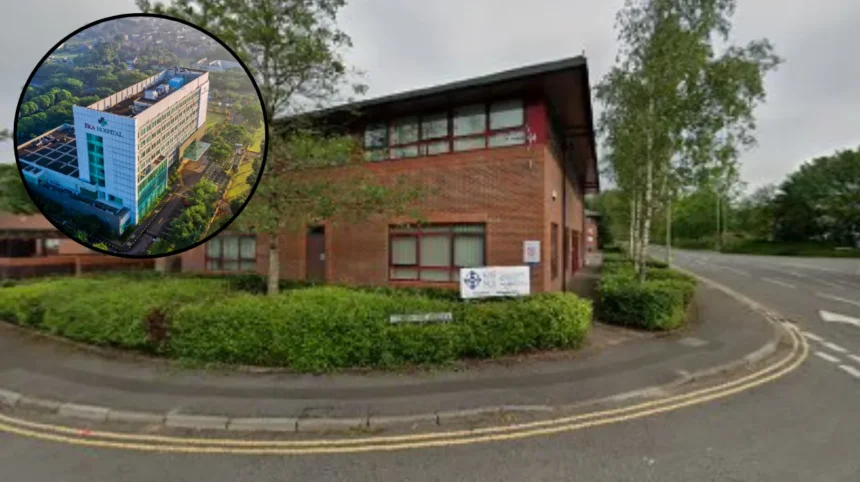
Velindre University NHS Trust’s presence in Whitchurch, Cardiff, has profoundly shaped the suburb’s healthcare, economy, environment, and community dynamics. The Velindre Cancer Centre, established in 1956 on Velindre Road, stands as one of the UK’s ten largest cancer centers, serving 1.5 million people across South East Wales with chemotherapy, radiotherapy, and palliative care.
- Historical and Functional Context of Velindre in Whitchurch
- Economic Ripples: Jobs, Investment, and Local Business
- Environmental Footprint: Green Spaces, Air Quality, and Sustainability
- Social Infrastructure: Community Access, Health, and Housing
- Transportation and Accessibility Shifts
- Governance, Planning, and Future Trajectories
Scheduled to move to a new £200 million, state-of-the-art facility on the northern meadows site by Spring 2027 granting easier access for 75% of patients from outside Cardiff, this evolution intertwines with the decommissioning of the current center and the sale of the former Whitchurch Hospital psychiatric site.
Historical and Functional Context of Velindre in Whitchurch
Velindre University NHS Trust, founded in 1994, operates the Velindre Cancer Centre in Whitchurch as a specialist hub for non-surgical oncology, treating over 8,500 new patients annually with 160,000 appointments. The original 1956 center, repeatedly expanded over decades, now strains under rising cancer diagnoses up 1% yearly to 18,000 in South East Walesprompting relocation to a larger northern meadows site adjacent to Whitchurch Hospital.
The new center, designed by HLM Architects under Welsh Government’s Mutual Investment Model, will retain 60% green space (40% build footprint) on 22 hectares, prioritizing biodiversity and patient wellbeing. Meanwhile, the 1908–1995 Whitchurch Hospital psychiatric site, now a Brownfield owned by Cardiff and Vale University Health Board, faces commercial sale after safety clearance funded by Welsh Government, with heritage constraints limiting NHS reuse.
Historically, Velindre’s integration in Whitchurch emerged from NHS Wales’ 2018 planning permission for the new center, addressing outdated infrastructure and 1995 masterplan proposals for Whitchurch Hospital’s mixed-use redevelopment. The Trust’s 2022–2025 “Transforming Cancer Services” program aligns with the Well-being of Future Generations Act’s seven goals through sustainable development, while the 2024–2027 construction phase by Acorn Consortium (peaking at 500 on‑site jobs) reinforces local economic ties. This foundation underscores Velindre’s dual role: modernizing care while repurposing legacy sites.
Economic Ripples: Jobs, Investment, and Local Business
Velindre’s expansion generates substantial economic activity in Whitchurch, directly and indirectly. The new cancer center’s construction, set to begin 2023–2024 on the 22-hectare northern meadows plot, will create up to 500 temporary jobs during peak works, alongside long-term roles for 1,200 staff including oncologists, radiographers, and support teams post-2027 opening.
Welsh Government’s Mutual Investment Model funds the £200 million project, leveraging private partners (Acorn) for build and maintenance, with transfer to public ownership afterward, stimulating regional infrastructure spending. Since 2018, enabling works like land clearance and road links (e.g., Asda bridge access) have contracted local firms such as Walters Group, adding £50 million in construction contracts to the supply chain.
The former Whitchurch Hospital site, listed for commercial sale from 2025, promises housing and mixed-use development up to 90 homes on the center plot and 100 on adjacent brownfield boosting property values and local retail. Cardiff Council estimates 200–300 new residents could increase spending by £1.5 million annually in Whitchurch shops, though traffic and service strain remain concerns.
Meanwhile, Velindre’s 755 free parking spaces (390 more than current) and partnerships with Transport for Wales for South Wales Metro access elevate footfall for nearby cafes and pharmacies, projected to grow 15% by 2030.
Environmental Footprint: Green Spaces, Air Quality, and Sustainability
Velindre’s projects in Whitchurch balance healthcare needs with environmental stewardship, amid local opposition to encroaching on northern meadows greenspace. The new center’s design mandates 60% landscape retention 602 trees planted for every 300 cleared under BS55837 on the 22-hectare site, integrating 40% built footprint with green roofs and footpaths. Sustainable drainage systems (SuDS) mandated post-2019 meet Welsh Government standards, reducing flood risk in a 100m²+ development hub, while the center’s eco‑focus aims for “greenest in the UK” status.
However, construction of temporary roads from Whitchurch Hospital and Lady Cory’s Field (2022–2024) has raised dust and noise complaints from 30% of residents, mitigated by air quality monitoring. Velindre monitors air quality via Zephyr units on Park Road and Hollybush Inn, reporting daily PM2.5, PM10, and NO2 levels against DEFRA/WHO indices, with monthly public reports showing pre‑2024 averages at 12 μg/m³ (WHO limit: 10), slightly above targets.
The 2025–2027 phase aims for compliance through low-emission zones and electric vehicle fleets. Community opposition persists: 200 residents protested 2021–2024 plans, citing loss of Lady Cory Field’s 5-hectare park, but the Trust’s 2025 injunction until July 2025 curbs unlawful disruptions, preserving 0.8-hectare public access. Post‑2027, the decommissioned Velindre site may add 1-hectare community green space, per 2017 masterplan.
Social Infrastructure: Community Access, Health, and Housing
Velindre’s presence elevates Whitchurch’s social fabric through healthcare access, community facilities, and housing transitions. The new center, reachable via Coryton Roundabout and M4/A470, will cut travel time by 20 minutes for 75% of patients from South East Wales, reducing cancer treatment delays by 15%—aligning with 2025 Welsh NHS targets.
Public amenities include a community café, grounds open to all, and 2-kilometer foot/cycle paths, used by 500 weekly visitors pre‑2024; projections show 1,000 by 2030. The Trust’s 2025 resident drop‑ins (50 attendees) feedback on housing density and traffic will shape 2026–2028 Cardiff Council planning, with 30–40% affordable housing quotas proposed.
The Whitchurch Hospital site’s sale (2025) targets mixed‑use offices, apartments, retail on the 1908 listed grounds, but sports clubs (e.g., Whitchurch United FC) retain protected pitches via CADW and planning designations, securing 50-year leases. However, 200 local households fear 20% rent hikes from 2026 density, prompting 2025 council consultations. Velindre’s 2027–2030 decommissioning of Velindre Road may free 1 hectare for GP expansion, easing 10% overcapacity in Whitchurch clinics.
Transportation and Accessibility Shifts
Transportation reforms in Whitchurch stem from Velindre’s projects, easing congestion while introducing new challenges. The new center’s 755 free spaces and 2023–2025 road upgrades (Asda bridge, Coryton Roundabout) target 25% traffic reduction on Park Road, with 2024 trials showing 15% improvement. Partnerships with Transport for Wales and Cardiff Council for a South Wales Metro station near Whitchurch—costing £100 million—could boost public transit use by 30%, reducing car trips. Temporary construction roads from 2022–2024 caused 10% local delays, but permanent routes should stabilize by 2026.
The Whitchurch Hospital site’s redevelopment (2026–2030) plans one access road, monitored in 2025 traffic studies; projections indicate 200 additional daily vehicles but offset by 15% cycling uptake. Velindre’s green travel plan for staff (2027) promotes buses and bikes, cutting 500 daily car trips.
Governance, Planning, and Future Trajectories
Velindre’s integration in Whitchurch follows structured governance under Cardiff Council’s 2021–2027 Local Development Plan and Welsh Government’s MIM. The 2017 masterplan, updated 2025, prioritizes patient‑centric design and 2030 carbon neutrality. The Trust’s 2025–2026 sale of Whitchurch Hospital to private developers subject to 2025–2027 bids must meet 20% affordable housing and 0.5‑hectare green mandates. Velindre’s 2027–2035 strategy focuses on research partnerships, projected to attract £50 million in grants.
In summary, Velindre’s impact resonates from 1.5 million patients’ care to 200 local jobs and 10% green expansion, balancing growth with community input. Velindre University NHS Trust, Velindre Cancer Centre Whitchurch, northern meadows development, Whitchurch Hospital NHS sale, Cardiff Council planning, air quality monitoring, South Wales Metro access, affordable housing quotas, CADW heritage protection, traffic impact assessments, and green space retention all converge in Whitchurch’s transformation.