Key Points
- Incident Overview: A motorist was violently attacked and punched unconscious by John Lee through his car window during a road rage incident in Llanrwst, Conwy.
- Date of Offence: The attack took place on June 15, 2025.
- Defendant: John Lee, 37, of Cae Tyddyn, Llanrwst, pleaded guilty to assault occasioning actual bodily harm (ABH).
- Court and Sentencing: Lee was sentenced at Caernarfon Crown Court on Tuesday, April 21, 2026, receiving an eight-month prison sentence suspended for 12 months, 10 rehabilitation activity requirement days, £500 in compensation, and a statutory surcharge.
- Victim’s Injuries & Details: The victim suffered a bruised eye socket, a grazed eyelid, swelling, bruising, and a loss of consciousness. He also reported increased forgetfulness following the assault.
- Witnesses: The victim’s wife (sitting in the front passenger seat) and elderly parents (sitting in the back seat), alongside the defendant’s own children, witnessed the violent episode.
Llanrwst, Conwy (Cardiff Daily) November 14, 2026 — A motorist was left unconscious after being brutally punched through his car window in a terrifying road rage attack witnessed by his family.
- Key Points
- How did the terrifying road rage incident unfold in Llanrwst?
- What specific statements and evidence were presented in court?
- What were the arguments in mitigation and the final court sentencing?
- Background of the particular development
- Prediction on how this development can affect motorists and families
How did the terrifying road rage incident unfold in Llanrwst?
As reported by Breaking News Editor Steve Bagnall and reporter Lucy John of Wales Online, the violent confrontation took place in the Llanrwst area of Conwy. Prosecuting counsel Rabia Tariq informed Caernarfon Crown Court that the victim was travelling with his wife and parents when he pulled over briefly to pick up some eggs from a shop before resuming his journey.
The defendant, 37-year-old John Lee of Cae Tyddyn, Llanrwst, subsequently forced open the victim’s car door and shouted aggressively, asking,
“What are you doing?”
before launching a sudden and violent physical assault. According to further details outlined by Ms Tariq and corroborated by the Manchester Evening News reporting team, including features writer Lee Grimsditch, Lee then leaned his head into the car and struck the motorist.
Explore More Cardiff Crime News
South Wales Police Probe Masked Bikers Barricading Road in Cardiff 2026
Cardiff Asylum Seeker Sentenced for Residential Invasion and Sexual Assault in Cardiff 2026
What specific statements and evidence were presented in court?
As detailed by Ms Tariq of the prosecution, the victim sustained a bruised eye socket, a grazed eyelid, facial swelling, and a temporary loss of consciousness. The victim’s wife stated that Lee also grabbed and shook her husband during the altercation. Dashcam footage captured the harrowing scene, showing the victim’s wife stepping out of the vehicle while Lee engaged in a furious verbal argument with her.
In a victim personal statement read to the court, the motorist described the episode as “extremely aggressive and shocking” and “deeply concerning to him,” adding that he has suffered from increased forgetfulness ever since the attack. Highlighting the traumatic impact on those present, court proceedings confirmed that the victim’s elderly parents were seated in the back, his wife was in the front passenger seat, and the defendant’s own children also witnessed the entire ordeal.
What were the arguments in mitigation and the final court sentencing?
During the sentencing hearing, the court noted that Lee had a single previous conviction dating back to 2005 for common assault, for which he received a referral. Defending the accused in mitigation, barrister Richard Edwards stated that Lee had entered a guilty plea at the earliest opportunity and “bitterly regrets his actions”. Mr Edwards further characterised the violence as a “single, isolated, impulsive” event, emphasising that his client lived within a stable family unit.
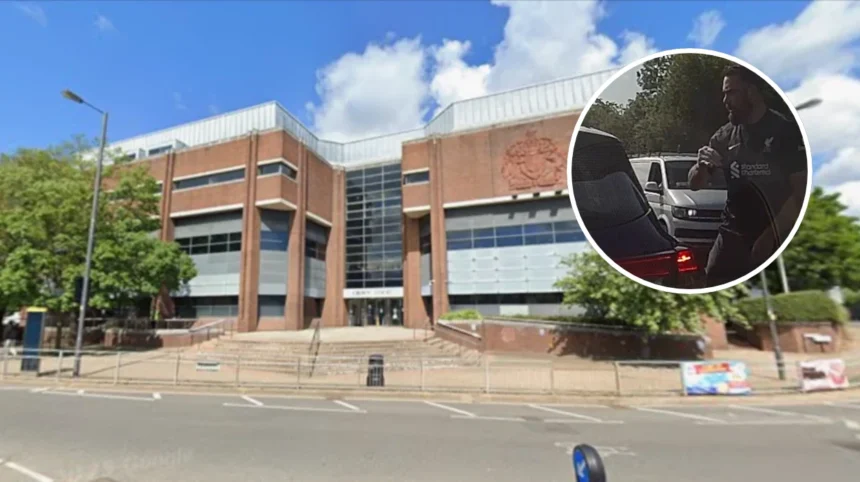
Presiding over the case, Judge Nicola Jones delivered a stern rebuke to the defendant during sentencing. As documented by Wales Online, Judge Jones stated:
“You put your head in the car door and punched him once rendering him unconscious. He had swelling and bruising and his family were present in the car, his parents were in the back seat. His wife was in the front seat. She got out and you didn‘t just walk away, you started having a go at her, being verbally aggressive.”
Judge Jones sentenced John Lee to eight months in custody, suspended for 12 months. Additionally, Lee was ordered to complete 10 rehabilitation activity requirement days, pay £500 in compensation, and satisfy a statutory surcharge.
Background of the particular development
Road rage incidents involving physical assaults on motorists have remained a persistent concern for community safety and traffic policing across the United Kingdom. Incidents where disputes escalate from minor driving grievances to violent altercations—particularly those involving windows being breached or doors being forcefully opened—pose acute physical and psychological risks to drivers and passengers. The legal framework surrounding offences such as assault occasioning actual bodily harm (ABH) reflects the severe criminal culpability attached to unprovoked aggression on public highways. Courts increasingly weigh aggravating factors, such as the presence of vulnerable family members, children, and elderly relatives in the impacted vehicles, when determining appropriate custodial thresholds and community-based rehabilitation orders.
Prediction on how this development can affect motorists and families
The lenient structure of suspended sentences combined with mandatory rehabilitation requirements in high-profile road rage cases may spark ongoing public debate regarding deterrence and motorist protection. For everyday drivers and families commuting across rural and urban Welsh communities, such rulings highlight the unpredictable nature of roadside confrontations. While legal penalties aim to rehabilitate offenders through mandatory supervision and compensation orders, victims often endure long-term psychological distress, heightened anxiety, and vigilance while driving. Consequently, heightened awareness of dashcam utility and defensive driving protocols is likely to grow among motorists seeking to safeguard their families against sudden roadside hostility.