Key Points
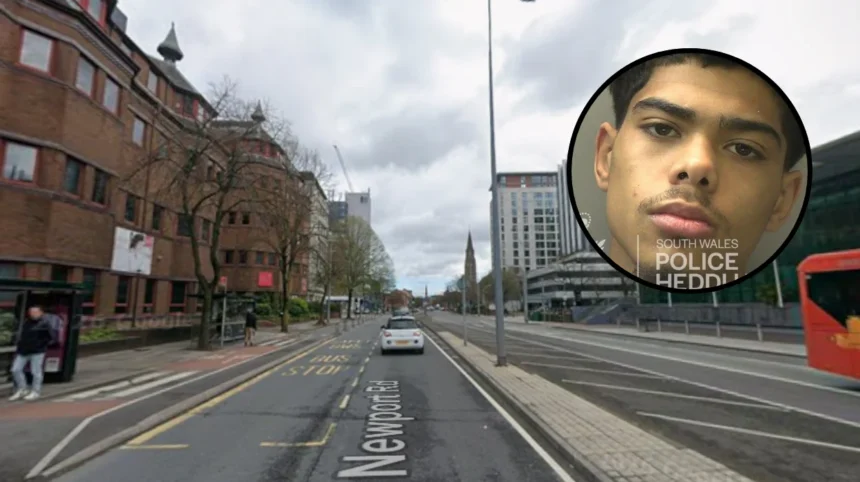
- This is concerning David McCauley, who is 21 years old and who has been found carrying a Zombie-type knife, money, heroin, and crack cocaine by the police.
- The defendant has now been sentenced by the courts to repay a huge amount that is more than £10,000.
- Some months before he was arrested for having the drugs, McCauley assaulted a woman named Holly Fryer using a framed canvas painting after she refused to lend her mobile phone to him.
- His first arrest happened on November 19 outside his mother’s house in Cardiff following reports of domestic trouble.
- While running away from the police, McCauley threw away a Zombie-type knife and a bag which had about £500 of Class A drugs (eight wraps of crack cocaine and three wraps of heroin).
- According to Philip Dewey of Wales Online, McCauley had pleaded guilty to two charges of possession with intent to supply Class A drugs, two charges of possessing a bladed article in public and assault by beating, among other charges.
Cardiff (Cardiff Daily) September 17, 2026 – A Cardiff criminal caught dealing Class A drugs and carrying a dangerous weapon has faced further legal consequences after being ordered to pay back more than £10,000. David McCauley, 21, was previously apprehended by police following a foot chase in which he discarded a Zombie-style knife alongside packages of heroin and crack cocaine. The latest financial penalty follows earlier court proceedings where the offender was convicted of multiple serious offences, including drug supply and a violent assault with a picture frame against a woman at a sheltered accommodation.
- Key Points
- What are the details of David McCauley’s arrest and offenses in Cardiff?
- What other violent crimes were linked to the defendant?
- What were the legal outcomes and background arguments presented in court?
- Background of the Particular Development
- How This Development Can Affect the Local Community and Vulnerable Groups
What are the details of David McCauley’s arrest and offenses in Cardiff?
As reported by Philip Dewey of Wales Online, the sequence of events leading to the criminal proceedings unfolded on November 19, when police units were dispatched following reports of a domestic disturbance involving David McCauley and his mother near her residential property in Cardiff. Upon spotting police officers in the street, the then-teenager fled on foot, triggering a brief pursuit.
As detailed by Philip Dewey of Wales Online, officers managed to detain and search McCauley after he discarded a Zombie-style package and weapon during the chase. The recovered package contained eight individual wraps of crack cocaine, weighing roughly 2.86 grams, alongside three wraps of heroin weighing just under a gram. Investigators estimated the street value of the recovered narcotics to be approximately £500. Furthermore, a subsequent search revealed an additional Rambo-style knife tucked into his waistband, which McCauley claimed to police he carried for personal protection.
Explore more Canton Stabbing & Knife Crime News
The Salvation Army in Canton Relocates for Refurbishment, Canton 2026
Kings Castle Pub Redevelopment Approved in Canton Cardiff 2026
What other violent crimes were linked to the defendant?
Beyond the drug and weapons offenses, court disclosures highlighted a separate violent incident committed by McCauley prior to his November arrest. As reported by Philip Dewey of Wales Online, an assault took place on August 29 at a supported living facility in Cardiff, where McCauley targeted a resident named Holly Fryer inside her room.
According to the court reports outlined by Philip Dewey of Wales Online, the confrontation began when Ms Fryer refused to lend her mobile phone to McCauley so he could access Snapchat. The defendant responded by becoming heavily abusive, hurling offensive language at the victim, before picking up a wooden-framed canvas picture and striking her directly in the face. The assault left the victim deeply distressed and prompted an immediate alert to accommodation staff.
What were the legal outcomes and background arguments presented in court?
As documented by Philip Dewey of Wales Online, McCauley formally pleaded guilty to two counts of possessing a bladed article in a public place, two counts of possession with intent to supply Class A drugs, and one count of assault by beating. He committed these acts while also being in direct breach of an active suspended sentence order. His criminal record already featured previous convictions relating to burglary, driving offences, possession of cannabis, and past possession of bladed articles.
During the mitigation phase of his hearings, defence barrister Hasim Salmman explained to Cardiff Crown Court that his client had endured a deeply troubled childhood, marked by an absent father and a mother struggling with alcohol and substance dependencies. Mr Salmman noted that McCauley had been forced out of the family home multiple times, experiencing homelessness and hostel living where he faced physical violence, including being stabbed. Defence counsel added that a recent family tragedy—the death of his cousin in a scooter crash in Ely—pushed the young man deeper into misusing crack cocaine and other illicit substances. McCauley was initially handed a 40-month sentence of detention in a young offenders’ institute, which has now been followed by the latest court order compelling him to forfeit a significant financial sum exceeding £10,000.
Background of the Particular Development
The judicial decision to pursue financial recovery through confiscation orders reflects tightening measures within the United Kingdom’s criminal justice system to strip offenders of assets acquired through illicit enterprises. Under frameworks like the Proceeds of Crime Act, courts routinely target convicted drug traffickers to ensure that criminal lifestyles do not yield long-term financial rewards. In McCauley’s case, his progression from domestic disputes and localized property offenses into Class A drug distribution and knife possession triggered multi-agency interventions involving South Wales Police, local support authorities, and the Crown Court. The compounding nature of his legal penalties—moving from custodial sentences handed down by Cardiff Crown Court to subsequent financial clawbacks—highlights ongoing efforts by Welsh judicial authorities to dismantle urban drug supply lines and address embedded neighborhood crime.
How This Development Can Affect the Local Community and Vulnerable Groups
This legal outcome carries significant implications for residents, support staff, and vulnerable individuals within Cardiff’s residential and supported accommodation sectors. For frontline workers and residents in social housing or supported living facilities, the strict enforcement of criminal penalties and asset recovery sends a deterrent message regarding safety and accountability. Vulnerable tenants, who are frequently targeted or exploited by predatory individuals seeking resources or access to property for illicit operations, may experience a heightened sense of security knowing that violent disruptions and intimidation are met with robust legal tracking. Furthermore, the persistent focus on removing bladed weapons like Zombie-style and Rambo-style knives from local streets directly impacts community safety in areas like Ely, aiming to curb knife-related violence and safeguard young people from entering cyclical patterns of substance misuse and street-level criminality.