Key Points
- South Yorkshire Fire and Rescue Service (SYFR) dispatched five fire engines to a building fire at Denison House on South Parade in Doncaster city centre in the early hours of January 24, 2026.
- SYFR spokesperson stated: “We currently have five fire engines in attendance at a building fire on South Parade, Doncaster. Residents living nearby should keep windows and doors closed due to smoke in the area.”.
- Denison House is a historic Grade II-listed Georgian property, derelict for years, once home to Sir Edmund Beckett-Denison, Doncaster’s richest citizen and railway pioneer.
- Builders spotted at the site in December 2024, but the building’s fate remains uncertain; auctioned in 2019 with £200,000 guide price for conversion into 11 apartments.
- Sir Edmund Beckett-Denison (1787-1874) chaired Great Northern Railway, lobbied for Doncaster as key rail stop, served as Tory MP, wealth from family bank.
- Building converted to council offices in 20th century, vacated later, boarded up and crumbling.
- Beckett-Denison born Leeds 1787, settled Doncaster 1818, elected MP West Riding 1841, withdrew 1847, returned 1848-1859, close to Sir Robert Peel.
- Died May 24, 1874, aged 87, buried Christ Church; namesakes include another Denison House by station, Beckett Road in Wheatley.
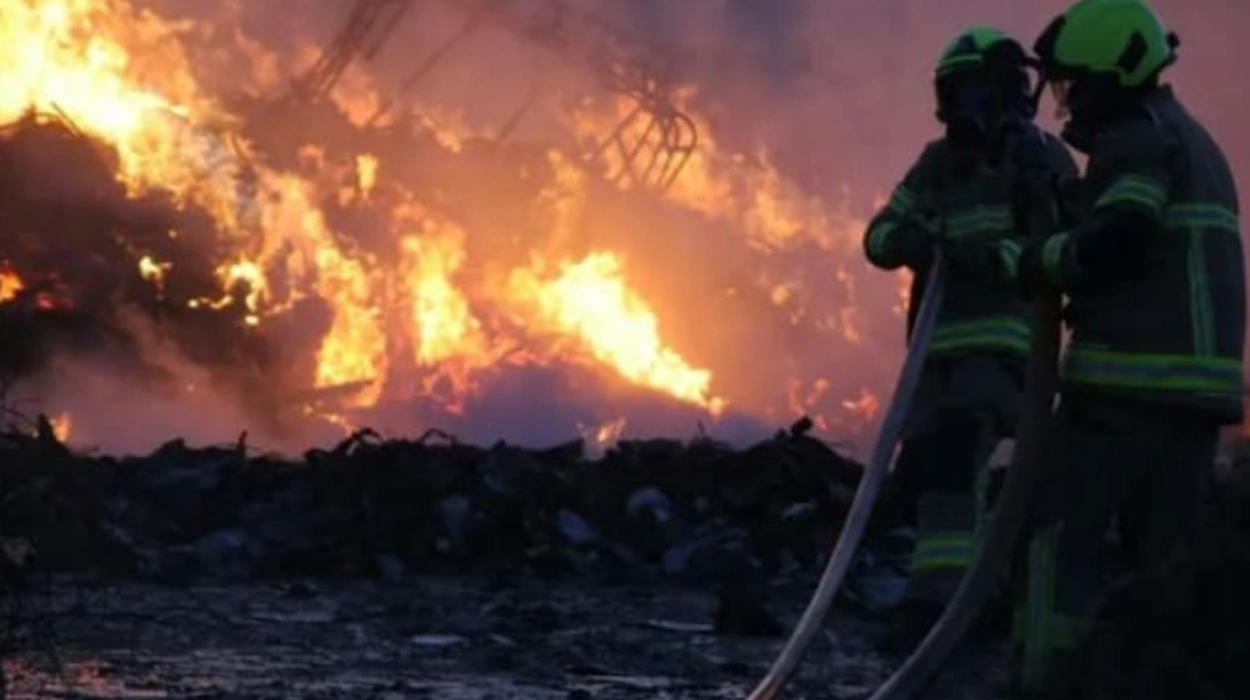
- SYFR crews spent the night tackling the blaze at the derelict site.
- Queries sent to SYFR for further details.
Doncaster (Cardiff Daily) January 24, 2026
Fire crews from South Yorkshire Fire and Rescue Service spent the night tackling a significant blaze at Denison House, the historic Grade II-listed building on South Parade in Doncaster city centre. The incident, reported in the early hours, prompted immediate advice for nearby residents to keep windows and doors closed amid heavy smoke. No injuries have been reported, but the fire drew substantial resources to the derelict Georgian mansion.
- Key Points
- Doncaster (Cardiff Daily) January 24, 2026
- What Caused the Fire at Denison House?
- Who Was Sir Edmund Beckett-Denison?
- What Is the History of Denison House?
- How Did Firefighters Respond?
- What Is the Building’s Current State?
- Why Is Doncaster Significant in Railway History?
- What Happens Next for Denison House?
What Caused the Fire at Denison House?
As reported by a spokesperson for South Yorkshire Fire and Rescue Service via their official channels, “We currently have five fire engines in attendance at a building fire on South Parade, Doncaster”. The cause remains under investigation, with crews focused on containment and damping down. Further details are awaited from SYFR, as enquiries have been made directly to the service.
The building’s long-term dereliction may have contributed to rapid spread, having lain empty and boarded up for years. Recent builder activity in December 2024 raised hopes, but little progress followed.
Who Was Sir Edmund Beckett-Denison?
Denison House was once the residence of Sir Edmund Beckett-Denison, Doncaster’s richest citizen, from 1855 until his death in 1874. As chairman of the Great Northern Railway, he lobbied successfully to position Doncaster as a vital staging post on the London-to-Scotland route.
Born in Leeds in 1787, he settled in Doncaster in 1818, amassing wealth from the Beckett family bank. He entered politics as a Tory MP for West Riding in 1841, withdrew in 1847 against Richard Cobden, returned in a 1848 by-election, serving until 1859. Close to Sir Robert Peel—he supplied the horse that fatally injured Peel—he opposed Corn Laws repeal in 1846 but shifted by 1848.
Beckett-Denison died aged 87 on May 24, 1874, with his funeral at Christ Church where he was buried in the family vault. His legacy endures in Denison House near the railway station and Beckett Road in Wheatley.
What Is the History of Denison House?
The Georgian property, imposing and historic, served as council offices in the 20th century before vacancy. It went to auction in 2019 with a £200,000 guide price, proposals for 11 apartments mooted but unrealised. Boarded up and crumbling, it awaited redevelopment amid disrepair.
Builders appeared in December 2024, yet the fate stayed mysterious. The fire now complicates preservation efforts for this Grade II-listed landmark.
How Did Firefighters Respond?
South Yorkshire Fire and Rescue Service crews were called in the early hours, deploying five fire engines initially. They advised locals: “Residents living nearby should keep windows and doors closed due to smoke in the area”. Efforts continued overnight to fully extinguish the blaze at the derelict site.
No further operational updates were immediately available, though SYFR has been contacted for more. The response mirrors past major incidents, prioritising safety and containment.
What Is the Building’s Current State?
Denison House has been derelict for years, boarded up and falling into disrepair despite its protected status. The fire risks further damage to the structure, already vulnerable. Authorities urge avoiding the area during operations.
Post-fire assessments will determine structural integrity and heritage implications.
Why Is Doncaster Significant in Railway History?
Sir Edmund Beckett-Denison’s influence elevated Doncaster via the Great Northern Railway. His lobbying secured its role on the premier London-North East-Scotland line. Legacies like nearby Denison House and Beckett Road commemorate this.
What Happens Next for Denison House?
The building’s future was unclear pre-fire, with stalled redevelopment. Investigations will probe arson or accident, alongside heritage body involvement. SYFR updates are anticipated.
Residents’ safety remains paramount, with smoke alerts issued.