Key Points
- Emergency Call Timing and Location: The emergency call occurred at 3:03 pm in the afternoon of Monday, October 5th, and was aimed at a fishing vessel located around 12 miles south-west of St Ann’s Head.
- Type of Emergency: One of the crew members on the fishing vessel was experiencing a medical emergency described as a cardiac emergency.
- Initial Response and Rendezvous: While the fishing vessel was sailing at maximum speed toward Milford Haven, the Angle RNLI lifeboat set out and met up with the vessel around five miles off St Ann’s Head.
- Safe Transfer of Patient: Due to the poor conditions in the sea, both vessels then sailed to Mill Bay where the patient could be safely transferred into the lifeboat.
- Air Rescue Helicopter: Coastguard Rescue Helicopter R387 that had been sent from St Athan came into the area and dropped a winch paramedic on the lifeboat.
- Evacuation to Hospital: The patient was then packaged and hoisted onto the helicopter and flown directly to a hospital in Cardiff.
Cardiff (Cardiff Daily) October 7, 2026 – A joint multi-agency emergency operation involving the Angle RNLI lifeboat and a HM Coastguard rescue helicopter successfully airlifted a fisherman suffering from a severe cardiac episode 12 miles off the Pembrokeshire coast. The complex rescue operation, which required a tactical rendezvous at sea and a sheltered transfer at Mill Bay before an air evacuation to Cardiff, highlights the seamless coordination and rapid response capabilities of Welsh maritime and aerial rescue services.
- Key Points
- How Did the Emergency Response Unfold Off the Pembrokeshire Coast?
- Why Was a Tactical Move to Mill Bay Necessary During the Rescue?
- What Role Did the Coastguard Rescue Helicopter Play in the Evacuation?
- When Was the Lifeboat Station Cleared and Returned to Service?
- Background of the Particular Development
How Did the Emergency Response Unfold Off the Pembrokeshire Coast?
The sequence of events began on Monday afternoon, October 5, when emergency services were alerted to a medical emergency unfolding aboard a commercial fishing vessel. As detailed by the official RNLI account and reported across regional publications, the call for assistance came in precisely at 3:03 pm.
As reported by Tom Sinclair of The Pembrokeshire Herald, the fishing boat was situated roughly 12 miles south-west of St Ann’s Head when a crew member experienced a sudden and critical cardiac episode. Recognising the gravity of the situation, the captain of the fishing vessel immediately turned the craft around and steered back toward the Haven at its maximum possible speed.
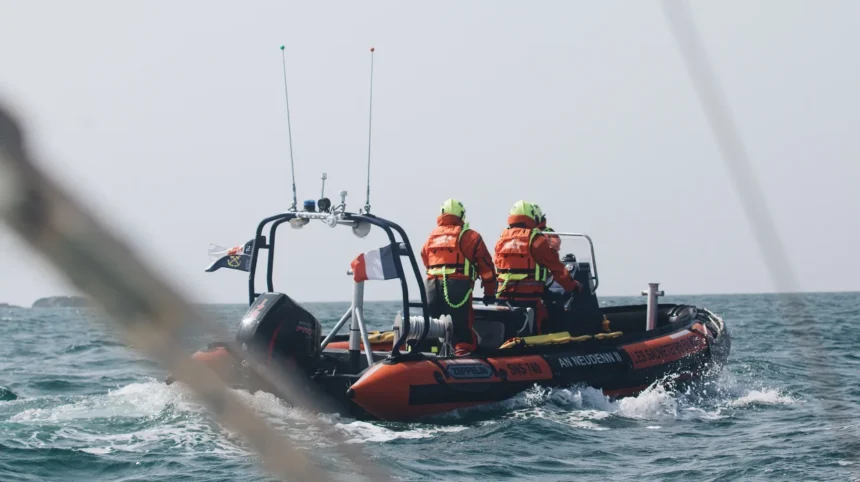
Simultaneously, the volunteer crew of the Angle RNLI all-weather lifeboat sprang into action, launching their vessel shortly after the initial tasking. The lifeboat steamed out to meet the incoming fishing boat, successfully intercepting and establishing a rendezvous point approximately five miles off St Ann’s Head.
Explore More Local Cardiff News
Wärtsilä and TMS Cardiff Gas Sign Five Year Agreement Cardiff 2026
New Youth Mural and Park Upgrades Transform Cardiff 2026
Why Was a Tactical Move to Mill Bay Necessary During the Rescue?
Upon reaching the fishing vessel, the volunteer lifeboat crew discovered that while the casualty was conscious and breathing, the prevailing sea and weather conditions were far too hazardous to attempt an immediate transfer of a vulnerable patient between the two rolling boats on the open sea.
To ensure the safety of both the patient and the rescue personnel, a tactical decision was made. According to the operational details released by Angle RNLI and covered by outlets such as the Tenby Today, both boats altered course to proceed deeper into the protected and calmer waters of Mill Bay.
Once sheltered within Mill Bay, the sea state settled sufficiently for the casualty to be transferred carefully from the fishing vessel directly onto the lifeboat. Immediately following the transfer, the patient was placed under the care of Angle RNLI crew members who hold specialised training in advanced casualty care.
What Role Did the Coastguard Rescue Helicopter Play in the Evacuation?
While the initial medical assessment was underway on the lifeboat inside Mill Bay, aerial support arrived in the skies overhead. Coastguard Rescue Helicopter R387, scrambled from its base in St Athan, reached the location.
Following a collaborative evaluation of the patient’s condition between the lifeboat crew and the incoming aviation unit, it was determined that the expertise and equipment of an onboard winch paramedic were urgently required. The Coastguard paramedic was winched down from the hovering aircraft directly onto the deck of the Angle lifeboat.
Working in tandem, the medical personnel packaged the patient securely to withstand an aerial hoist. The casualty was then successfully winched up from the lifeboat into the cabin of Rescue Helicopter R387. With the transfer complete, the aircraft departed the scene immediately, transporting the patient directly to a hospital in Cardiff for specialised emergency medical intervention.
When Was the Lifeboat Station Cleared and Returned to Service?
With the aerial evacuation successfully executed and no further assistance required from maritime units, the RNLI authorities officially stood down the Angle lifeboat crew.
The lifeboat turned back toward its home station at Angle, arriving alongside the slipway promptly. The volunteers immediately set about washing down equipment, restocking medical supplies, and securing the vessel. By 4:45 pm—less than two hours after the initial emergency call was logged—the lifeboat was fully refuelled, checked, and placed back alongside, ready to respond to any subsequent maritime emergencies along the Welsh coast.
Background of the Particular Development
The waters surrounding Pembrokeshire—including Milford Haven, St Ann’s Head, and the broader Bristol Channel approaches—constitute one of the busiest maritime zones in the United Kingdom. Home to major commercial shipping lanes, bustling fishing fleets, and high volumes of recreational boating, the region demands constant vigilance from emergency services. The Royal National Lifeboat Institution (RNLI) station at Angle, alongside HM Coastguard assets stationed at locations like St Athan, forms a vital safety net for mariners operating miles out to sea where rapid medical access is otherwise impossible. Cardiac emergencies and acute medical episodes at sea present severe logistical hurdles due to remote locations, unpredictable weather patterns, and the physical challenges of transferring patients between unstable vessels. Over decades, coordinated protocols between volunteer lifeboats and search-and-rescue (SAR) helicopter units have been refined to handle offshore medical crises, drastically cutting down transit times to major trauma and tertiary medical centres such as those in Cardiff.
This high-profile multi-agency rescue carries direct implications for commercial fishermen, maritime workers, and coastal communities operating off the Welsh coast. For commercial fishing crews, who frequently work long hours in isolated and physically demanding environments, the demonstrated efficiency of the Angle RNLI and St Athan Coastguard helicopter provides a critical reassurance that emergency medical response systems can effectively bridge the gap between offshore isolation and mainland specialist healthcare. However, the incident also underscores the persistent vulnerability of maritime workers to sudden health crises, such as cardiac episodes, far from land-based doctors. As emergency response times remain dependent on seamless coordination between sea and air units, local stakeholders anticipate continued emphasis on onboard safety gear, first-aid training, and reliable marine communication channels. For the broader public and coastal tourism sector, such successful interventions reinforce confidence in regional emergency frameworks while highlighting the ongoing dependence on volunteer-driven rescue services to safeguard lives in treacherous marine environments.