Key Points
- The Competition Appeal Tribunal dismissed Bristol Airport’s legal challenge to the Welsh Government’s £205 million subsidy package for Cardiff Airport.
- The tribunal rejected all four grounds of Bristol Airport’s case and said Cardiff Airport is not an “ailing” business under subsidy rules.
- Bristol Airport had argued the package broke the Subsidy Control Act and gave Cardiff an unfair advantage in the market.
- The Welsh Government said the funding is part of a long-term plan to develop Cardiff Airport, improve passenger numbers and support wider aviation investment.
- The support package is intended to help route development, terminal and infrastructure upgrades, and growth in maintenance, repair and overhaul activity.
- The ruling is being described as a significant boost for Cardiff Airport’s expansion plans and for jobs linked to the airport.
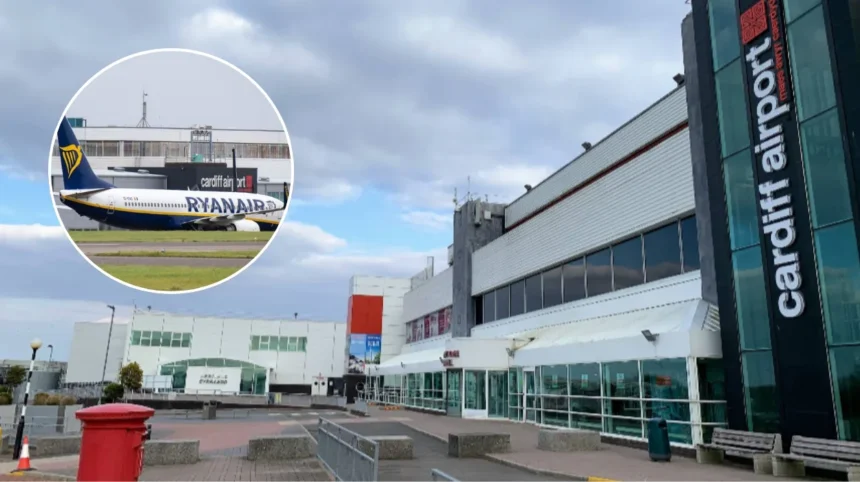
Cardiff Airport (Cardiff Daily) April 10, 2026 – As reported by the BBC, Bristol Airport argued the subsidy was unlawful and would distort competition, but the tribunal dismissed the challenge.
According to WalesOnline, the tribunal rejected all four grounds of the challenge and confirmed that Cardiff Airport is not ailing, which mattered because Bristol had argued the financial package unfairly propped up a struggling business. The decision means the Welsh Government can continue with its long-term funding strategy for the airport in Rhoose.
What did Bristol Airport argue?
Bristol Airport’s case was that the Welsh Government’s planned support for Cardiff Airport breached subsidy rules and created an unfair market advantage. The BBC reported that Bristol said the package was so large that taxpayers were effectively contributing £71.50 per passenger, while also claiming the scale of the support was unprecedented in UK aviation.
WalesOnline reported that Bristol also said the decade-long subsidy violated the Subsidy Control Act and unfairly supported Cardiff Airport against a commercial rival. The tribunal did not accept those arguments, and the judgment was unanimous, according to the BBC.
What does the funding cover?
The Welsh Government’s long-term strategy for Cardiff Airport is not limited to day-to-day support. According to Welsh Government statements, the package is designed to help route development, raise annual passenger numbers, and fund investments in the terminal and wider infrastructure.
The BBC reported that ministers said the funding would also support new maintenance facilities, hangars and increased cargo capacity. The broader aim is to make the airport more commercially active while strengthening aerospace maintenance, repair and overhaul operations in Wales.
Why is this important for Wales?
The ruling matters because Cardiff Airport is one of Wales’s major transport assets and is closely tied to regional economic policy. WalesOnline said the airport’s expansion plans include boosting passenger numbers, increasing non-terminal activities such as aviation training, and attracting investment in maintenance, repair and overhaul work.
The Welsh Government’s long-term strategy also suggests the airport could play a bigger role in connectivity, business travel and job creation over the coming decade. For ministers, the tribunal outcome removes a major legal obstacle to that plan.
What happens next?
The tribunal ruling allows the Welsh Government to proceed with its funding approach unless there is any further legal step, though no such step is detailed in the reports cited. Cardiff Airport’s management can now continue working within the long-term public support framework that was challenged by Bristol Airport.
The decision also settles, for now, the competition dispute between the two airports over the subsidy’s legality. That should give Cardiff Airport more certainty as it seeks to expand services and infrastructure.
Background of the development
Cardiff Airport has been under Welsh Government ownership since 2013, and the current funding strategy forms part of a wider attempt to strengthen the airport’s commercial position. In 2024, the Welsh Government set out a long-term plan that aimed to take annual passenger numbers to just over 2 million within a decade.
That plan also included investment in the terminal, ground operations and better transport links, alongside aviation and maintenance growth. The dispute with Bristol Airport emerged because the size of the package raised competition concerns in the wider UK aviation market.
Prediction for passengers and jobs
For passengers, the ruling is likely to support more route development and a stronger case for future services from Cardiff Airport, although actual gains will depend on airline demand and commercial execution. For workers and local businesses, the decision may help sustain investment in maintenance, repair and overhaul activity, cargo handling and other airport-linked services.
For the Welsh economy, the most immediate effect is certainty: the funding plan is now legally intact, which should make it easier for the airport to plan ahead. Over time, that could support gradual growth in passenger traffic and aviation-related employment if the strategy delivers as intended.