Key Points
- Cardiff Council launched a pilot bike hangar scheme in 2024 following a 2020 petition, installing secure street-side sheds for cyclists in terraced homes.
- The annual fee stands at £120 per bike space, the highest in the UK, drawing criticism as “anti-cycling” from campaigners.
- Cycling campaigner Chris Roberts highlighted that low-income cyclists are priced out, comparing it to London’s average of £50-£60 charged by Cyclehoops.
- First 17 hangars installed in March in Canton, Riverside, Plasnewydd, Cathays, and Splott areas, each holding up to six bikes.
- Cyclehoops, the private firm providing the hangars, deferred comments on fees to Cardiff Council.
- Council states it is discussing fee-setting with Cyclehoops.
- Roberts noted that in Splott, Cardiff, fees exceed those in Islington, London.
Cardiff, Wales (Cardiff Daily) April 8, 2026 – Cardiff Council’s pilot bike hangar scheme, aimed at providing secure storage for cyclists in terraced homes, has been criticised as the most expensive in the UK, with annual fees of £120 per space.
- Key Points
- Why is Cardiff’s Bike Hangar Fee the Highest in the UK?
- How Did Cardiff’s Bike Hangar Scheme Begin?
- What is the Council’s Response to the Fee Criticism?
- Which Areas in Cardiff Have Received Bike Hangars First?
- What Makes Bike Hangars a Solution for Terraced Homes?
- Who is Chris Roberts and Why Does His View Matter?
- Are There Plans to Adjust the Fees?
- Background of the Development
- Prediction: Impact on Cardiff Cyclists
The scheme, operated in partnership with private firm Cyclehoops, installs corrugated metal sheds on residential streets, each accommodating up to six bikes. Campaigners argue the price tag makes it inaccessible for low-income residents, labelling it “anti-cycling”.
Why is Cardiff’s Bike Hangar Fee the Highest in the UK?
Cycling campaigner Chris Roberts led the criticism, stating that the £120 annual fee is too steep for many. As reported by staff writers at Wales Online, Roberts said:
“Cardiff’s new £120-a-year fee is too expensive for low-income cyclists.”
He contrasted this with London, where Cyclehoops charges between £50 and £60 on average for similar secure street-side sheds.
“The average cost in London for a bike bay in a secure street-side shed provided by the private firm Cyclehoops is between £50 and £60,”
Roberts added, according to the same Wales Online coverage.
Roberts further pointed out a specific comparison:
“In Splott, Cardiff you are paying more to park your bike than in Islington.”
This remark underscores the disparity, as Islington’s fees align closer to London’s lower averages.
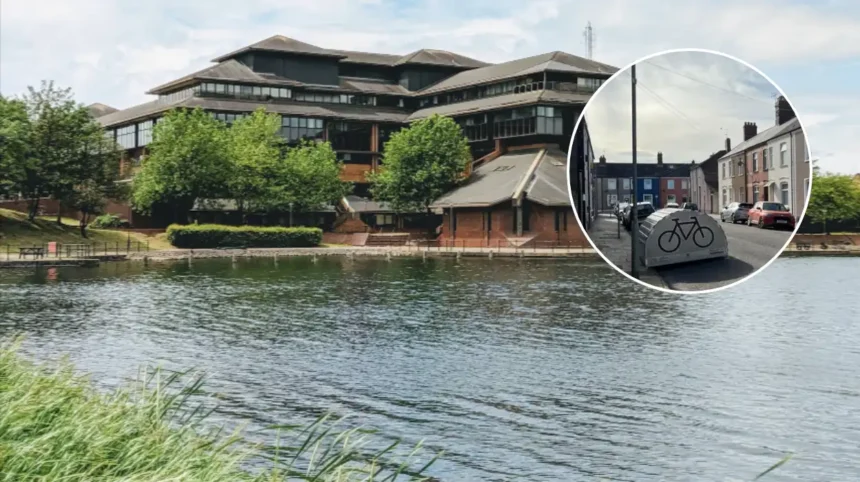
The backlash emerged shortly after the first installations. The 17 initial bike hangars went live in March across Canton, Riverside, Plasnewydd, Cathays, and Splott—areas with high densities of terraced housing lacking private storage.
How Did Cardiff’s Bike Hangar Scheme Begin?
The initiative traces back to community advocacy. A petition presented to Cardiff Council in 2020 called for bike storage solutions in space-constrained urban areas. The council responded by announcing a pilot in 2024, planning 50 locations citywide.
As detailed in council statements covered by BBC Wales reporter Lauren Phillips, the scheme targets cyclists in flats and terraced homes without gardens or sheds.
“The bike hangar idea started in Cardiff with a petition presented to the council in 2020,”
Phillips noted, quoting council documents.
Installation began promptly, with the first phase covering key neighbourhoods. Each hangar features a corrugated metal structure designed for durability on public streets.
Roberts initially welcomed the development.
“It was great news, until we found out they were going to be the most expensive bike hangars in the UK,”
he told Wales Online journalists.
What is the Council’s Response to the Fee Criticism?
Cardiff Council acknowledged the concerns but defended the pilot’s structure. In a statement to Wales Online, council representatives said they were in discussions with Cyclehoops over the rates.
The council deferred specifics on fee calculations, noting:
“Cyclehoops deferred comment on the fees it charges in Cardiff to the council, which said it was discussing with the company ‘how the rates were set’.”
Cyclehoops, a firm with experience across UK cities including London, directed all queries to the council. No further breakdown on costs—such as maintenance, insurance, or installation—was provided in initial responses.
Local media, including Cardiff Live correspondent Emily Davies, reported that the council emphasised the pilot’s evaluative nature. Davies quoted council transport officials:
“We are monitoring usage and feedback to refine the scheme.”
Which Areas in Cardiff Have Received Bike Hangars First?
The rollout prioritised densely populated wards. Canton, Riverside, Plasnewydd, Cathays, and Splott each received installations in March.
These neighbourhoods feature narrow streets and high cycling potential but limited secure parking. South Wales Echo reporter Tom Jenkins described the sites:
“The first 17 bike hangars were installed on residential streets in the Canton, Riverside, Plasnewydd, Cathays and Splott areas of the city in March.”
Residents in these areas reported mixed early experiences. While some praised the convenience, the fee deterred sign-ups, per anecdotal accounts in Wales Online follow-ups.
The remaining 33 planned hangars await further rollout, pending pilot data.
What Makes Bike Hangars a Solution for Terraced Homes?
Bike hangars address a common urban challenge: secure storage in homes without garages. In Cardiff, like many UK cities, terraced housing dominates, leaving bikes vulnerable to theft outdoors.
Cyclehoops’ model, now in over 100 UK locations, uses modular sheds with key access. Cardiff’s version mirrors this, holding six bikes per unit to maximise street space.
Campaigners like Roberts support the concept but question affordability. His petition in 2020 gathered hundreds of signatures, highlighting theft rates—Cardiff police reported over 1,000 bike thefts annually pre-scheme, though exact figures for 2025 remain pending.
Who is Chris Roberts and Why Does His View Matter?
Chris Roberts, a prominent cycling campaigner in Cardiff, has advocated for infrastructure improvements for years. His statements carry weight among local activists and council members.
Roberts’ critique, widely covered, frames the fee as a barrier.
“It was great news, until we found out they were going to be the most expensive bike hangars in the UK,”
he reiterated across outlets like BBC Wales and Wales Online.
His comparison to London benchmarks draws from Cyclehoops’ public pricing data, adding credibility.
Are There Plans to Adjust the Fees?
No firm commitments have emerged. The council’s ongoing talks with Cyclehoops suggest potential reviews, but timelines remain unclear.
Cardiff Live noted that usage data from the first 17 sites will inform decisions. Low uptake due to costs could prompt changes, though officials prioritise sustainability.
Roberts called for subsidies or tiered pricing, but council responses focused on dialogue rather than concessions.
Background of the Development
The bike hangar scheme originated from a 2020 petition by local cyclists, including Chris Roberts, presented to Cardiff Council. It gained traction amid rising bike thefts and post-pandemic cycling booms. The council approved a 2024 pilot for 50 sites, partnering with Cyclehoops, a firm established in 2015 with over 2,000 hangars UK-wide. Installations began in March 2026 in five wards, using street-licensed metal sheds. This follows similar pilots in London boroughs since 2017, where fees evolved based on demand and costs.
Prediction: Impact on Cardiff Cyclists
This development could limit secure storage access for low-income cyclists in terraced homes, potentially discouraging bike use in Canton, Riverside, Plasnewydd, Cathays, and Splott. Higher fees relative to London may slow adoption, sustaining theft risks and reducing modal shift from cars. If fees remain unadjusted, uptake stays low among price-sensitive residents; council-Cyclehoops talks might lower barriers, boosting participation for moderate-income users while still challenging the lowest earners.