Key Points
- Host Location Confirmed: Cardiff has been officially announced as the host city for the 2028 National Eisteddfod, marking the festival’s return to the Welsh capital for the first time since 2018.
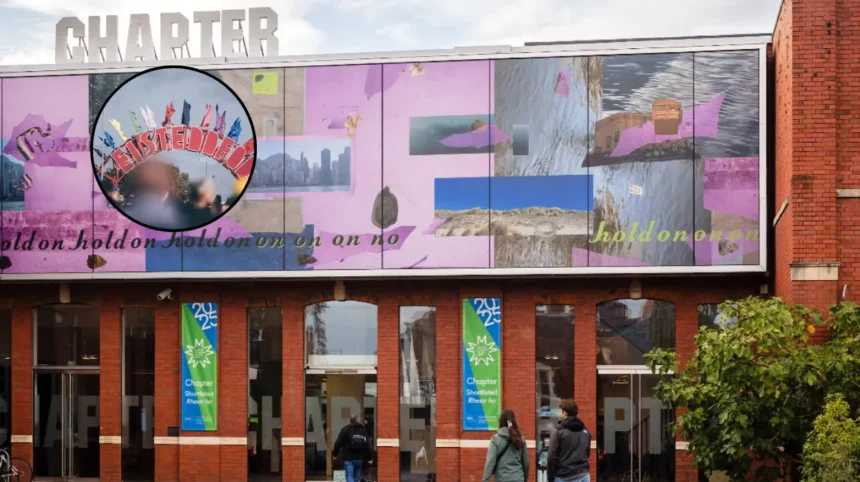
- Public Launch Meeting: Preparations and community outreach will officially begin on Wednesday, 9 September, with a public meeting at the Chapter Arts Centre on Market Road, Cardiff, at 18:30.
- Leadership Nominations Opening: Nominations for Executive Committee roles—including Chair, Strategic Vice-chair, Cultural Vice-chair, Chair of the Local Fund, and Executive Committee Secretary—will open next week via an online application process.
- Inclusive Community Focus: Organisers are actively encouraging participation from diverse backgrounds, including Welsh learners and non-native speakers, with simultaneous translation services provided at the initial public meeting.
Cardiff (Cardiff Daily) August 10, 2026 –In a major cultural announcement timed with the closing stages of the Eisteddfod y Garreg Las, organisers have confirmed that Cardiff will serve as the official host city for the 2028 National Eisteddfod. The decision brings Wales’s flagship cultural celebration back to the capital city for the first time in a decade, following its last staging there in 2018.
The announcement signals the launch of a multi-year community engagement and fundraising strategy across the catchment area. Formal preparations and local project initiatives are scheduled to commence on Wednesday, 9 September, commencing with a public launching meeting held at the Chapter Arts Centre on Market Road, Cardiff, at 18:30.
Betsan Moses, Chief Executive of the Eisteddfod, expressed enthusiasm regarding the upcoming operational phase in the capital:
“We’re really looking forward to starting our work in the Cardiff area and building excitement over the next two years. It’s wonderful to know that so many people across the catchment area are ready to play their part and help us create a special week and a memorable project when the Eisteddfod returns to the area.”
Moses highlighted the festival’s objective to build an inclusive organizational team combining experienced volunteers with new community members:
“We’re keen to bring together people from different backgrounds, interests and areas of expertise to be part of the team. By combining experience and new energy, we can work together to create a project and festival that will attract competitors and visitors in their thousands.
“This is the first time the Eisteddfod has returned to the capital since 2018 – we’re looking forward to a period of working with local communities – anyone interested in being part of the team is welcome to register online or come to the public meeting in Cardiff.
“We look forward to welcoming some of the 2018 Eisteddfod team back, and to attracting a new group of people to join us over the coming months. There is an opportunity for everyone to contribute, by working with us in the community or helping to create the festival itself. The message is simple – everyone is very welcome.”
Civic leaders have similarly welcomed the announcement, underlining the city’s readiness to stage national-scale events. Cllr Chris Weaver, Leader of Cardiff Council, noted the institutional significance of the event for the city:
“The National Eisteddfod is the largest and most important celebration of the Welsh language and Welsh culture in our national calendar, and I’m incredibly proud that it is returning to our capital city in 2028 for the first time in a decade.
“Cardiff has a proud track record of staging major events, and we look forward to welcoming visitors from across Wales and beyond for what is sure to be a memorable and inspiring Eisteddfod.”
How Can Local Residents and Volunteers Get Involved in the Committee Structure?
The core structure of the National Eisteddfod relies heavily on local volunteer networks and regional committees as the festival moves between Northern and Southern Wales annually. The initial public meeting at Chapter Arts Centre aims to provide local residents with a direct platform to offer volunteer support and join the local organizational apparatus.
In the weeks following the public launch, nominations will officially open for key Executive Committee officers. Interested individuals will be able to apply or nominate candidates online for critical leadership positions, including:
- Chair of the Executive Committee
- Strategic Vice-chair
- Cultural Vice-chair
- Chair of the Local Fund
- Executive Committee Secretary
Beyond the executive board, numerous subject-specific sub-committees will be formed to oversee various artistic, logistical, and community aspects of the festival.
Organisers have confirmed that full details regarding application processes and committee membership criteria will be published online shortly.
To ensure broad access, the initial public meeting will be conducted in Welsh, with simultaneous English translation provided.
Festival directors have emphasised that Welsh language learners and those at the beginning of their language journey are specifically encouraged to apply for committee roles, using the multi-year preparation period as a practical environment to practise and develop their language skills.
Explore More Local Cardiff News
Cardiff Restaurants Hit with Worst Food Hygiene Ratings in 2026
Andrea Bocelli to Headline Land of Song Festival Cardiff 2026
Background of the Development
The National Eisteddfod of Wales (Eisteddfod Genedlaethol Cymru) is Europe’s largest competitive festival of music and poetry, tracing its historical roots back to the legendary gathering summoned by Rhys ap Gruffydd of Deheubarth at Cardigan Castle in 1176.
Modern iterations of the festival alternate annually between North and South Wales, attracting around 150,000 visitors and over 6,000 competitors over an eight-day period every August.
The 2018 Cardiff National Eisteddfod represented a historic shift in the festival’s traditional operational model. Unlike typical years where the event relies on a temporary fenced “Maes” (field) with entry fees, the 2018 event took place as an “Eisteddfod Heb Muriau” (Eisteddfod Without Walls) centered in Cardiff Bay.
Utilizing existing civic structures such as the Wales Millennium Centre and the Welsh Parliament (Senedd), the 2018 model allowed free access to the main perimeter, drawing over 160,000 visitors and breaking long-standing attendance records. The return to Cardiff in 2028 will build upon the legacy and operational lessons established during the 2018 urban staging.
Predictions: How This Development Will Affect Local Stakeholders and the Capital City
The return of the National Eisteddfod to Cardiff in 2028 is expected to have notable cultural, linguistic, and economic impacts across specific target audiences:
The arrival of thousands of competitors, performers, and national tourists will provide a significant economic boost to Cardiff’s retail, hotel, and catering industries.
Local hospitality vendors across the city center and Cardiff Bay can anticipate elevated footfall and high accommodation occupancy rates during the festival week in August 2028, alongside steady commercial engagement during the preceding two years of regional committee meetings and fundraising events.
By actively recruiting non-native speakers and language learners onto organizational committees, the 2028 Eisteddfod creates an accessible bridge for Cardiff’s multicultural demographic to engage directly with Welsh language heritage.
The two-year run-up will offer grassroots practical language immersion opportunities, aiding local educational goals and furthering the Welsh Government’s Cymraeg 2050 target of reaching one million Welsh speakers.
Performing arts venues, local arts groups, and community organizations across Cardiff will benefit from increased national visibility and collaboration opportunities.
The multi-year planning phase will allow local performers, poets, and visual artists to develop new works specifically designed for competition and showcase on a national platform.