Key Points
- The Senedd, Tŷ Hywel, and the Wales Millennium Centre have officially connected to Cardiff Council’s low-carbon heat network.
- The strategic development aims to drastically reduce carbon emissions from heating by up to 80 per cent for these prominent structures.
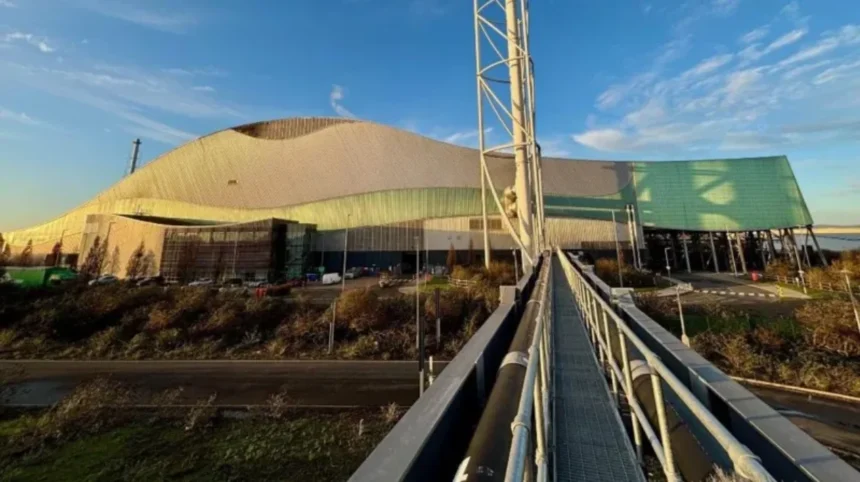
- The network captures surplus waste heat from Viridor’s Trident Park Energy Recovery Facility, channeling it through highly insulated pipes across Cardiff Bay.
- The £15.5 million infrastructure project was financed via a UK Government grant and a Welsh Government loan, managed by Cardiff Heat Network Ltd.
- Future expansion plans (Phase 2) and prospective integration with alternative heat sources, such as local groundwater or deep geothermal energy, are currently under evaluation.
Cardiff (Cardiff Daily) November 11, 2026 — Three of Wales’ most prominent public and cultural establishments—the Senedd, Tŷ Hywel, and the Wales Millennium Centre—have successfully linked to Cardiff Council’s municipal low-carbon district heating system, marking a critical leap forward in the capital’s strategic roadmap toward absolute carbon neutrality.
- Key Points
- How Do These Landmark Buildings Receive Low-Carbon Heat?
- What Are the Environmental and Technical Specifications of the Network?
- Which Other Facilities Have Joined the Network?
- What Are the Future Expansion Plans for Cardiff Heat Network?
- Background of the Development
- Prediction on Future Impacts
How Do These Landmark Buildings Receive Low-Carbon Heat?
As reported by Business News Wales, the innovative municipal energy scheme operates by capturing surplus thermal energy that would otherwise be wasted during electricity generation at Viridor’s Trident Park Energy Recovery Facility. This otherwise lost energy is transported via an extensive network of highly insulated underground pipes across the Cardiff Bay district, providing sustainable space heating and hot water to major facilities.
Emphasizing the municipal importance of the rollout, Cabinet Member for Climate Change Councillor Dan De’Ath stated, as reported by Business News Wales:
“These three buildings are at the heart of Welsh public and cultural life. Their connection to the heat network sends a real signal that Cardiff, as the capital city of Wales, is serious about playing its part in tackling climate change and increasing its energy resilience while continuing to serve communities.”
What Are the Environmental and Technical Specifications of the Network?
According to reporting by SmartCitiesWorld, transitioning to this municipal infrastructure removes the necessity for these major landmark sites to rely on conventional gas boilers, successfully driving down their heating-related carbon emissions by up to 80 per cent.
The £15.5 million capital project was financed through a dedicated UK Government grant alongside a substantial loan supplied by the Welsh Government, deployed directly by Cardiff Council via its arm’s-length entity, Cardiff Heat Network Ltd. The initiative forms a foundational component of the council’s wider “One Planet Cardiff” climate emergency strategy, which has contributed to a 21.6 per cent reduction in per capita carbon emissions across the city since 2019.
Discussing the environmental responsibilities of the national arts institution, Steve Morris, Head of Business Operations at the Wales Millennium Centre, stated, as reported by BusinessGreen:
“Connecting Wales Millennium Centre to the Cardiff Heat Network is an important step in reducing our environmental impact and strengthening the sustainability of our iconic building. As a national home for the arts, we have a responsibility to lead by example, and this partnership helps us cut carbon emissions while ensuring a resilient, low-carbon heating supply for the future.”
Which Other Facilities Have Joined the Network?
The newly integrated parliamentary and cultural properties join an expanding portfolio of urban adopters. Previous connections to the active pipe grid include Cardiff and Vale College, Tresillian House, Nelson House, Butetown Community Centre, and Scott Harbour—a former office building transformed into 78 council-owned residential social housing apartments, marking the system’s first residential integration.
Further supporting operational transparency, Matthew Jones, the Senedd’s Head of FM Services and Sustainability, noted as reported by Business News Wales:
“We’re proud to play our part in supporting Cardiff’s transition to a cleaner, greener city.”
What Are the Future Expansion Plans for Cardiff Heat Network?
Operators and municipal planners are not stopping at the current boundaries of Cardiff Bay. Business News Wales reported that Cardiff Heat Network Ltd is actively engaged in discussions with additional prospective customers situated near the active pipe infrastructure to secure further commercial and public connections.
Furthermore, municipal authorities are reviewing funding pathways for a potential “Phase 2” development rollout, which would extend the district heating network deeper into the central business district of the city centre and wider Cardiff Bay corridors. Although Viridor’s facility provides the baseline thermal input, the system architecture was purposefully engineered to be “heat source neutral”. This design choice means that as the network matures, it can interface with alternative or secondary energy provisions, such as local groundwater thermal extraction or deep geothermal energy reserves resting beneath Cardiff’s urban streets.
Background of the Development
The establishment of the Cardiff low-carbon heat network originates from broader municipal and national mandates to tackle urban building decarbonisation. Across the United Kingdom, conventional gas infrastructure supplies up to 73 percent of total heating demand, making sustainable thermal networks a vital tool for meeting legislated Net Zero targets.
Cardiff Council initially investigated district heating viability to curb municipal emissions, utilizing development grants provided by the UK Government’s Heat Network Delivery Unit (HNDU). Construction on the foundational phase commenced in early 2022, laying the groundwork for what has evolved into Wales’s premier large-scale urban municipal heat network.
Prediction on Future Impacts
This infrastructural evolution carries profound implications for the local community, municipal authorities, and commercial enterprises across Cardiff. For local residents and building occupants, the transition away from volatile fossil-fuel heating systems toward locally captured waste heat offers long-term shelter from global energy market shocks, stabilizing heating expenditures.
For the wider public sector and businesses operating in the region, the expansion of a heat-source-neutral grid provides a ready-made compliance pathway to meet stringent net-zero environmental targets without incurring prohibitive individual site upgrade costs. If Phase 2 extensions into the city centre materialize, smaller commercial businesses and residential complexes could soon access resilient, low-emission utilities, accelerating Cardiff’s broader socioeconomic transformation into a leading green European capital.