Key Points
- Contractor Taylor Woodrow has failed in its attempt to stop the filing of a fresh legal claim by the housing developer Taylor Wimpey UK.
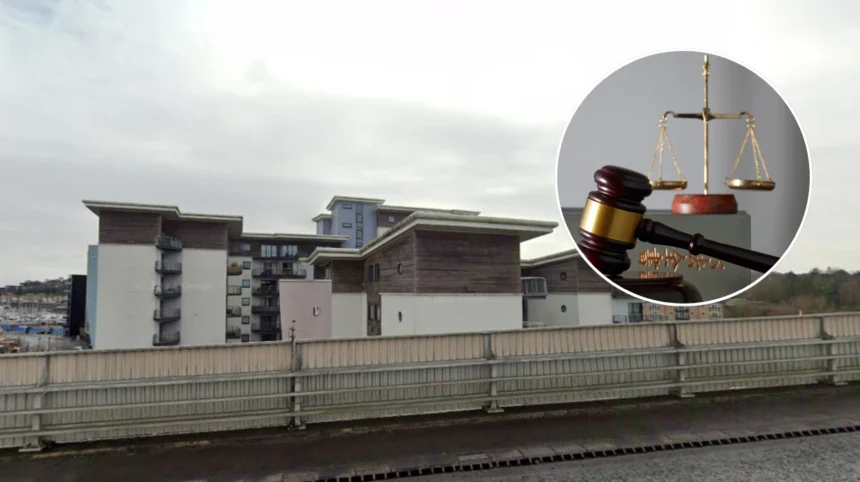
- The claim is to recover around £24 million in remediation costs for fire safety defects in seven high-rise apartment blocks located in Victoria Wharf, Cardiff Bay.
- Apart from that, Taylor Wimpey UK wants a building liability order to be made against the contractor’s parent firm, Vinci Construction Holding.
- Taylor Woodrow had contended that the fresh proceedings amounted to an abuse of process. However, Justice Pepperall did not agree with this contention of Taylor Woodrow.
- At present, the present legal claim does not decide the issue of liability or instruct the defendants to make payments towards repairs.
Cardiff (Cardiff Daily) October 12, 2026 – Contractor Taylor Woodrow has suffered a major legal setback after failing to block a fresh multimillion-pound lawsuit brought by house builder Taylor Wimpey. The legal battle centers on recovering roughly £24m required to fix severe fire safety defects discovered at seven high-rise residential blocks situated in Cardiff Bay. The court’s latest decision clears the path for Taylor Wimpey UK to move forward with its comprehensive defects claim and press its bid for a building liability order against parent entity Vinci Construction Holding.
Why did Taylor Woodrow fail to block the Cardiff fire safety claim?
As reported by construction industry news sources, Taylor Woodrow attempted to halt the fresh proceedings by arguing that the lawsuit was an abuse of process, characterizing the move as treating an earlier failed arbitration as a “dress rehearsal”. However, Mr Justice Pepperall firmly rejected this defense.
As detailed in legal reports, Mr Justice Pepperall stated that Taylor Wimpey UK held an independent right to initiate proceedings and that the previous statutory claim had been dismissed strictly on timing grounds without any evaluation of its actual merits. Addressing the defendant’s grievances, the judge stated:
“In my judgment, requiring Woodrow now to address this DPA claim on its merits is not unjust harassment.”
Furthermore, the judge dismissed complaints concerning the antiquity of the dispute, highlighting that Parliament explicitly extended statutory timeframes to accommodate historic building safety claims.
What is the background of the Victoria Wharf dispute?
The residential blocks at the Victoria Wharf development in Cardiff Bay were originally designed and built by Taylor Woodrow, who was appointed around 2005. Construction and completion of the blocks took place between November 2005 and July 2008. Following the tragic Grenfell Tower fire, intense scrutiny fell on high-rise residential structures across the United Kingdom, leading to the identification of critical fire safety defects across these Cardiff towers.
An initial legal challenge launched by Taylor Wimpey Developments—the specific entity that originally employed the contractor—hit a major roadblock in May 2022. An arbitrator ruled at the time that both contractual claims and claims under the Defective Premises Act (DPA) were time-barred. Although the Building Safety Act subsequently extended the limitation period for historic DPA claims to 30 years just weeks later, that legislative change could not retroactively save the already dismissed claim. A subsequent negligence claim also collapsed in March 2024 because the arbitrator concluded that Taylor Woodrow did not owe the specific developer the duty of care alleged.
Not deterred by previous procedural failures, Taylor Wimpey UK launched separate, fresh proceedings in October 2025 by leveraging its own distinct legal interest in the development. While this new case largely mirrors previous allegations focusing on substandard external wall systems, it also introduces a brand-new claim regarding structural steelwork.
Explore more Cardiff Council News
Aldi Secures Planning Approvals for New Supermarkets in South Wales 2026
Cardiff Council And Wates Residential Top Out Scheme In Cardiff 2026
What happens next in the legal proceedings?
With the court dismissing Taylor Woodrow’s bid to set aside the lawsuit, individual leaseholders remain legally entitled to pursue independent claims if they choose. However, the court deemed it “just and convenient” for Taylor Wimpey UK to act on their behalf to streamline remediation accountability.
Legal analysts note that this interim judgment does not formally establish legal liability for the defects, nor does it immediately compel either Taylor Woodrow or Vinci Construction Holding to pay out funds for the rectification work. Instead, the ruling ensures that the intricate technical and legal arguments regarding the fire safety failures will finally face a comprehensive examination on their merits.
Background
The legal confrontation surrounding the Victoria Wharf high-rises forms part of a broader, nationwide reckoning with legacy construction standards following the 2017 Grenfell Tower disaster. Across the United Kingdom, developers, contractors, and housing associations have been locked in complex liability disputes over non-compliant cladding, missing fire breaks, and compromised external wall systems installed during the 2000s under building regulations that were later found to be deficient. The introduction of the Building Safety Act fundamentally altered this landscape by retroactively expanding limitation periods for defective premises, prompting major industry players like Taylor Wimpey to untangle historic corporate structures and pursue supply chain partners—such as Taylor Woodrow and its ultimate parent, Vinci Construction Holding—to recoup escalating remediation expenditures.
This judicial development carries profound implications for the UK construction sector, particularly for major main contractors and their corporate parents involved in legacy high-rise projects. By allowing Taylor Wimpey UK’s fresh claim to proceed past preliminary strike-out applications, the court has signaled a low tolerance for procedural technicalities attempting to block historical building safety claims, provided they fall within Parliament’s newly expanded statutory windows. For contractors and parent companies like Vinci Construction Holding, this creates heightened financial exposure and risk surrounding projects completed decades ago. Consequently, the insurance and legal defense costs across the industry are expected to surge, forcing construction firms to adopt more aggressive risk-sharing arrangements, enhance compliance documentation, and brace for a wave of similar downstream litigation as developers aggressively seek to shift the mounting financial burden of post-Grenfell remediation back onto original designers and builders.