Key Points
- Planning Application Filed: The Sedna Group Ltd from Cardiff has made a formal planning application to Cardiff Council with regards to converting the Waypointe student accommodation building situated on Letty Street, Cathays, to co-living.
- History of Building: It is pertinent to mention that the building was previously used as an office building but got converted into a student accommodation building in 2021; it was exclusively used by students until this latest application.
- Layout Proposed: Upon approval of this project, the building would be converted into four apartments with six ensuite bedrooms in each apartment with the common living and dining area.
- Intended to Relieve HMO Pressures: Applicants claim that through this conversion, they would give an option of managed housing which would alleviate the pressure on families living in HMOs in the student district of Cardiff.
- Transport and Parking: In the submitted application, there has been provision of one car parking place along with secure cycle parking for 24 bikes.
- Minimally Disturbing to the Surrounding Neighborhood: The planning documents state that there will be minimal change to the existing lawful pattern of occupancy and use, thus resulting in no additional traffic or parking activity.
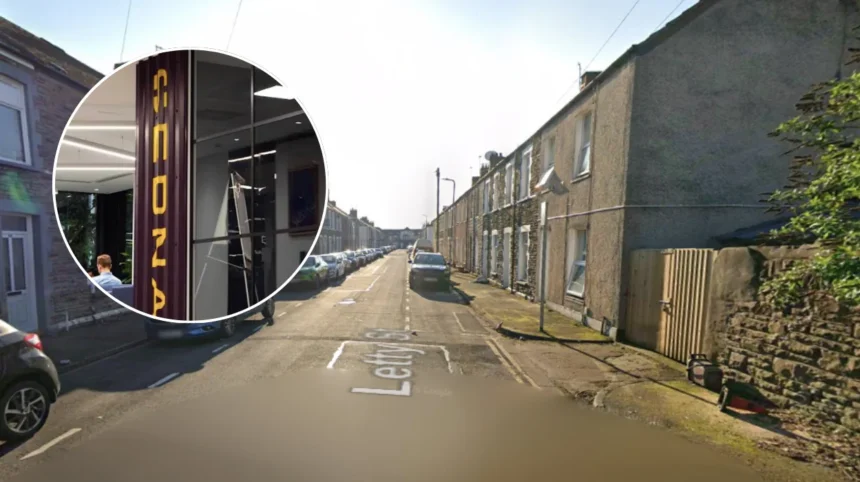
Cardiff (Cardiff Daily) October 14, 2026 — A purpose-built student accommodation block situated in the heart of Cardiff could soon be reconfigured to house general residents under new planning proposals submitted to local authorities. As reported by Kieran Molloy of WalesOnline, the Waypointe building on Letty Street in Cathays—which was originally constructed as student flats five years ago in 2021—is the subject of a newly lodged bid by Cardiff-based Sedna Group Ltd to Cardiff Council seeking permission to transition the property into a co-living space.
- Why Is the Waypointe Student Accommodation in Cardiff Facing Conversion Plans?
- What Will the New Co-Living Layout Look Like Inside Letty Street’s Waypointe?
- How Will Parking and Transport Be Managed Under the Co-Living Proposals?
- Background of the Particular Development
- How This Development Can Affect the Particular Audience
Why Is the Waypointe Student Accommodation in Cardiff Facing Conversion Plans?
The application submitted by Cardiff-based Sedna Group Ltd aims to address ongoing housing supply pressures within the Welsh capital, particularly within student-heavy neighborhoods. As detailed by Kieran Molloy of WalesOnline, the developers intend to convert the existing student block into co-living apartments in an effort to alleviate the strain on traditional residential housing stock.
As reported by Kieran Molloy of WalesOnline, the planning documents argue that the scheme will offer distinct community benefits. The planning statement notes:
“The proposed co-living accommodation will deliver a number of public benefits. It will provide additional housing choice, contribute towards Cardiff’s housing supply, support the provision of relatively affordable accommodation, offer a managed alternative to traditional HMOs, and make efficient use of an existing building which is already in quasi-residential use.”
What Will the New Co-Living Layout Look Like Inside Letty Street’s Waypointe?
Although the property is moving away from exclusive student occupation, the internal layout will bear close similarities to its current configuration. According to the coverage by Kieran Molloy of WalesOnline, the building will be partitioned into four distinct apartments, each comprising six bedrooms.
Every bedroom within the development is planned to be ensuite and will be arranged around a shared kitchen, dining space, and communal lounge area. As noted in the planning documents highlighted by Kieran Molloy of WalesOnline,
“the pattern of occupation, level of activity and residential function of the building will remain substantially unchanged from the existing lawful use.”
How Will Parking and Transport Be Managed Under the Co-Living Proposals?
Transportation arrangements for the converted building are expected to mirror the low vehicle ownership trends established during its time as student accommodation. As reported by Kieran Molloy of WalesOnline, the proposed site layout features a single designated car parking space alongside secure cycle storage facilities capable of accommodating up to 24 bikes.
Planning documents cited by Kieran Molloy of WalesOnline explain that future occupants are anticipated to exhibit travel habits consistent with past residents, noting a “strong reliance on walking, cycling and public transport.” Consequently, the application states that
“the proposal is not anticipated to generate any significant increase in parking demand or vehicle movements when compared with the lawful student accommodation use.”
Furthermore, the documents emphasize that the project avoids any new structural construction or intensive development. As recorded by Kieran Molloy of WalesOnline, the application notes that the project “does not involve the construction of a new residential building and does not constitute a significant net increase in residential development,” but rather represents
“the reconfiguration and continued residential occupation of an existing building already approved and occupied as communal accommodation.”
Explore more Cathays News
Cathays Station Footbridge Construction Begins For Accessibility Upgrade Cathays 2026
Cardiff Refuses Salvation Army Flat Conversion Plans in Cathays 2026
Background of the Particular Development
The Waypointe building on Letty Street in Cathays has undergone a series of functional transitions over recent years. Originally operating as commercial office space, the property underwent a major transformation in 2021 when it was converted into purpose-built student accommodation to serve Cardiff’s growing higher education population. Situated in Cathays—an area heavily populated by students attending nearby universities—the building has functioned exclusively for student tenants. However, shifting urban housing dynamics, rising demand for affordable non-student housing options, and the continuous conversion of traditional family dwellings into houses in multiple occupation (HMOs) have prompted developers to rethink the utility of quasi-residential assets in the district.
How This Development Can Affect the Particular Audience
If approved by Cardiff Council, this conversion project could set a notable precedent for managing housing density and community infrastructure within student-centric neighborhoods like Cathays. For local residents and community groups concerned about the proliferation of HMOs, the introduction of managed co-living spaces offers a potential buffer that absorbs housing demand without displacing more family homes. For prospective young professionals, key workers, and transient renters seeking affordable housing options in Cardiff, the development provides an alternative accommodation model that combines private ensuite bedrooms with shared communal facilities. At the same time, because the site relies heavily on existing infrastructure and sustainable transport links rather than expanding local parking requirements, the immediate neighborhood is unlikely to experience heightened traffic congestion, balancing community integration with urban intensification.