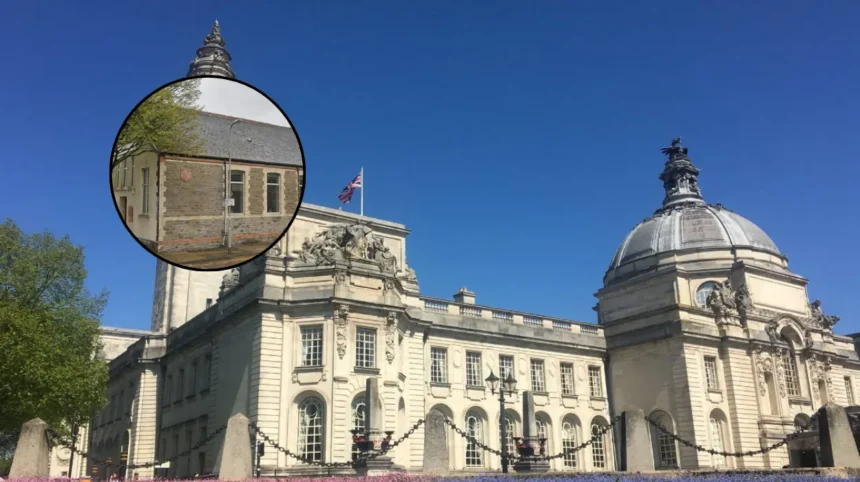
Key Points
- Cardiff Council has formally refused planning permission for the proposed conversion of a former Salvation Army building in Cathays into 10 flats.
- The application was submitted in September by Lucky Letting Agency, aiming to transform the disused May Street site into a residential development.
- Local ward councillors, including Cardiff Council Leader Chris Weaver, submitted formal objections citing overdevelopment, lack of lighting, and loss of privacy.
- Council planning officers agreed with the objections, ruling that the design would result in unacceptable overlooking and claustrophobic living conditions for future occupants.
- The decision leaves the former community hall without an active use, casting uncertainty over the long-term future of the structure.
Cathays (Cardiff Daily) August 29, 2026 – The future of a former Salvation Army building in Cathays has been left in uncertainty following the decision by Cardiff Council to reject planning proposals that would have converted the vacant community hall into a residential flat complex.
As reported by Kieran Molloy of WalesOnline, Lucky Letting Agency submitted plans to Cardiff Council in September last year seeking permission to redevelop the disused property located on May Street. The applicant proposed to alter external openings, build extensions, and convert the interior structure into 10 residential flats, which planning submission documents described as a “high-quality” housing addition.
According to planning documentation submitted on behalf of Lucky Letting Agency, the redevelopment scheme intended to “create a sustainable and attractive residential development that respects its urban context.”
The planning application stated:
“[The proposal] will bring a disused building back into productive use, contribute to the local housing supply, and enhance the visual appearance of the street.”
The developer added that:
“The development will transform the building into a valuable asset for the local community.”
Why Were The Flat Conversion Plans Opposed By Local Councillors?
The planning application faced formal opposition from local representatives serving the Cathays ward. Elected representatives raised concerns regarding the density of the scheme and its potential impact on the surrounding residential neighbourhood.
As reported by Kieran Molloy of WalesOnline, local ward councillors Sarah Merry, Norma Mackie, and Chris Weaver—who serves as the leader of Cardiff Council—submitted a joint letter of objection to the local authority’s planning officer. The ward members argued that the 10-flat scheme represented an “overdevelopment” of the May Street plot and would severely “impact on the amenity of neighbours.”
In their formal objection letter to the planning department, the three ward councillors highlighted specific concerns regarding light quality and privacy risks for neighbouring properties:
“The outlook of four of the flats will be poor with the design only allowing one window to light the whole of the studio as there can be no windows facing onto the houses of May Street.
“For the same reason we believe that any glass in the dormer windows must be obscured to avoid overlooking the properties in May Street.
“This would be acceptable in a bathroom but not a bedroom which will make the room feel claustrophobic.”
What Did Cardiff Council Planning Officers Conclude In Their Decision?
Following an evaluation of the submitted plans and public representations, Cardiff Council planning officers determined that the application could not be approved in its current form.
As reported by Kieran Molloy of WalesOnline, the designated planning officer concurred with the objections raised by the ward councillors, stating that “significant concerns arise in respect of overlooking and loss of privacy.”
The official planning report concluded that the arrangement of windows on the proposed extensions would result in direct views into nearby residential properties.
The report stated:
“The resulting loss of privacy would be detrimental to the living conditions enjoyed by neighbouring occupiers and would fail to respect the established residential character of the surrounding area.”
Background of the Development
The property situated on May Street in Cathays previously operated as a community facility for the Salvation Army, serving as a hub for local social initiatives and worship before becoming vacant. Following the cessation of operations at the site, the premises were acquired by commercial interests.
Cathays is a densely populated inner-city electoral division of Cardiff, situated adjacent to the main campus of Cardiff University. Due to its central location, the area features a high concentration of student housing, houses in multiple occupation (HMOs), and high-density residential flats.
In recent years, Cardiff Council has implemented stricter planning assessment criteria regarding residential conversions in Cathays. Local planning policies aim to manage the balance between residential density, community cohesion, and the preservation of neighbour amenities. The refusal of the May Street application follows similar decisions within the ward where concerns over overdevelopment, street character, and transient population density were identified by local authority officers.
Explore More Cathays News
Illegal Immigrant Caught with £16k Drugs in Cathays Cardiff 2026
Cardiff Rental Crisis Forces 55-Year-Old Into Cathays HMO: 2026
Prediction: How This Development Affects Stakeholders
The decision to refuse planning permission for the former Salvation Army building carries distinct structural consequences for local residents, the developer, and the broader Cathays housing market:
- Impact on Local Residents and Property Owners: Residents on May Street and surrounding roads receive immediate protection against increased on-street parking pressure and potential overlooking issues. However, because the former Salvation Army hall remains vacant without an approved alternative plan, local residents face the continued presence of an unused building on their street, which carries long-term risks of visual decay or site security concerns until a revised plan is established.
- Impact on Lucky Letting Agency and Developers: The applicant faces a choice between appealing the planning refusal to the Welsh Planning Inspectorate or reformulating the proposal. To gain approval in subsequent submissions, developers will likely need to scale down the total number of units, alter window orientations to satisfy privacy guidelines, and reconfigure interior layouts to improve natural daylighting.
- Impact on the Local Housing and Rental Market: The refusal prevents 10 new compact residential units from entering the Cathays rental supply in the short term. While this decision maintains current density levels in the immediate vicinity, it restricts additional housing stock targeted at young professionals and students within walking distance of central Cardiff.