Key Points
- Leadership Change: Councillor Chris Weaver officially assumed leadership of Cardiff Council, replacing Huw Thomas who resigned after getting elected to the Senedd in the 2026 election.
- Background Information: As the council’s cabinet member of finance, modernization, and performance since 2017 and also the representative of the Cathays ward since 2012, Cllr Weaver was appointed the leader of Cardiff Council.
- Important Objectives: Speaking to the Local Democracy Reporting Service and Nation.Cymru, Cllr Weaver stressed his determination to implement the on-going projects such as the redevelopment of Cardiff Central railway station, the International Sports Village, and Atlantic Wharf regeneration.
- Main Priorities: Some of the other priorities he would focus on would include youth unemployment and disengagement from education, street litter, HMOs, and the use of technology for filling potholes.
- Political Background: Assuming office against the backdrop of a tough Senedd election outcome for the Welsh Labour Party, one of the tasks facing Cllr Weaver is preparing the party for the upcoming local government elections in May 2027.
Cardiff (Cardiff Daily) September 22, 2026 — Following a high-profile leadership transition prompted by the Senedd election, Cardiff Council’s newly appointed leader, Councillor Chris Weaver, has outlined his strategic vision for Wales’ largest local authority. Stepping into the role previously held by Huw Thomas—who secured a seat representing Caerdydd Penarth—Cllr Weaver inherits a city grappling with intense financial pressures, infrastructural demands, and a precarious political landscape ahead of the 2027 local government elections. In early briefings and media interviews, the new administration has signaled a strong commitment to continuity on major capital projects while addressing persistent local grievances regarding frontline service delivery.
What Are the Core Priorities for Cardiff’s New Council Leader?
As reported by Kieran Molloy of the Local Democracy Reporting Service (and as covered by regional outlets such as WalesOnline and Nation.Cymru), the transition of power places a seasoned municipal hand at the helm of County Hall. Having managed the authority’s finances since 2017, Cllr Weaver assumes leadership with comprehensive institutional familiarity.
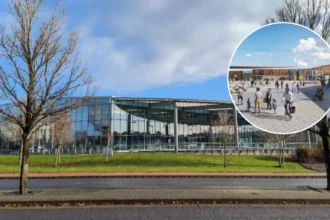
When asked about the key focus areas for his administration, Cllr Weaver stated that his primary goal is to see through the large-scale regeneration projects initiated under his predecessor. As detailed in reporting by the Local Democracy Reporting Service, these critical schemes include the major revamping of Cardiff Central railway station, the ongoing development of the International Sports Village, and the wider regeneration framework at Atlantic Wharf.
When pushed by journalists on whether he intended to launch brand-new flagship developments, Cllr Weaver noted that while the council remains open to opportunities across “all areas of the city,” ensuring the completion of current foundational projects is of paramount importance.
How Will Cllr Weaver Differentiate His Administration?
Seeking to carve out a distinct identity from his predecessor, Cllr Weaver highlighted that young people missing out on education, employment, and training opportunities requires a “pretty urgent focus” during his tenure. He argued that long-term municipal investment—such as the city’s extensive council house building programme and targeted educational expansions—is vital, warning that failing to invest directly costs the city more in the long run.
Furthermore, the new administration’s restructured cabinet—approved during the annual general meeting covered by Nation.Cymru journalists Ted Peskett and staff—aligns closely with the council’s senior management team to enforce strict accountability. This restructured team features Councillor Sarah Merry as Deputy Leader and Cabinet Member for Education, alongside joint portfolios for Housing and Communities managed by Councillors Lynda Thorne and Lee Bridgeman.
How is the Council Addressing Everyday Local Grievances?
Beyond grand infrastructural projects, the leadership transition brings renewed attention to day-to-day municipal concerns raised extensively by Cardiff residents, including littering, road conditions, and housing density.
Tackling Litter and Inner-City Strains
As a councillor representing the Cathays ward—a well-known student and inner-city litter hotspot—Cllr Weaver acknowledged the severe local frustration surrounding waste management and houses in multiple occupation (HMOs).
As noted in reports by WalesOnline, Cllr Weaver remarked on the antisocial nature of littering, stating:
“A lot of litter is caused by people who could very easily take their litter to a bin or present their waste correctly, and actually, we don’t need to have these problems on the street if people would just take some responsibility.”
To combat these issues, the council has allocated additional funding within the budget for enhanced street cleaning and efforts to boost recycling rates. The administration also continues to navigate community friction concerning HMO applications, which frequently draw neighbor complaints regarding noise, overcrowding, and transient population pressures.
Fixing Potholes and Managing Congestion
Infrastructure maintenance, particularly the state of local roads and potholes, remains a prominent flashpoint for public exasperation. Addressing the urgency of road repairs, Cllr Weaver told the Local Democracy Reporting Service:
“We will look at whether there’s any new technology you can use, new techniques of repairing potholes.”
When asked if the council would adopt a more aggressive repair strategy using modern techniques, he confirmed that it “absolutely” would, emphasizing:
“We recognise that it is really important to fix potholes for keeping people moving whether on bikes or cars. It is dangerous not to fix them.”
On the broader and frequently debated topic of transport congestion and air quality—including potential frameworks around a road user charge first explored by the council in 2023—Cllr Weaver indicated that the administration would continue the methodical processes already underway.
What Lies Ahead for Labour Ahead of the 2027 Local Elections?
The political backdrop to Cllr Weaver’s ascension is defined by the wider fortunes of Welsh Labour. Following what journalists described as a difficult and bruising Senedd election cycle for the party across Wales, Labour’s municipal position in Cardiff faces heightened scrutiny.
Reporting by Kieran Molloy for the Local Democracy Reporting Service highlighted that Cllr Weaver was frank about the party’s electoral setbacks, noting:
“[The results] were really, really devastating to Welsh Labour and there’s a lot of reflection in the party around how we reached that point and why we reached that point.”
With the local government elections scheduled for May 6, 2027, the new leader has less than a year to convince the electorate. Despite a volatile political atmosphere where opposition groups like Plaid Cymru and Reform UK are mounting substantial challenges, Cllr Weaver maintains confidence in his party’s local record. He asserts that the administration’s historical delivery on statutory services, education, and housing provides a resilient platform to win back voter confidence.
Explore more Local Cardiff News
Welsh National Opera Launches Season With Bold Bartók And Stravinsky Double Bill Cardiff 2026
Cardiff Logistics Expert Aris Syntetos Wins Top OR Honor Cardiff 2026
Background of the Particular Development
as a direct constitutional consequence of the Welsh Senedd elections. Huw Thomas, who had served as the leader of Cardiff Council since 2017 and steered the local authority through the unprecedented socio-economic pressures of Brexit, the COVID-19 pandemic, and the subsequent cost-of-living crisis, successfully contested and won a seat in the Senedd for the constituency of Caerdydd Penarth.
Under local government rules and internal party structures, Mr Thomas’s elevation to the Welsh Parliament necessitated his resignation as a councillor and council leader. This triggered an internal election within the ruling Labour group—the dominant political group on Cardiff Council. In May 2026, the Labour group unanimously backed Chris Weaver, then the cabinet member for finance, to take over the leadership. His position was formally ratified at the full council’s annual general meeting later that month, marking a structured handover of power that coincided with a broader cabinet reshuffle designed to tighten alignment with the authority’s senior management.
This leadership transition and the policy directions outlined by Cllr Weaver carry significant implications for Cardiff’s residents, business owners, and commuters.
For Cardiff residents, the renewed municipal focus on street cleanliness, inner-city waste management in areas like Cathays, and technological upgrades to pothole repairs could lead to more responsive neighborhood-level service delivery. However, persistent tensions surrounding housing density, particularly the regulation of houses in multiple occupation (HMOs), mean that neighborhood friction will likely remain a testing ground for community relations.
For local businesses, commuters, and motorists, the commitment to seeing through major capital infrastructure projects—such as the Cardiff Central station overhaul and Atlantic Wharf regeneration—signals long-term economic investment, albeit with potential short-term disruption. Furthermore, as the council continues its exploratory work on transport strategies and congestion management, commuters can expect ongoing debates regarding urban mobility and air quality initiatives.
Ultimately, because Cllr Weaver faces a compressed timeline ahead of the May 2027 local government elections against an energized opposition, the administration is under intense pressure to demonstrate immediate, tangible improvements in basic frontline services. This political vulnerability guarantees that public satisfaction with road conditions, school provisions, and urban cleanliness will heavily influence the outcome at the ballot box.