Key Points
- Platform Height Upgrade: In Spring 2027, platform levels at Cardiff Queen Street station will be upgraded to provide level access for both CVL Class 398 tram-trains operated by Transport for Wales and Stadler FLIRT Class 756 trains.
- Spring Infrastructure Blockade: The enhancement of infrastructure will be done via an extensive blockading program which is due to begin on the Cardiff Bay Branch from 20 March, followed by a complete blockade of the CVL mainline from 1 April until 26 April.
- Comprehensive Works Program: The scheduled engineering works involve track and signaling commissioning, reworking of the Queen Street junction, double-track the Cardiff Bay branch, and completing the CVL Overhead Line Electrification.
- Shift to Control Room: Signaling control of the Rhymney line will be transferred from the Wales Rail Operating Centre of Network Rail to the special TfW CVL Integrated Control Centre based in Taff’s Well.
- End-State Timetable Vision: After the blockade is over, the CVL upgrade program will be completed, and the end-state timetable which involves four trains per hour from Treherbert, Aberdare, Merthyr Tydfil, and Rhymney will be achieved.
- Funding and Devolution Challenges: The Welsh Government confirms that TfW will construct new stations on the South Wales Main Line which is not devolved, while asking for increased funding from the UK Government to ensure the survival of special railway engineering skills acquired from the CVL Project.
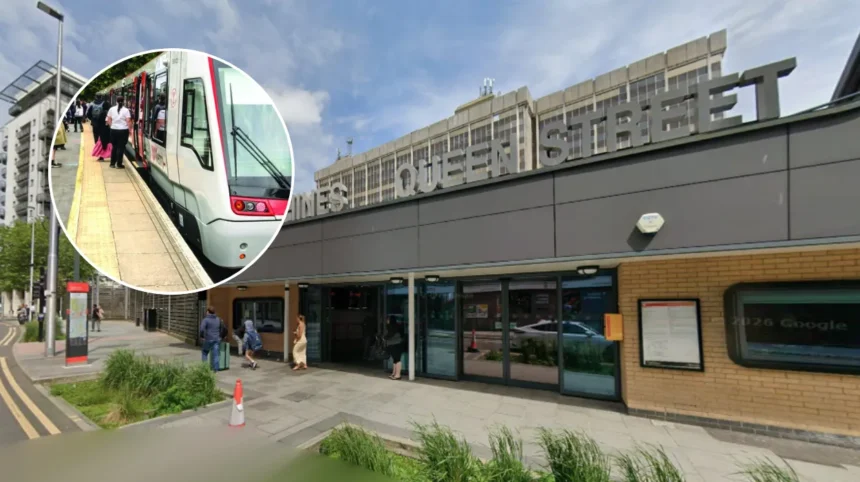
Cardiff, (Cardiff Daily) October 14, 2026 – As reported by Rhodri Clark of Modern Railways, platform surfaces across Cardiff Queen Street station are scheduled to be raised next spring to provide seamless, level access for passengers boarding Core Valley Lines Class 398 tram-trains and Stadler FLIRT Class 756 units. Platform 5 at the central station, which underwent rebuilding in 2014, already sits at the required height for standard level boarding. The physical upgrade to the remaining platform surfaces forms a central element of a major Core Valley Lines (CVL) engineering blockade set to take place in spring 2027.
The main engineering programme for the spring blockade encompasses a suite of critical infrastructure milestones designed to bring the network up to modern operational standards. As detailed by Rhodri Clark of Modern Railways, the key engineering works will comprise:
- Track and signalling commissioning, including the complex structural remodelling of Queen Street junction;
- Transfer of signalling control for the Rhymney line from Network Rail’s Wales Rail Operating Centre over to Transport for Wales’ (TfW) purpose-built CVL Integrated Control Centre at Taff’s Well;
- Infrastructure installation and commissioning for the second track along the Cardiff Bay branch line; and
- Final completion of the comprehensive CVL overhead line electrification programme.
According to the scheduled timeline outlined by Rhodri Clark of Modern Railways, the operational blockade will be implemented in staged phases. Network access constraints will initially affect the Cardiff Bay branch exclusively, starting on 20 March. Following this initial section, the primary network-wide blockade across the main Core Valley Lines will run continuously from 1 April to 26 April.
When the intensive blockade concludes, the CVL transformation programme is expected to be substantially complete, with only minor close-out activities remaining. Transport for Wales expects the infrastructure to then be fully prepared to support the long-awaited end-state CVL service timetable. Once fully operational, this frequency upgrade will deliver four trains per hour connecting central Cardiff with Treherbert, Aberdare, Merthyr Tydfil, and Rhymney.
How does the Core Valley Lines project fit into broader Welsh rail infrastructure and funding debate?
As reported by Richard Clinnick of Modern Railways, the Welsh Government has confirmed that Transport for Wales will undertake the construction of new stations along the South Wales main line, despite the fact that this specific line falls under non-devolved UK railway infrastructure. In light of this responsibility, Welsh ministers are actively urging their UK Government counterparts to bring forward previously allocated capital funding. Welsh authorities emphasize that accelerating these funds is crucial to ensure TfW retains the specialized engineering skills and technical expertise accumulated during the Core Valley Lines modernisation as it approaches its final stage.
This call for accelerated investment occurs against a complex financial backdrop for public transport in Wales. As reported by Richard Clinnick of Modern Railways, TfW Rail was awarded a further increase in state subsidy, despite registering recent growth in commercial passenger revenues. Simultaneously, train fleet integration has presented operational demands; as noted in earlier reporting by Richard Clinnick of Modern Railways, TfW has maintained pressure on train manufacturers over the delivery and performance of new rolling stock, favouring long-term partnership models to resolve lingering stock concerns.
The introduction of the Class 398 tram-trains and tri-mode Class 756 units reflects a multi-year fleet renewal initiative. As reported by Modern Railways in coverage of the InnoTrans industry exhibition, manufacturer Stadler previously displayed these custom UK train designs—including TfW’s new tram-trains and tri-mode trains alongside Merseyrail battery EMUs—highlighting the technological step-change now arriving across Welsh rail routes.
Explore more City Centre News:
Cardiff Coffee Passport Launches Across Independent Venues, City Centre Cardiff 2026
Free Live Music Heritage Exhibition Opens in Cardiff City Centre 2026
Background of the Core Valley Lines Modernisation
The Core Valley Lines network forms the commuter backbone of South Wales, connecting the Valleys communities directly to the commercial center of Cardiff. Historically operated under conventional diesel regional train services on Network Rail infrastructure, the network frequently suffered from capacity limits, aging rolling stock, and infrastructure bottlenecks.
In 2018, the Welsh Government took the strategic decision to transfer ownership of the Core Valley Lines infrastructure from Network Rail to Transport for Wales. This devolution paved the way for the South Wales Metro project—a multi-million-pound investment plan designed to turn legacy suburban rail corridors into a modern, high-frequency, electrified transit network. Central to this vision was the procurement of a brand-new fleet from manufacturer Stadler, comprising Class 398 light-rail tram-trains capable of running on both street tracks and traditional heavy rail, alongside Class 756 tri-mode trains utilizing overhead electric wires, batteries, and diesel power.
To fully realize the performance benefits of these state-of-the-art trains, extensive physical modifications were required across the geography of the lines. Over recent years, engineers have systematically erected overhead line electrification gantries, modified low-clearance bridges, built a new depot and Integrated Control Centre at Taff’s Well, and altered station platforms. Cardiff Queen Street station, serving as the pivotal interchange hub where lines from Treherbert, Aberdare, Merthyr, Rhymney, and Cardiff Bay converge, represents one of the final structural focus areas of the entire electrification and level boarding programme.
How Will These Developments Affect Passengers, Regional Businesses, and Railway Workforce?
The completion of the spring blockade and the rollout of level boarding at Cardiff Queen Street are poised to deliver a transformational operational shift across South Wales, directly affecting several key stakeholder groups:
- Rail Passengers and Accessibility Advocates: The raising of platform surfaces to match the floor heights of Class 398 and Class 756 trains will eliminate step gaps for passengers at Cardiff Queen Street. This change will dramatically improve travel autonomy for wheelchair users, parents with strollers, and passengers with reduced mobility. Furthermore, the launch of the four-trains-per-hour end-state timetable will significantly increase passenger capacity, cut waiting times, and improve service reliability across the Valleys corridors. However, passengers will experience localized travel disruption and require bus replacement services during the blockade period from 20 March to 26 April.
- Valleys and Cardiff Regional Businesses: Enhanced transport connectivity traditionally acts as an economic multiplier. Delivering reliable, high-frequency transit between the South Wales Valleys and central Cardiff will expand the accessible labour market for capital city employers while facilitating easier access to shopping, education, and leisure destinations. Local businesses surrounding Cardiff Queen Street can expect increased footfall once the upgraded end-state frequency takes effect.
- Specialist Railway Engineers and Construction Workforce: The Welsh Government’s push for the UK Government to release early funding for South Wales main line station construction is directly tied to job retention. If funding is released promptly, engineering teams and technical contractors concluding their duties on the Core Valley Lines project can seamlessly transition onto main line station builds. This continuity would prevent a loss of skilled rail engineering labor from Wales, maintaining regional expertise for future infrastructure upgrades.