Key Points
- A free interactive event “Be a Social Scientist” is set to occur on sbarc|spark on Maindy Road, Cardiff on Tuesday 27th October between 10 am and 2 pm.
- This event is for families with children 14 years old or younger and gives them the chance to have a low-cost outing during October half term.
- This event will be organized within the framework of the ESRC Festival of Social Science. This event seeks to bring academic research from the university to the community.
- Among other activities, the event involves learning about school food conducted by Amy Hamlyn from DECIPHer Cardiff University. The sessions will involve school meals and Universal Free School Meals.
- Children can participate in low carbon housing design workshops, map-making, collage making, and public health studies.
- People who want to attend the event can register for free using Cardiff University’s initiatives.
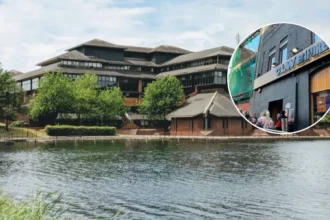
Cardiff (Cardiff Daily) September 23, 2026 – Families across South Wales seeking affordable activities during the upcoming October half-term are being given the opportunity to participate in a unique educational initiative. The “Be a Social Scientist” event will offer children aged 14 and under the chance to engage with interactive games, hands-on workshops, and creative activities designed to demonstrate how social science intersects with everyday life. Hosted at the sbarc|spark building on Maindy Road in Cardiff, the free programme runs from 10am to 2pm on Tuesday, October 27, aiming to transform complex academic concepts into approachable, family-friendly experiences.
What does it mean to be a social scientist?
As reported by Paul Atkins, commercial content writer of WalesOnline, social science focuses on understanding people, communities, and the world. Instead of traditional listening environments, children attending the Cardiff event will be encouraged to ask questions, share ideas, construct items, and investigate everyday issues. Organised under the ESRC Festival of Social Science, the initiative seeks to bridge the gap between university research and public engagement by utilising building blocks, drawings, quizzes, riddles, and interactive displays.
What really happens to school food?
One of the central features of the programme addresses school nutrition. As detailed by Paul Atkins of WalesOnline, Amy Hamlyn from Cardiff University’s Centre for Development, Evaluation and Implementation in Public Health Improvement (DECIPHer) will lead an interactive activity utilizing games, visuals, and prizes. Participants can examine what food is provided, what options pupils select, and what is ultimately consumed, while also learning broader context regarding school meals in Wales and the ongoing rollout of Universal Free School Meals.
Explore more Local Cardiff News:
Cardiff Bay Victorian Dry Docks £17m Sauna Plan Cardiff 2026
New Pet Crematorium Planned For Family Farm In Lisvane Cardiff 2026
How can children build a home for the future?
In another workshop titled Low Carbon and Low Cost: Designing Homes for Future Living, young attendees will use construction bricks to build miniature houses integrated with modern technologies like solar panels and heat pumps. According to reporting by Paul Atkins of WalesOnline, children will also have the opportunity to sketch their own low-carbon housing designs and select features for future sustainable living, introducing core conversations about housing, energy efficiency, and environmental design.
How do creative workshops explore communities and health?
For participants interested in visual arts, the Creatively Being a Social Scientist workshop provides a platform to experiment with mapping, collaging, sketching, storyboarding, and modelling. As outlined by Paul Atkins of WalesOnline, these activities encourage children to articulate how they perceive their local environment. Additional stations such as Crossroads of Movement invite families to compare travel experiences within their communities, while Health is Wealth! introduces public health concepts and equitable community development through quizzes and riddles.
Background
The “Be a Social Scientist” event forms part of the wider Economic and Social Research Council (ESRC) Festival of Social Science, an annual UK-wide celebration of social science research. The festival is designed to promote public awareness of how social, economic, and political research impacts daily life, bringing together universities, researchers, and local communities. By hosting the session at Cardiff University’s sbarc|spark innovation hub, organizers aim to lower barriers to academic engagement, fostering early curiosity in scientific inquiry, public health, urban planning, and socioeconomic structures among younger demographics.
This development is expected to positively impact local families and children across South Wales by providing accessible, high-quality educational engagement during school holidays without financial burdens. For the participating children, early exposure to empirical questioning and creative problem-solving can enhance critical thinking skills, civic awareness, and confidence in expressing community-level observations. Furthermore, the initiative strengthens community-university relations by demystifying higher education and demonstrating the tangible value of social research in shaping future public policies related to health, housing, and education.