Key Points
- A 16‑year‑old boy has died following a collision between a car and a cyclist in the Grangetown area of Cardiff.
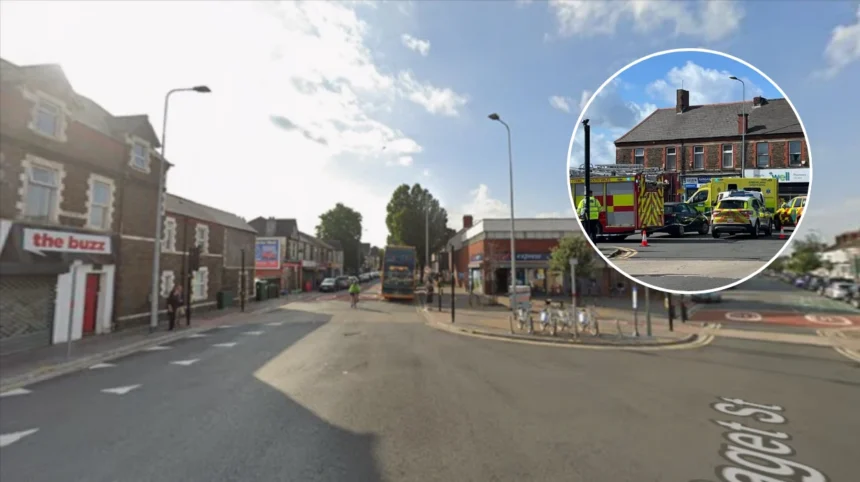
- The crash occurred at approximately 12:25pm on Wednesday at the junction of Penarth Road and Clare Road, Grangetown.
- South Wales Police confirmed the teenager’s death and stated that his family is being supported by specially trained officers.
- Penarth Road was closed for around nine hours while emergency services attended the scene and investigators carried out their work.
- Officers are appealing for witnesses and for anyone who may have dash‑cam or mobile‑phone footage of the incident to contact police.
- The force has established a collision‑investigation team to examine the circumstances of the crash, including the movements of both the vehicle and the cyclist.
- Local community members and residents have expressed shock and sadness over the incident, describing the area as normally busy but generally safe for pedestrians and cyclists.
Cardiff (Cardiff Daily) March 26, 2026 – A 16‑year‑old boy has died following a crash in a Cardiff city suburb, when a car collided with a cyclist at the junction of Penarth Road and Clare Road in Grangetown. As reported by WalesOnline, the incident happened at approximately 12:25pm on Wednesday, prompting a major emergency response and the closure of one of the city’s busiest thoroughfares for around nine hours.
- Key Points
- What happened in the crash?
- How did the police respond?
- What do the road‑closure and disruption tell us?
- How is the community reacting?
- What are the wider safety concerns raised?
- What might the investigation focus on?
- What support is being offered to the family?
- What could this mean for future road‑safety measures?
- How are readers and viewers being asked to help?
- What broader lessons might be drawn?
As detailed by the South Wales Police spokesman, the force was called to the scene shortly after the collision and found the teenage boy with life‑threatening injuries. Despite the efforts of paramedics and hospital staff, he later died. The spokesperson added that family‑liaison officers are working closely with the boy’s relatives to provide support during what they described as an “extremely difficult time.”
What happened in the crash?
According to WalesOnline, the collision took place at the busy intersection of Penarth Road and Clare Road, a junction frequently used by cars, buses, pedestrians and cyclists travelling between the city centre and Grangetown, Canton and Penarth. Early reports indicated that the 16‑year‑old was riding a bicycle on Penarth Road when he was struck by a vehicle, though the exact sequence of events has not yet been confirmed by police.
Eyewitnesses interviewed by local reporters described a “chaotic” scene, with emergency services arriving within minutes and the teenager being treated at the roadside before being taken to hospital. As reported by a resident speaking to WalesOnline,
“It all happened so quickly – one second the road was normal, the next there were ambulances and police cars everywhere.”
How did the police respond?
South Wales Police confirmed that they treated the incident as a serious road‑traffic collision. The force cordoned off the junction and shut Penarth Road between Clare Road and other nearby side streets for nearly nine hours while collision investigators examined the area, photographed the scene, and collected evidence.
As reported by a South Wales Police spokesperson,
“Sadly, a 16‑year‑old boy has died as a result of this collision. Our thoughts are with his family and friends at this very difficult time.”
The spokesperson also noted that specially trained officers had been assigned to support the family, and that the investigation team was working to establish the full circumstances of the crash.
The force has issued a public appeal for information, asking any witnesses who saw the collision or who may have dash‑cam or mobile‑phone footage of Penarth Road around 12:25pm on Wednesday to contact them. As stated by the police,
“Even a small detail could help us understand exactly how this tragic incident unfolded.”
What do the road‑closure and disruption tell us?
The closure of Penarth Road brought significant disruption to local traffic and bus routes during the afternoon and early evening. National transport operators and local buses were forced to divert via alternative routes, with commuters and local residents reporting delays.
As noted by WalesOnline, the road remained shut until the late evening as investigators completed their work and the scene was deemed safe for reopening. The scale and duration of the closure reflect the seriousness with which the police treated the incident and the complexity of the evidence‑gathering process at a busy urban junction.
Grangetown community members have also commented that the closure was a visible reminder of the severity of the crash. A local shopkeeper told WalesOnline,
“We’re used to being busy, but seeing the road shut like that and all those police cars really hit home that a young life has been lost.”
How is the community reacting?
Reaction from local residents and community leaders in Grangetown has been one of shock and sorrow. Many described the area as a familiar, everyday route for families, students and workers, making the death of a teenager on such a common road feel particularly disturbing.
As reported by WalesOnline, local councillors and community activists have expressed condolences to the family and called for a thorough review of safety measures at the junction. One councillor said,
“Our thoughts are with the family and everyone who knew this young boy. We will be working closely with South Wales Police and the local authority to understand what more can be done to make this junction safer for cyclists and pedestrians.”
Some local residents have also begun discussing the broader issue of road‑safety and cycling infrastructure in Cardiff. As one cyclist interviewed by WalesOnline put it,
“We need better‑protected cycle lanes and clearer signage, especially at busy junctions like this. It feels like we’re sharing the road with very little protection.”
What are the wider safety concerns raised?
The incident has reignited debate about road‑safety standards, particularly around cyclist and pedestrian protection in densely populated urban areas. WalesOnline and other local outlets have highlighted that Grangetown sits on a major commuter route, with high volumes of motor traffic, buses, cyclists and pedestrians passing through each day.
As reported by a road‑safety campaigner quoted by WalesOnline,
“This kind of collision, especially involving a young person on a bike, is a stark reminder that we cannot take our current infrastructure for granted. Junctions need better design, clearer markings, and in some cases, lower speed limits.”
Transport campaigners have also pointed to previous incidents in Cardiff where cyclists and pedestrians have been involved in collisions, arguing that lessons must be learned and implemented consistently. They have urged Cardiff Council and South Wales Police to collaborate on reviewing accident‑black‑spot data and considering measures such as extended pedestrian crossings, advanced stop lines for cyclists and improved traffic‑light phasing.
What might the investigation focus on?
South Wales Police have confirmed that a dedicated collision‑investigation team is examining the crash. Typically, such teams look at vehicle speed, the condition of the road and any relevant signage, the movements of all parties involved, and factors such as visibility, weather and lighting conditions at the time.
As stated by the police spokesperson, the team will also review any available CCTV footage from nearby businesses and traffic‑cameras, as well as any dash‑cam or mobile‑phone videos shared by members of the public.
“We are committed to establishing exactly how this collision occurred and ensuring that any wider safety concerns are addressed,”
the spokesperson said.
Once the investigation is complete, the police may share a fuller factual account of the crash, and any regulatory bodies or local authorities may consider changes to the road layout or signage if necessary.
What support is being offered to the family?
South Wales Police have emphasised that they are providing specialist support to the boy’s family. As detailed by the force, this includes family‑liaison officers who keep the family informed about the progress of the investigation and help them navigate the formal processes that follow a road‑traffic death.
Welsh health and social‑care services may also be involved, depending on the family’s needs, including bereavement support and counselling. Local community‑support groups and places of worship in Grangetown have also been reported to be offering practical and emotional support, reinforcing the close‑knit nature of the neighbourhood.
As one local community leader told WalesOnline,
“We are a community that looks out for one another. It is heartbreaking that a young person has lost his life in such a way, and we will do everything we can to support his family and friends through this.”
What could this mean for future road‑safety measures?
The fatal crash in Grangetown has prompted calls from local voices and campaigners for a reassessment of how Cardiff’s junctions are designed and managed, particularly those where cyclists and pedestrians mix with fast‑moving traffic.
As reported by WalesOnline, some local authorities and transport‑planning groups have previously advocated for “20 mph zones” and more segregated cycle‑lane schemes in residential and mixed‑use areas. Campaigners argue that reducing vehicle speeds and physically separating cyclists from cars can significantly lower the risk of serious or fatal collisions.
Transport‑policy experts quoted in the coverage have suggested that councils and police forces should jointly review recent collision data, identify recurring patterns, and implement targeted improvements. As one expert noted,
“Every fatal collision should be treated not just as a tragic individual event, but as a signal that something in the system needs to change.”
In the coming weeks and months, Cardiff Council and South Wales Police are expected to decide whether to introduce additional safety measures at the Penarth Road–Clare Road junction or similar sites across the city, based on the findings of the ongoing investigation and broader accident‑statistics analysis.
How are readers and viewers being asked to help?
South Wales Police have urged the public to come forward with any information that might assist their investigation. As reported by WalesOnline, this includes:
- Witnesses who saw the collision or the vehicle or cyclist shortly before or after the incident.
- Drivers or pedestrians who may have dash‑cam or mobile‑phone footage of Penarth Road around 12:25pm on Wednesday.
A police spokesperson reiterated that even seemingly minor details could be crucial.
“If you think you might have seen something relevant, please contact us. Your information could help us build a clearer picture of what happened and may prevent similar tragedies in the future,”
the spokesperson said.
Residents have also been encouraged to share their experiences and concerns about road‑safety with local councillors and community groups, so that voices from the affected neighbourhood can feed into any future planning or design decisions.
What broader lessons might be drawn?
The death of a 16‑year‑old boy in a crash between a car and a cyclist in Grangetown has underscored the vulnerability of younger road users, especially when cycling on busy urban routes. WalesOnline and other outlets have highlighted that while Cardiff has made progress in expanding cycling infrastructure, more can still be done to protect those on bikes and on foot.
Safety‑advocacy groups have stressed that both drivers and cyclists must remain vigilant, but that responsibility should not fall solely on individuals. As one campaigner told WalesOnline, “We need a system that is designed to be safe by default, not one where mistakes automatically lead to death or serious injury.”
As the investigation continues and the community grieves, the case is likely to remain a focal point for discussions about road‑safety culture, infrastructure design and how cities can better protect their youngest and most exposed road users.